




 Weather
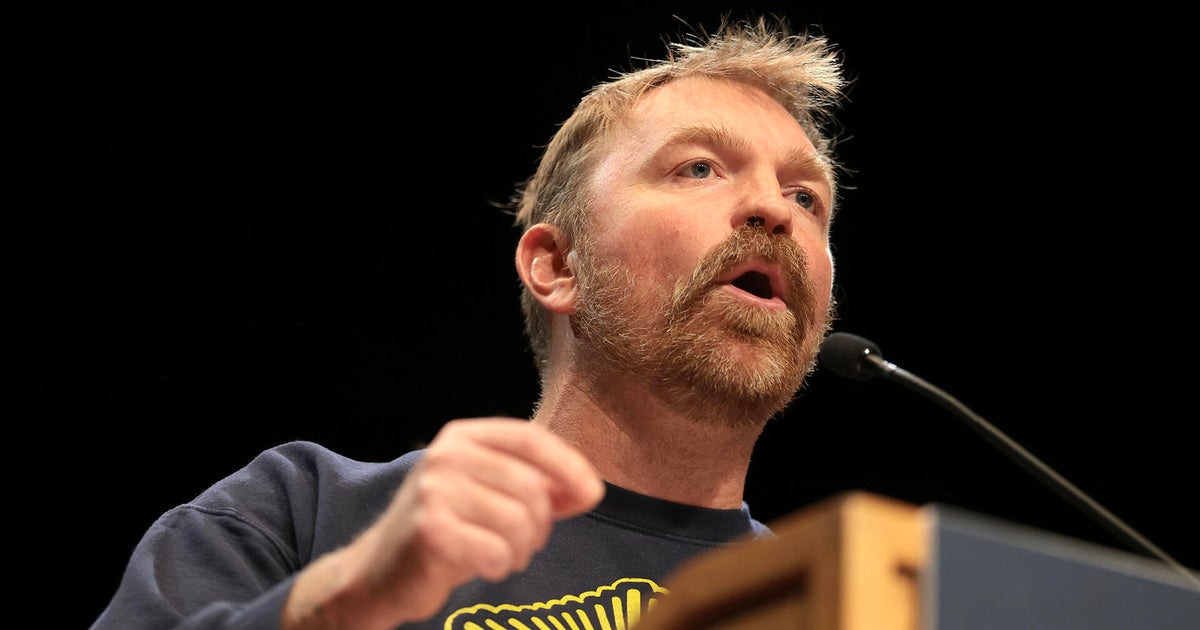
Washington — Maine Democratic Senate candidate Graham Platner announced Wednesday he is suspending his campaign after a woman accused him of sexually assaulting her when they were dating five years ago, ending a Senate run punctuated by personal controversies.
Platner announced his decision in an 11-minute social media video. He vehemently denied the sexual assault allegations, calling them “false” and “not real,” but said the pressure from state-level and national Democrats had made it impossible for his campaign to continue. He blamed the “political establishment” for the situation.
“This is incredibly difficult, because I know that some will think it’s an admission of guilt, and it most certainly is not,” he said. “We’re not doing it because of the allegations, we’re doing it because of the structures that are being taken away from us by those in power.”
Platner said he plans to file paperwork to withdraw from the Senate race. Under state law, he must formally withdraw by Monday at 5 p.m.
The move will disrupt one of the most closely watched races of this cycle, as Democrats seek to unseat Republican Sen. Susan Collins in a contest that could determine control of the Senate. Under Maine law, the state party will have until July 27 to select a new nominee.
The party said earlier Wednesday it would hold a nominating convention to choose a new candidate, adding that more details on the process would come “soon.” The party has also said that Platner will not have a role. Several high-profile Maine Democrats have expressed interest.
Platner urged the Maine Democratic Party to use an “open, transparent and democratic” process to replace him, and said the decision shouldn’t be made by “party apparatchiks.”
“My name might be on the ballot right now, but that ballot line belongs to the people of Maine,” he said in his video Wednesday.
A Maine woman, Jenny Racicot, told Politico and CNN that Platner entered her home without permission in late 2021 when he was drunk and forced himself on her, ignoring her demands for him to stop. Racicot said the two met on a dating app in 2019 and had a casual, consensual relationship before the night of the alleged assault.
Racicot told CNN’s Jake Tapper that Platner, “by dictionary definition, raped me.”
“He violated multiple layers of consent that night. By coming into my home when I asked him not to, and by advancing on me when I told him not to, and furthermore, another incident that I had told him not to do,” Racicot said, referring to his alleged refusal to use protection.
She said: “In that moment, I evaluated my safety. … I basically felt safest just complying.”
Platner called the allegations “categorically false” in a video shortly after Politico broke the story Monday, before Racicot’s CNN interview. In a statement, his campaign called the allegations “desperate smears” that were “coached and coordinated by out of state establishment operatives.”
In his video announcing the end of his campaign, Platner said he learned about the allegations through press inquiries “with no time to truly respond, no time for investigations before a corporate media system and the political establishment got to act as judge, jury and executioner.”
“Accusations are supposed to be the beginning of things, not the end,” he said.
“This was the last week to try to get me off of the ballot, and that’s why this is occurring,” he added.
The allegations led the Maine Democratic Party to call on Platner to withdraw earlier this week, along with Senate Minority Leader Chuck Schumer and Sen. Kirsten Gillibrand of New York, who chairs Senate Democrats’ campaign arm, the Democratic Senatorial Campaign Committee. The DSCC said it would not invest in the race if Platner remained on the ballot, and the Senate Majority PAC said in light of the allegations, it was redirecting resources away from the Maine Senate race, severely limiting his campaign’s viability going forward.
And a number of Platner’s highest-profile supporters in Congress — like Democratic Rep. Ro Khanna of California and Sen. Ruben Gallego of Arizona — also took back their endorsements shortly after the story became public.
On Tuesday, independent Sen. Bernie Sanders of Vermont said he spoke with Platner and “recommended that he step aside.” The statement carried significant weight, with Sanders having been a key supporter of Platner’s.
Late Tuesday, with Platner still in the race and a June 13 deadline to remove his name from the ballot rapidly approaching, the Maine Democratic Party accused his campaign of trying to “put their thumb on the scale” and influence how a new nominee is chosen. A Platner spokesperson denied that the campaign was trying to control the process, but said Platner wanted to ensure that the decision was made by “voters and volunteers.” Some former Platner allies urged state Democratic leadership to replace Platner with a fellow member of the party’s progressive wing.
Meanwhile, Republicans have suggested they expect the allegations against Platner to reverberate in the general election, even as his campaign ends. In a statement shortly after Platner’s withdrawal, Republican National Committee Chair Joe Gruters said: “Democrats rolled in the mud with Platner, and now they are completely stained by their association with this sick monster.”
A 41-year-old veteran and oyster farmer from coastal Maine, Platner emerged from obscurity last year, drawing nationwide attention and support from prominent progressives like Sanders. Platner easily won the Democratic Senate primary last month, facing virtually no major opponents since Gov. Janet Mills withdrew from the race.
But Platner’s insurgent campaign was dogged by a series of personal controversies and allegations about his behavior. Last year, news outlets reported on a series of problematic posts on Reddit penned by Platner several years ago, and Platner acknowledged that he got a tattoo during his time in the Marines that is widely understood to be a Nazi symbol. He has since apologized for his internet posts and says he had the tattoo covered up.
Then, after Mills dropped her campaign, The Wall Street Journal reported that Platner’s wife told the campaign he had sent sexually explicit texts to other women while they were married. Days later, The New York Times reported that women Platner dated had accused him of “unsettling” behavior, including an allegation that he was “physically threatening,” which he denied.
Platner has said some of the allegations against him stemmed from a “very dark period of my life where I struggled with undiagnosed PTSD, too often self medicated with alcohol, and was a far from perfect boyfriend.”
Some prior Platner supporters — including his former political director — suggested he should drop out following the Times’ and Journal’s reports, fearing the controversy could make it difficult for Democrats to win. Collins has represented Maine in the Senate since 1997, and unseating her has been one of Democrats’ top objectives for more than a decade, but the moderate GOP senator has continued to win reelection even as Maine becomes increasingly Democratic.
Platner told MS NOW last month that “not once” had he considered dropping out of the race.
“Amy and I knew early on that we were going to take lumps, and we just, we’re dedicated to this,” Platner said. “It has never crossed our mind to drop out of this thing. I am fully committed to this until the end.”
This is a breaking story; it will be updated.