






 Weather
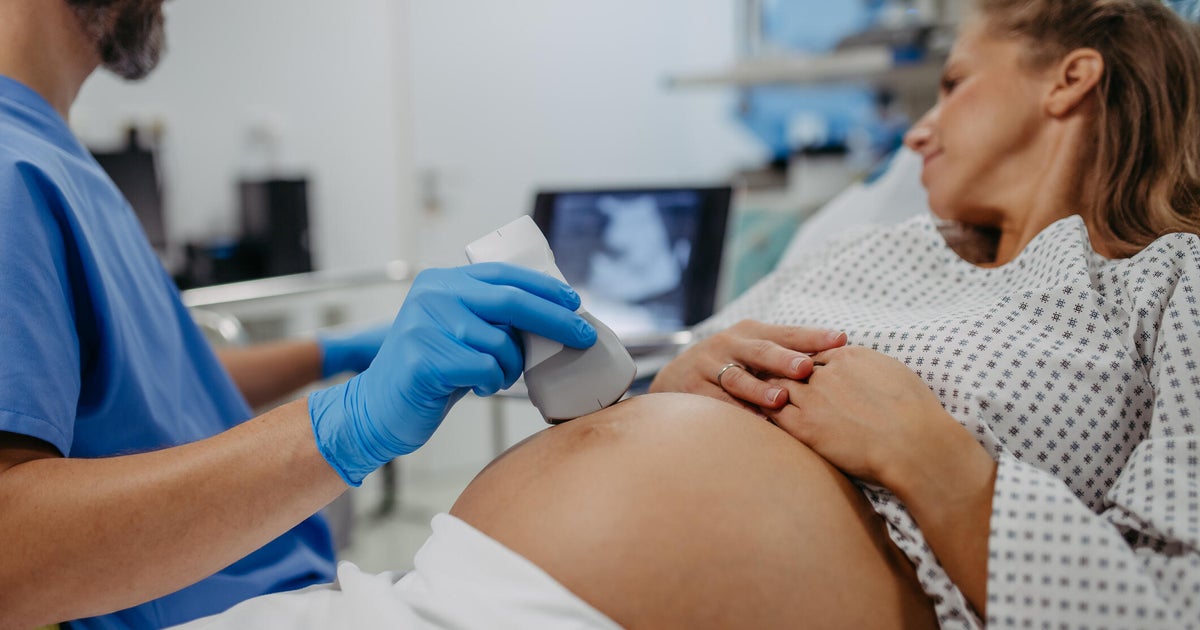
Having a baby in the United States is about to get more complicated.
Under new billing codes that take effect in January, doctors who manage maternity care will start charging à la carte for visits and services related to pregnancy, childbirth, and postpartum care. It’s an about-face from recent years, when doctors have often received a single “bundled” payment for maternity care they provided. Although OB-GYNs strongly back the change and have pushed for it for years, some patient advocates and employers say it’s an open question whether the new system will result in better care or increased patient costs.
The American College of Obstetricians & Gynecologists says the change is crucial to accurately reflect the care OB-GYNs currently provide, with expectant patients — some older and sicker than in decades past — more likely to have complex medical and social needs and receive care in multiple settings from multiple practitioners.
For example, under current bundled obstetrics coding, the number of prenatal visits is set at a fairly arbitrary 13, “which is not really what most people need,” said Lisa Hofler, chair of the Department of Obstetrics and Gynecology at the University of New Mexico and a member of the ACOG committee that developed the new codes in conjunction with the American Medical Association. The new fee-for-service codes will better accommodate more or fewer visits, either in person or remotely, based on individual needs.
Likewise, under the current system, “if someone comes in for a birth, no matter how long or how short their labor or how complicated or uncomplicated their delivery, the global reporting is the same because we only have one code,” Hofler said.
The new, more precise codes will help the growing number of medical professionals who may play a role in maternity care — such as hospitalists focused on labor and delivery, midwives, and maternal-fetal medicine specialists — to account for, and get paid for, the range of services they provide.
For patients, however, especially the growing number with high-deductible health plans, some maternity experts say the new system may result in higher out-of-pocket bills.
“The cost piece is really critical,” said Laurie Zephyrin, an OB-GYN and the senior vice president for the Achieving Equitable Outcomes initiative at The Commonwealth Fund, a health research nonprofit. “There will be more line items. Will that be passed along to patients, particularly those that are in commercial plans, in high-deductible plans?”
Whether families will pay more out-of-pocket “really comes down to how payers choose to implement these codes,” Zephyrin said.
Insurance industry representatives said they are concerned with the implementation timeline, which will require significant operational changes.
“Rushed implementation of far-reaching AMA code restructuring will fundamentally change how maternity services are managed and reimbursed,” said Chris Bond, a spokesperson for AHIP, which represents insurers.
Under federal law, providers and health plans use standardized codes for diagnoses, procedures, services, and supplies. Doctors and other health professionals bill for their services using Current Procedural Terminology codes, which are developed and maintained by the American Medical Association, the main trade group for doctors. The federal Centers for Medicare & Medicaid Services reviews new and revised codes and reimburses clinicians based on a fee schedule, which is updated every year. The CMS review is going on now, and the proposed fee schedule for next year will be published in July.
“We don’t know” whether CMS will go along with the proposed coding changes, said Barbara Levy, vice chair of the AMA’s CPT Editorial Panel. “They were at the table as observers and had opportunities to give inputs throughout the entire process,” she said. In the meantime, the AMA is educating providers and payers about the new coding structure.
Federal law limits how much expectant parents can be charged in certain instances. Under the ACA, most health plans have to provide maternity care that is considered preventive at no cost to members. The list of preventive maternity services, set by the federal Health Resources and Services Administration, includes prenatal and postpartum visits and screening for diabetes, anxiety, and HIV, among other things.
The global bundle doesn’t cover everything, though, and pregnant people typically already pay some of the cost for certain services, such as ultrasounds, specialist visits, and lab work. They’re also responsible for their portion of labor and delivery professional fees based on their insurance plan (in addition to hospital charges, which are billed separately).
Still, fee-for-service payment, in which providers are paid à la carte based on the volume of services they provide rather than on health outcomes, has long troubled health policy experts because of its potential to incentivize providers to do more and pricier services. In fact, one of the reasons policymakers moved away from that arrangement for maternity care in recent years was because they believed bundled payments had the potential to lower costs and improve quality, including reducing the roughly 30% of births in the United States done by cesarean section, which costs significantly more than vaginal birth. (It hasn’t worked. The proportion of births by C-section hasn’t budged under bundled payment.)
“I always worry about anything that is ‘piecemealing’ our healthcare system even more,” said Caitlin Donovan, a senior director at the Patient Advocate Foundation, a nonprofit that provides case management services for sick people in the U.S., of the return to fee-for-service billing.
Even under the current system, patients can get dinged for extra services they may not need. Donovan recalled that when she was pregnant with her third child at age 35, her obstetrician told her that as a “geriatric” expectant mother she needed weekly ultrasounds after her 20th week.
ACOG recommends a detailed first-trimester ultrasound for pregnant patients 35 years or older or with known risk factors, according to spokesperson Jamila Vernon. “Subsequent ultrasounds are also based on findings and risk factors. In other words, there is no set number of ultrasounds for all patients,” Vernon said.
“There was nothing that indicated I needed those scans,” Donovan said. “It was just a money grab.”
With roughly 3.6 million babies born every year in the United States, childbirth is one of the most common medical events that people experience.
Still, having a baby isn’t cheap. It costs families with employer coverage $2,743 on average, according to an analysis of data from 2021 to 2023 by researchers with the Peterson-KFF Health System Tracker.
About 41% of births in the U.S. are covered by the federal-state Medicaid program for low-income people. These families don’t generally face out-of-pocket costs for maternity care, and the new billing system won’t affect them financially.
However, ACOG hopes that the new system will help doctors and other medical professionals improve maternity care, particularly after a baby is born.
With a bundled system, it’s often unclear what services were provided during the maternity process, hampering researchers’ ability to evaluate whether specific services move the needle on maternal mortality rates, in which the U.S. lags every other high-income country.
Maternity care experts are particularly interested in postpartum care. Forty-eight states and Washington, D.C., now provide a full year of Medicaid coverage after childbirth, up from 60 days. Under the new codes, physicians will be paid to provide extended postpartum care, rather than the two visits that were recommended under bundled coding.
It’s important to track a number of medical issues after birth, including screening for depression, substance use, whether a pregnant mother’s gestational diabetes turned into diabetes, or whether cardiac changes returned to normal after birth, said Kay Johnson, a Medicaid and maternal-child health expert who is president of Johnson Policy Consulting.
With the new codes, “You have that opportunity for ongoing care, and you have a way to finance it,” she said.
Experts who represent employers say they understand why ACOG has been pushing for these changes, but they are concerned that they will result in higher costs.
“ACOG is saying that obstetricians are being underpaid, and there’s probably some truth to that,” said Jeff Levin-Scherz, population health leader at WTW’s health management practice and an assistant professor at Harvard’s T.H. Chan School of Public Health.
Levin-Scherz noted reports of increasing visit intensity, reflecting the time and resources a doctor spends on a patient and resulting in higher payment. “It’s not likely that this new set of visit codes will be exempt from that,” he said. Even though patients may not be on the hook directly for the cost of prenatal and postpartum visits, to the extent that there are more visits and they’re coded at a higher level, “if their plan is paying more next year, their insurance premiums will go up more,” he said.
Magda Rusinowski, a vice president of the Business Group on Health, which represents midsize and large employers that self-fund employee health benefits, said she is concerned that the new system will encourage the use of additional and more frequent tests and more expensive providers rather than doulas, for example.
“Fee-for-service in every discipline incentivizes more tests and higher-level providers because that’s what generates higher billing,” she said.
Still, “it’s early days,” Rusinowski said. “Many in the industry are trying to think about how this will unfold.”
KFF Health News is a national newsroom that produces in-depth journalism about health issues and is one of the core operating programs at KFF — the independent source for health policy research, polling, and journalism.