


 Weather

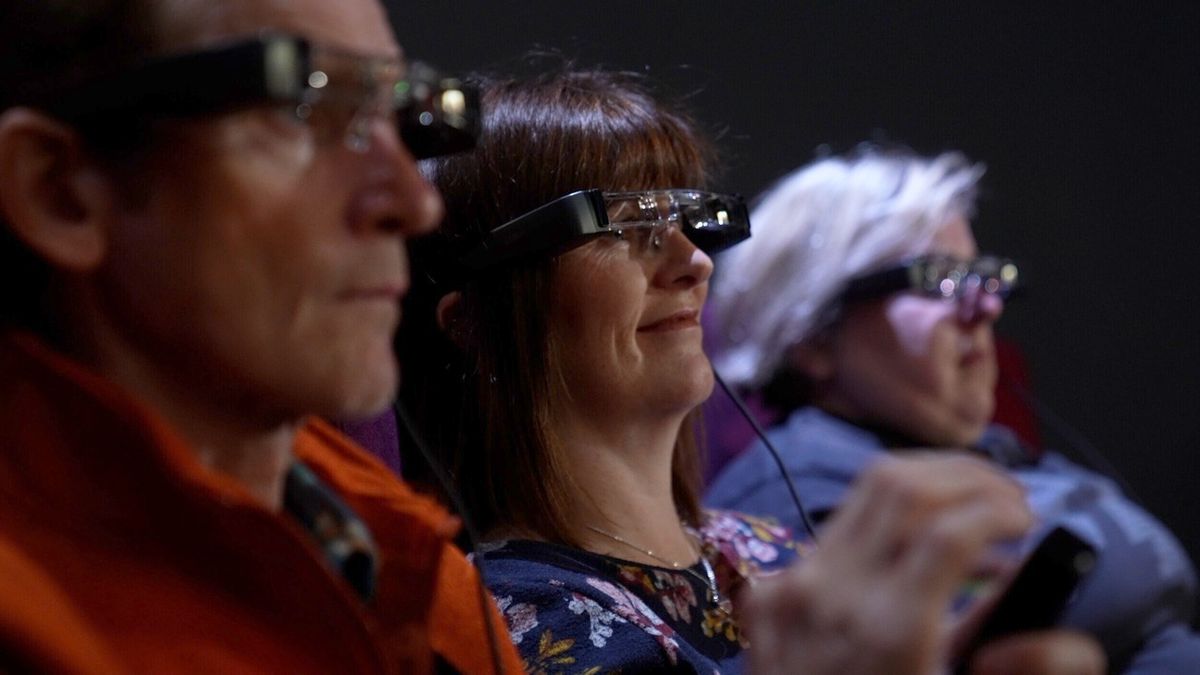
Temple University’s School of Theater, Film and Media Arts has introduced caption glasses for deaf and hard-of-hearing theatergoers, debuting the technology during its recent production of Macbeth, according to reporting from The Temple News and Temple Update.
Temple Theaters now has four pairs of glasses running WatchWord Live, a captioning system that sends prepared lines from a production’s script over Wi-Fi to transparent smart glasses. The text appears to float over the stage, so patrons can follow the dialogue without looking away from the performance. A handheld controller lets wearers change the size, color, brightness and placement of the captions, while an operator follows along and cues each line as it is spoken.
The launch caps nearly eight years of work between Temple Theaters and the university’s Institute on Disabilities. In 2018, the institute received a $225,000 grant from the Barra Foundation’s Catalyst Fund to bring caption glasses to Philadelphia-area theaters. By 2019 it had licensed the technology from Britain’s National Theatre, which introduced its smart caption glasses in 2018, and piloted them at People’s Light in Malvern, Pennsylvania. The pandemic stalled expansion plans, and setup costs remained a hurdle for theaters once they reopened.
Jason Lindner, associate director of marketing and communications for the school, reached out to the institute soon after learning about the project in 2018 and has championed bringing the glasses to Temple ever since. Lindner told The Temple News that Temple is the first university theater department to use WatchWord Live. He compared the experience to subtitles or opera supertitles, and noted that unlike open-captioned performances scheduled for select dates, the glasses make captions available at any performance.
Patrons can request a pair for any Temple Theaters or Temple Opera performance through an accessibility request form on Temple’s website.
Macbeth, directed by Marcus Giamatti, associate professor and head of directing, opened September 24 and ran through October 4. Giamatti told The Temple News he learned the glasses would be used about two weeks before opening and sees the rollout as an experiment with real potential to welcome audiences who might otherwise find live theater hard to access. Cast member Sophia Bosh, a junior, told Temple Update she views the technology as a meaningful step toward bringing more people, particularly members of the deaf community, into the audience.
Temple joins other Philadelphia stages using the glasses, including the Arden Theatre in Old City, which introduced them in 2024. According to the Barra Foundation, 68 patrons used the glasses across 43 performances at the Arden.
Looking ahead, Lindner hopes the software will be able to track actors’ dialogue automatically as early as Temple’s next production, using lighting and sound cues to recover its place if it falls behind. The school also hopes to offer the glasses at film screenings once it moves into the Caroline Kimmel Pavilion for Arts and Communication, set to open in fall 2027 with several new theater and film venues, including a 140-seat black box. Because films typically come with timed caption files, they are simpler to pair with the glasses than live performance.
Broadway news in your inbox
Weekly top stories – unsubscribe anytime.
Text me breaking news – biggest stories on your phone