





 Weather
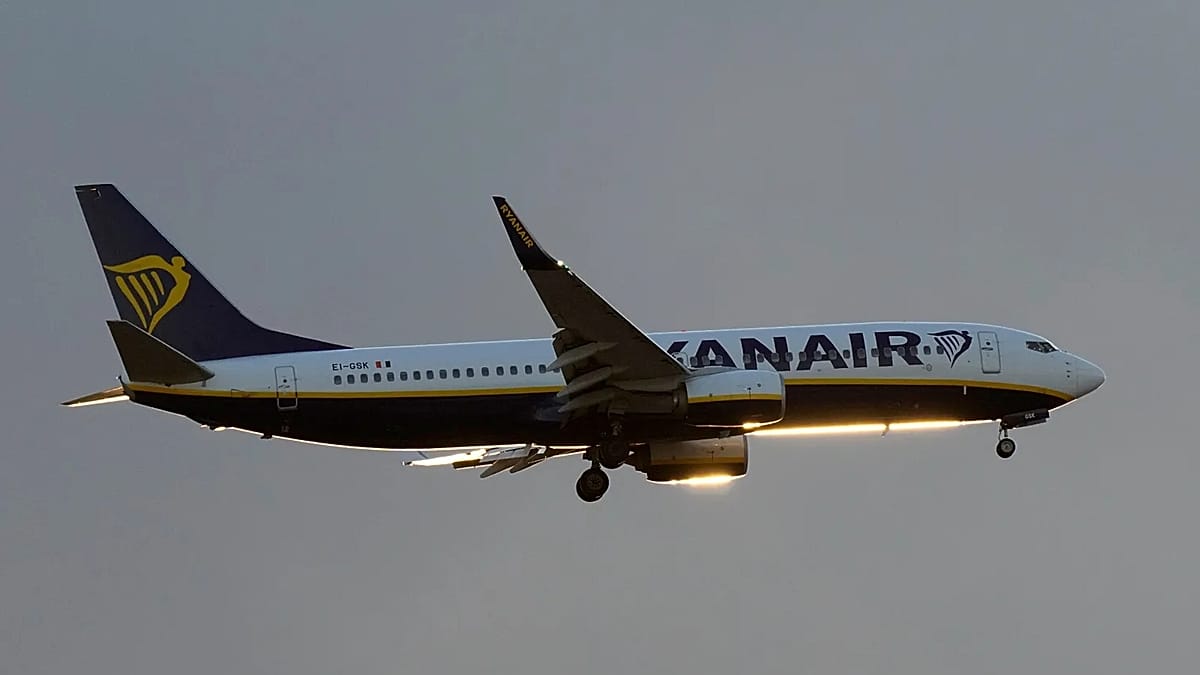
Ryanair has announced that it will cease operations at its base in Thessaloniki during the 2026 winter season, withdrawing three aircraft serving the region. At the same time, it is also proceeding to limit its operations at Athens Airport.
ADVERTISEMENT

ADVERTISEMENT
Specifically, it was announced that the “catastrophic loss of connectivity during the low tourist season is a direct result of the excessively uncompetitive charges imposed by the German-managed monopoly Fraport Greece and Athens Airport”.
According to the company, these changes will result in a reduction of 700,000 passenger seats, which is about 45% fewer than in the winter of 2025, as well as the cancellation of 12 routes.
Ryanair attributes its decision to the high charges imposed by both Fraport Greece and Athens Airport, arguing that Greek airports have become uncompetitive during the low tourist season.
It says that although the Greek government reduced the Airport Development Fee by 75% from November 2024 – from €12 to €3 per passenger – this reduction was not passed on to travellers, but was absorbed by airport operators.
The company also notes that Fraport Greece’s charges have increased by more than 66% compared to pre-pandemic levels, and Athens Airport is also planning further increases for the winter.
As a result, Ryanair has decided to move some of its business to countries it considers more competitive, such as Albania, regional Italy and Sweden.
The airline’s new winter schedule for 2026 includes:
- Withdrawal of three aircraft from Thessaloniki
- Reduction of the total capacity by 700,000 seats
- Elimination of 12 routes: Thessaloniki to Berlin, Chania, Frankfurt-Hahn, Gothenburg, Heraklion, Niderraine, Poznan, Stockholm, Venice-Treviso, Zagreb; Athens to Milan-Bergamo; and Chania to Paphos
- Suspension of activity at Chania and Heraklion airports during the winter period
At the same time, Ryanair presented to the Greek government a development plan aimed at increasing passenger traffic to 12 million passengers per year over the next five years. The plan includes the addition of 10 new aircraft, an investment of more than $1 billion, and the creation of 50 new routes.
However, the airline makes it clear that the implementation of this plan is dependent on a freeze on airport charges and the passing on of the ADF reduction to passengers.
Jason McGuinness, the airline’s Chief Commercial Officer, said: “Ryanair regrets to announce the closure of its base in Thessaloniki and reductions in Athens for winter 2026, which will result in the loss of 700,000 seats and 12 routes across Greece, as well as the suspension of operations in Chania and Heraklion during the low tourist season.
“These avoidable reductions in air traffic are a direct result of the failure of airports to pass on the reduction in ADF, particularly in Thessaloniki where Fraport Greece’s monopoly has increased charges by +66% since 2019.
“The removal of three aircraft, 500,000 seats (-60% compared to winter 2025) and 10 routes from Thessaloniki for winter 2026 will be devastating for the city and the region, as Ryanair provided 90% of Thessaloniki’s international low-cost capacity last winter.
“Unfortunately, there will no longer be low fares for the citizens and visitors of Thessaloniki, and year-round tourism will be affected. These aircraft will be transferred to Albania, regional Italy and Sweden, where the airports have transferred the government’s tax cuts – leading to more connectivity, tourism and jobs in these regions during the winter.”
On how to solve the problem, McGuinness added: “There is an opportunity for Greece to secure significant growth in passenger traffic all year round. However, this investment can only be realised if the German-run Fraport Greece monopoly fully passes on the Greek government’s tax cut from November 2024, allowing airlines such as Ryanair to offer the connectivity needed to reduce Greece’s chronic seasonality.”
Read the full article here