



 Weather
Good morning from Brussels. I’m Mared Gwyn.
ADVERTISEMENT

ADVERTISEMENT
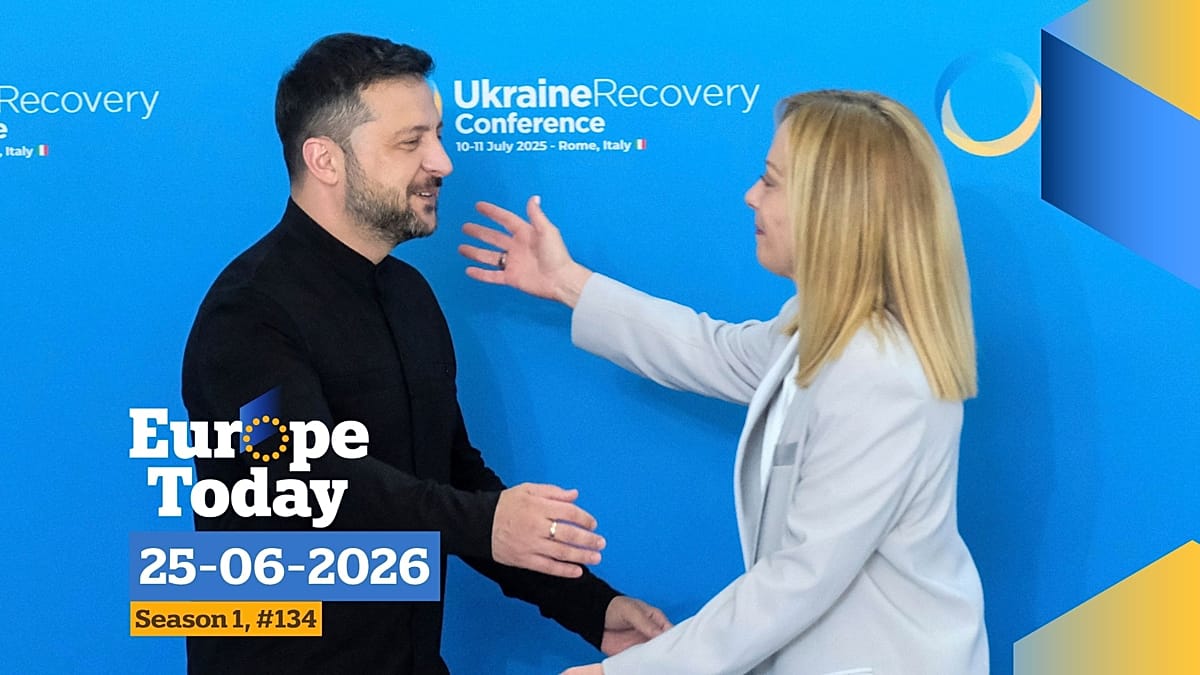
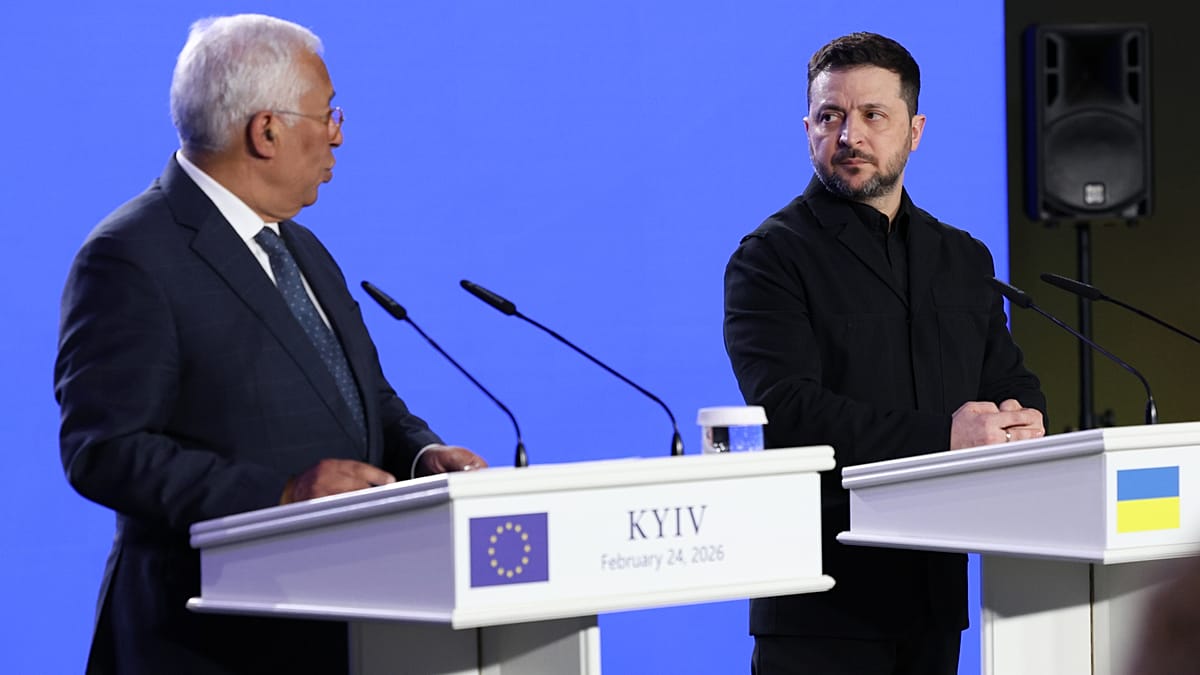
We start with a major development in Ukraine’s bid to join the European Union. Hungary last night lifted its two-year-long veto on Kyiv’s accession talks after Prime Minister Péter Magyar announced a deal on the rights of the Hungarian-speaking minority in Ukraine’s Transcarpathia region – an issue at the heart of the previous Orbán-led government’s staunch opposition to the talks.
“We have reached a comprehensive agreement with Ukraine on the expansion of the linguistic, educational, cultural and political rights of the 100,000-strong Hungarian minority,” Magyar said on Wednesday in a Facebook video. His government had been in regular talks with Ukrainian counterparts to smooth over the issue in order to clear the way for Kyiv’’s accession bid.
Ukraine did not immediately confirm the content of the deal, but the country’s deputy prime minister for European integration, Taras Kachka, thanked Hungary for its “constructive engagement”.
“We are opening a new chapter in Ukraine-Hungary relations – one built on mutual respect, trust, and our shared European future. Ukraine is moving forward,” Minister Kachka said.
As my colleague Jorge Liboreiro explains, the sudden shift in position unfolded during a meeting of ambassadors in Brussels, when the Hungarian envoy signalled the lifting of the reservations, prompting a last-minute change to the agenda.
The end of the veto will allow Ukraine and Moldova to formally open the first cluster of negotiations. The countries have been informally paired on their accession paths, with Hungary’s veto holding back both countries.
Both countries have already received letters confirming they have met the necessary criteria for the opening of talks. The Council of the EU is now expected to define its common position that will guide the negotiations.
The EU’s enlargement chief Marta Kos reacted to the news on Wednesday, saying that it’s now time for Ukraine and Moldova to “accelerate on their road to EU membership”. “This is the best way to ensure minority rights are respected,” she added.
Western Balkans calling: The breakthrough for Ukraine and Moldova comes just as EU leaders are preparing to huddle with six Western Balkan leaders in Tivat, Montenegro, in a show of support for the countries’ own quests for EU membership.
European Council chief António Costa is on the penultimate stop of his Western Balkan tour today – Serbia’s capital of Belgrade – before he moves on to Tivat where he will chair a dinner tonight before the EU-Western Balkans summit kicks off tomorrow.
Serbia, the biggest Western Balkan economy, is also considered one of the thorniest of the EU hopefuls in the region due to persistent rule of law concerns and the way Belgrade continues to pursue a foreign policy that does not fully align with the EU’s.
While all other Western Balkan EU candidate countries are aligning fully with EU foreign policy, Serbia’s alignment stands at 63%, most notably as it has not followed suit on sanctions against Russia.
Marta Kos, the EU’s enlargement chief, has also withheld funds earmarked for Serbia under an economic stimulation package over what she described as backsliding on the rule of law.
Costa will be joined in Tivat, Montenegro by most of the EU’s 27 leaders and all six Western Balkan heads of state and government – Montenegro being a symbolic venue as the country is edging ever closer to the EU and widely tipped to join within the next year.
Our Europe Editor Maria Tadeo is on the ground – stay tuned for more in tomorrow’s newsletter.
Lebanon latest: Israel and Lebanon agreed Wednesday to implement a conditional ceasefire that would require a “complete cessation” of fire by Iran-backed Hezbollah, according to a joint statement issued following US-led talks in Washington.
Speaking live to Europe Today, Lebanese Culture Minister Ghassan Salamé said it was important for both sides to implement the agreement, but added that comments made earlier this morning by some members of the Israeli agreement are “not very healthy”.
“I hope that some of the far-fetched interpretations I heard from the Prime Minister and Minister of Defence are just for public consumption,” Salamé said. Watch.
Also happening today: Euronews is teaming up with Brussels’ the European Policy Centre (EPC) for a two-day summit on economic security.
Moderated by Euronews’ correspondent Shona Murray, the forum gathers global policymakers, industry executives, and experts to discuss geo-economic fragmentation, trade vulnerabilities, and strategic technological dependencies.
Among the guest speakers are Nadia Calviño, the President of the European Investment Bank (EIB) and Lithuanian Foreign Minister, Kęstutis Budrys and the US’s ambassador to the EU, Andrew Puzder. The EU’s Trade Commissioner, Maroš Šefčovič will close the event with an address on Friday.
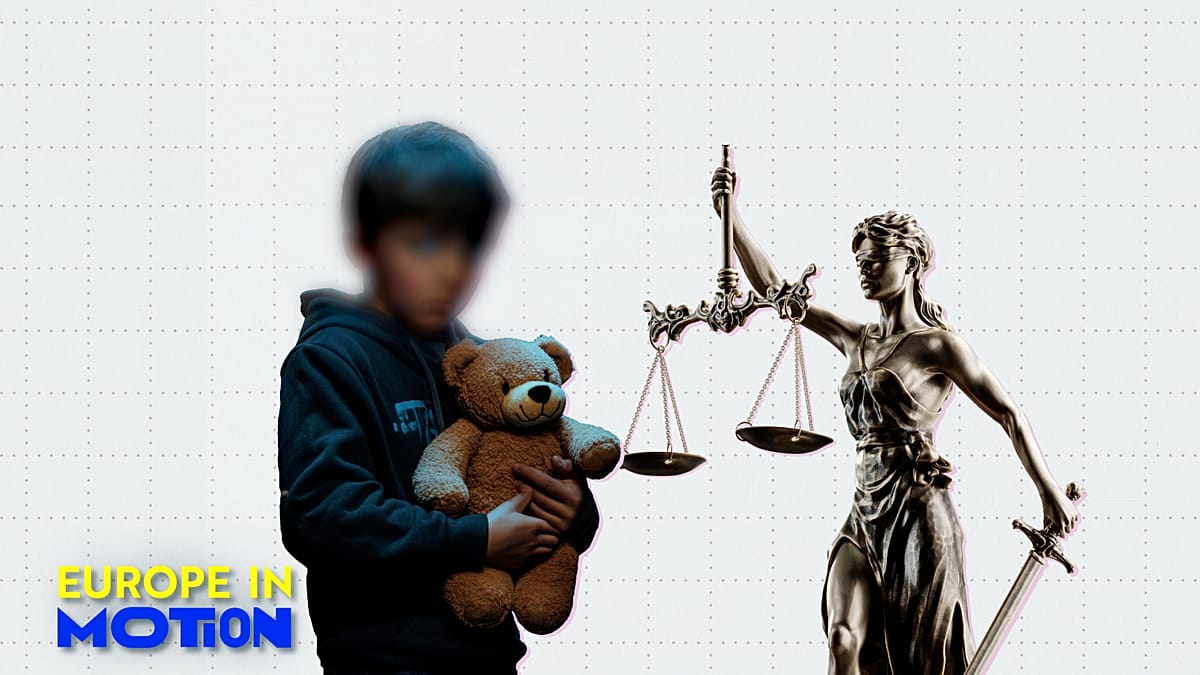
Controversy in the Parliament: An event about children’s rights to be hosted today at the European Parliament is sparking controversy among MEPs, our parliament reporter Vincenzo Genovese reports. The roundtable, organized by Renew Europe’s lawmaker Lukas Sieper, focuses on young LGBTQI+ individuals and the right of sexual autodetermination for children in Europe. Around 60 MEPs signed a letter to ask President Metsola to assess the opportunity to host the event. “Every child has the right to be protected first and foremost by crazy ideologies,” said European Conservatives and Reformists MEP Paolo Inselvini, who promoted the letter.
EU trade chief to meet China envoy amid heated trade tensions
The EU’s trade chief Maroš Šefčovič will meet his Chinese counterpart, trade envoy Li Chenggang, on the sidelines of an OECD ministerial meeting in Paris on Thursday, Peggy Corlin writes in to report.
The visit comes as EU-China relations remain strained, with Brussels seeking to crack down on Chinese overcapacity and tackle a record-high €359.9 billion trade deficit with Beijing.
After the EU unveiled the so-called Industrial Accelerator Act and the Cybersecurity Act which could exclude Chinese companies from the EU market, China threatened retaliation, fuelling fears of a trade war between the two trading partners.
Tensions escalated further last week when EU commissioners met to discuss the bloc’s strategy towards the Asian giant. Peggy has the details.
And in another blow for an EU that is aiming to shield itself from the volatile trading practices of foreign partners, the Trump administration on Tuesday threatened to impose further tariffs on the European Union following an investigation linked to forced labour. The European Commission has slammed the move as “unjustified”, as Peggy explains.
It comes as the EU prepares to implement a contentious trade deal struck last summer between US President Donald Trump and European Commission President Ursula von der Leyen in Turnberry, Scotland.
German MEP Bernd Lange (S&D), the European Parliament’s chief negotiator on the implementation of the Turnberry agreement, wrote on X that after its “defeat before the Supreme Court”, the US administration was “desperately” looking for new legal grounds “to sustain its tariff policy.”
“Accusing the EU of not doing enough against forced labour is absurd. The EU has adopted the world’s most stringent rules against products made with forced labour,” he said.
More from our newsrooms
MEPs urge EU sanctions on former RT France head Xenia Fedorova. European Parliamentary group, Renew Europe, is calling for individual sanctions against Xenia Fedorova, the former head of RT France, in a letter backed by a third of the group. Célia Gueuti has more on this story.
EU is more popular post-Brexit, including in the UK, Pew survey finds. A decade after Brexit, a new survey suggests the vote that split Britain may have helped bring the rest of Europe closer together. Simon Ormiston has the details.
Israel and Lebanon agree to conditional ceasefire following US-led talks. The conditional ceasefire would require a “complete cessation” of fire by Iran-backed Hezbollah, according to a joint statement issued following US-led talks in Washington. Jeremy Fisayo-Bambi has more.
We’re also keeping an eye on
- European Council President António Costa visits Belgrade, Serbia.
- European Parliament President Roberta Metsola visits Podgorica, Montenegro.
- European Commissioner for Internal Affairs and Migration Magnus Brunner delivers a press conference in Luxembourg following a Justice and Home Affairs Council.
- EU home affairs ministers gather in Brussels.
That’s it for today. Peggy Corlin, Jorge Liboreiro, Luca Bertuzzi, Vincenzo Genovese and Angela Skujins contributed to this newsletter.
Read the full article here