


 Weather
Published on
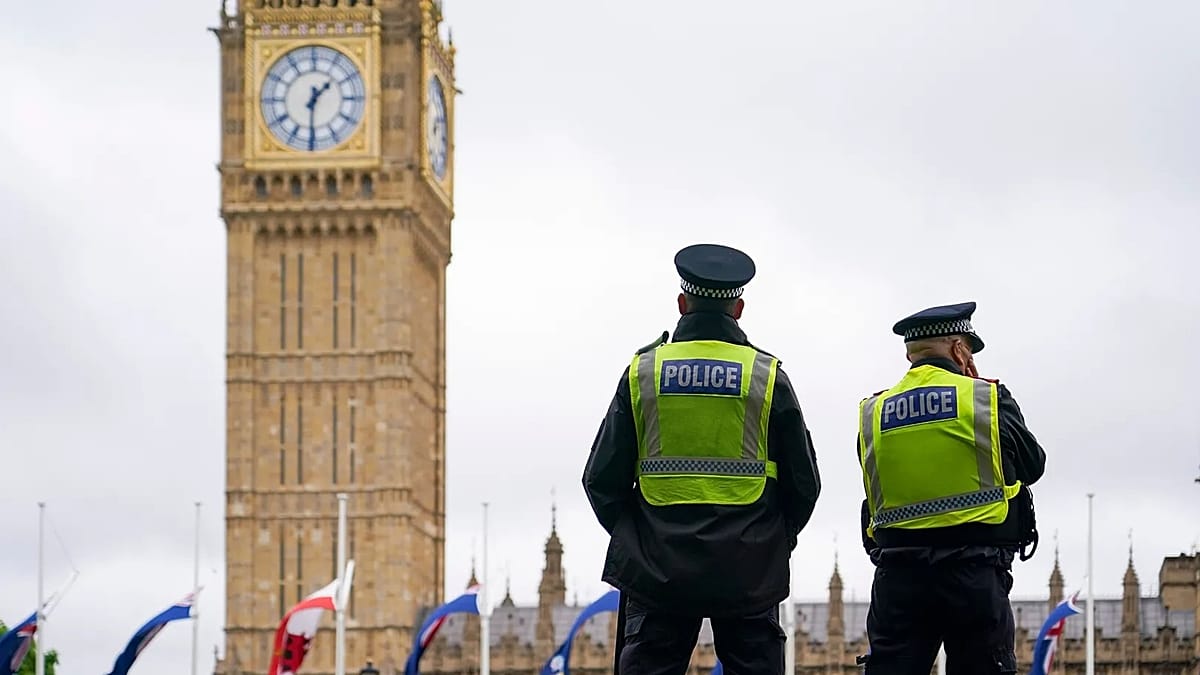
The commissioner of London’s Metropolitan Police force has announced plans to scale up the use of drones and facial recognition technology across the capital.
ADVERTISEMENT

ADVERTISEMENT
In a speech on Wednesday, Met Police Commissioner Mark Rowley warned that crime was “evolving at speed” and that many criminals were now going digital.
“They are using smarter, faster and more connected tools than ever before,” he said.
To counter this growing threat, Rowley said forces must get on board with emerging technologies and called for reduced legislation before implementation.
He singled out drones and facial recognition as particularly key to the Met’s policing capabilities moving forward.
Drones can be used by police forces to assist with tracking suspects, searching for missing people and live intelligence gathering, supporting officers at the scene.
Rowley said the Met would be expanding its drone programme and that he wanted drone coverage across all London boroughs by June 2027.
“We intend to work with London’s blue light services such as the London Fire Brigade to build a London-wide emergency services drone network, ideally built on shared infrastructure that covers the whole city,” he said.
The Met uses facial recognition software to help its officers locate people on “watchlists” in real-time. It is also used to help officers identify someone if they provide false details, or someone unconscious or injured who is unable to communicate.
Rowley, who said the tech had led to more than 2,000 arrests since 2024, announced that the force would now be rolling out “static” live facial recognition cameras, which will be attached to street infrastructure and monitored remotely.
“These cameras will be able to be moved between the highest crime hotspots. Next year our intention is to continue the rollout across London,” he said.
UK civil liberties campaign group Big Brother Watch has criticised the use of such technology.
The group has called facial recognition systems “intrusive,” “discriminatory” and “undemocratic” and said their usage was “spiralling out of control”.
Silkie Carlo, the director of the group, has also branded drones as “an extreme, militaristic form of surveillance”.
“Police using drones to surveil and bark orders at members of the public is usually excessive and counterproductive. Parliament should introduce stronger safeguards to circumscribe their use,” she said.
Read the full article here