



 Weather
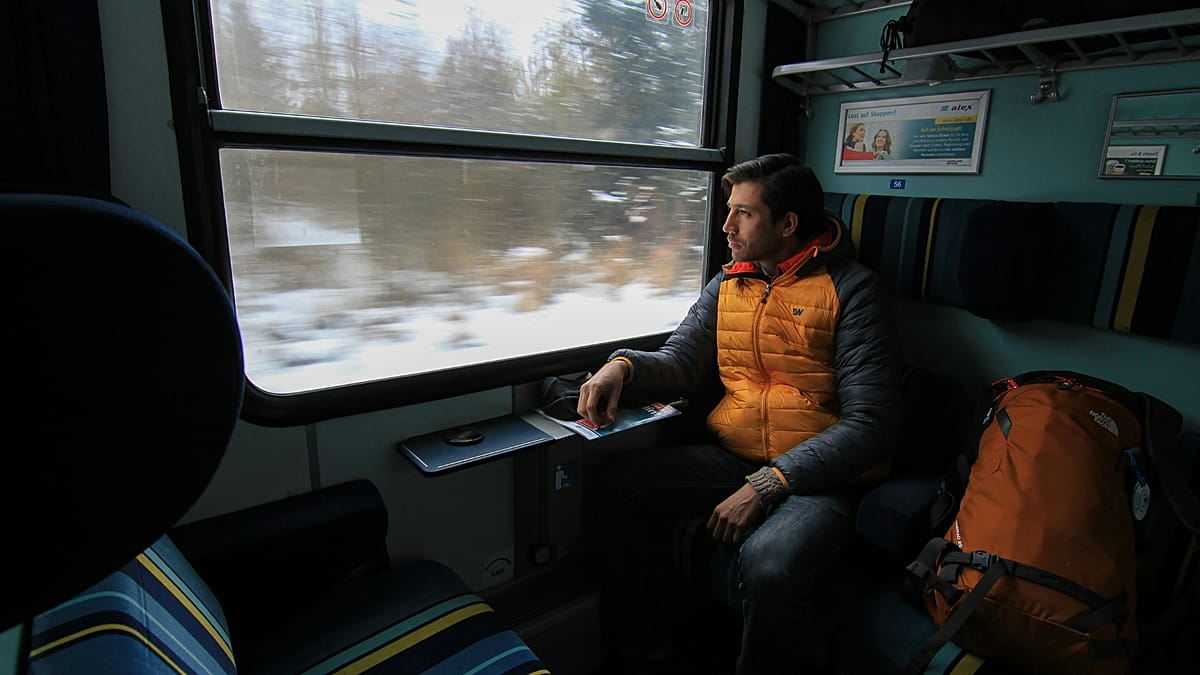
There’s something undeniably nostalgic about travelling through Europe by train.
ADVERTISEMENT

ADVERTISEMENT
Before wallet-friendly carriers made air travel across Europe commonplace, rail routes stitched the continent’s cities – from London pioneering the Metropolitan Railway as the world’s oldest underground train system, to the Paris Metro or Berlin U-Bahn. More than simply transport from point A to B, stepping onto these still-existing platforms also journeys through time.
What if there was a pass that could unlock travel across 33 European countries to make train journeys between cities even more accessible? That’s where a Eurail or Interrail pass comes in handy.
Through partnerships with railway companies such as Spain’s Renfe, France’s SNCF and Switzerland’s SBB CFF FFS, with either a Eurail or Interrail pass, travellers can hop aboard most trains across the continent.
This includes Austria, Belgium, Bosnia and Herzegovina, Bulgaria, Croatia, Czechia, Denmark, Estonia, Finland, France, Germany, Great Britain, Greece, Hungary, Ireland, Italy, Latvia, Lithuania, Luxembourg, Montenegro, Netherlands, North Macedonia, Norway, Poland, Portugal, Romania, Serbia, Slovakia, Slovenia, Spain, Sweden, Switzerland, and Türkiye.
Your residency determines which pass you can buy. Interrail passes are designed for European citizens and residents, while Eurail is for travellers who are residents in a country in Asia, Africa, the Americas and Oceania.
Which pass should you get?
Perhaps the better question is: How much travel time do you have on your hands?
With a Global Pass, passengers can travel to various destinations over days within one month, or even opt for a longer continuous pass which grants as long as three months’ worth of travel, with fares starting at €212 on both the Eurail and Interrail streams.
However, for the traveller with just one destination in mind, the One Country Pass allows for extensive exploring between three and 15 days within one month. A Greek Islands Pass across the Aegean for four days costs €97 per passenger.
With Interrail One Country Passes, there are no Bosnia and Herzegovina or Montenegro routes, and on Eurail, no One Country Passes for Great Britain, Switzerland, Bosnia and Herzegovina or Montenegro.
Whether looking to board with a Global or One Country Pass, tickets don’t include the cost of seat reservations, meaning travellers will need to pay an extra fee to secure their seats on high-speed trains, night trains and popular routes.
However, Plus Pass (Beta) takes care of seat reservation costs on high-speed and popular routes. Plus Passes are currently available as part of the Global Pass, as well as on Italy and German rail routes.
Where to go?
If you have a two-week free block in your calendar, the rail pass provider recommends visiting Italy and Switzerland with a 7-day Global Pass. The “Italy and Switzerland in 2 weeks” suggested itinerary starts in Zurich, before taking travellers through Lucerne, about a 50-minute train ride from Zurich, to Italy’s Milan, Florence and beyond.
“Switzerland and Italy are two of Europe’s most visited countries,” Interrail B.V. said. “They attract around 80 million tourists a year, but this isn’t all just down to good marketing. These countries are popular for all the right reasons – impressive cuisine, interesting history, beautiful scenery, and easy accessibility.”
One popular city-to-city route highlighted was Amsterdam to Brussels. A high-speed train ride taking around two hours and 43 minutes, the Benelux Pass not only unlocks access to The Netherlands and Belgium, but also to Luxembourg. With fares starting at €103 for three days of train travel within a month, travellers can sightsee in Amsterdam, have waffles in Brussels and dinner in Luxembourg.
Similarly, the Nordic Pass opens up rail travel to Denmark, Norway, Sweden and Finland. Starting at €164, the ticket lets travellers explore cities such as Copenhagen, Oslo, Stockholm and Helsinki in a single itinerary by rail, with easy access to everything from Danish landscapes, Swedish fika, Norwegian fjords and Finnish saunas.
Read the full article here