


 Weather
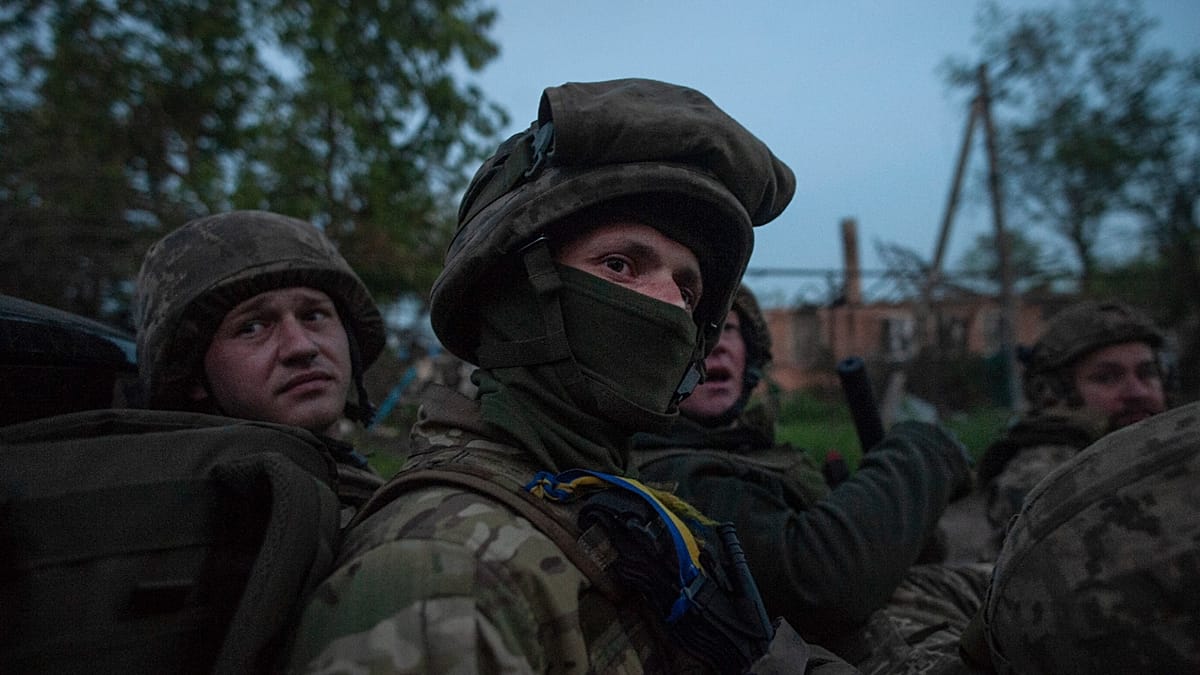
Ukrainian men of military age between 23-60 who arrive in the EU could lose their automatic temporary protection status under a European Commission proposal backed by Germany’s Interior Minister, Alexander Dobrindt. The proposal would allow the measure to be introduced across the bloc if requested by the Ukrainian government.
ADVERTISEMENT

ADVERTISEMENT
In an interview with the Ukrainian news agency Ukrinform, Ukraine’s ambassador to Germany, Oleksii Makeiev, said Berlin and Kyiv are discussing ways to encourage Ukrainian men living in Germany to return home.
Asked about plans to deport conscription-age Ukrainians whom Kyiv considers to have left the country illegally, Makeiev said: “I am not going to reveal these mechanisms yet.”
According to Germany’s Central Register of Foreign Nationals, more than 1.3 million Ukrainians are currently living in Germany, the vast majority under temporary protection.
Figures from the Interior Ministry, obtained by the German Press Agency (dpa), show that as of 31 May this year, 265,804 were men aged between 23-60. Across the European Union, that figure is estimated at around 1.15 million.
Caught by martial law
Vlad (name changed), now 26, still remembers the early hours of 24 February 2022. As the first bombs began falling on Kyiv, his younger brother, who had left Ukraine before the full-scale invasion, called with a simple message: “It’s started. You have to leave.”
Vlad threw the essentials into a backpack – a laptop, a charging cable and a few clothes – before making his way to the railway station. It was his second time fleeing Russia, as he’s originally from Crimea.
He boarded a train bound for western Ukraine. Several hours into the journey, President Volodymyr Zelenskyy declared martial law. Since then, most men of military age have been barred from leaving Ukraine without official permission. Since August last year, men aged between 18-22 have once again been allowed to travel abroad. The restrictions now apply to men aged 23 to 60 who are not exempt from military service and who may have left the country illegally. The train stopped at the next station and the men on board were told to get off. Unsure what to do, Vlad stayed in his seat.
“Some women shouted ‘shame’ at me,” he recalled. At the border, he was turned back.
As a man of military age without the documents needed to leave the country, he was not allowed to cross. “I want to support my country, but I can’t hold a weapon,” he said. Vlad has Tourette’s syndrome, which worsened dramatically under the strain of the war.
“I couldn’t even drink hot drinks anymore because my tics made me spill them over myself. I kept burning myself,” he recalled.
With the help of a humanitarian organisation, he was eventually examined by a doctor, who declared him medically unfit for military service. After waiting several more weeks, he was finally able to cross the border and travel to Berlin.
But Germany’s capital still felt too close to the war. Wanting to put as much distance as possible between himself and Russia, he moved on to Canada after a short stay. He has lived there ever since.
Can Ukrainian men apply for asylum?
Asked by Euronews how any changes to the temporary protection regime would affect Ukrainian men already living in Germany, Germany’s Federal Office for Migration and Refugees (BAMF) said asylum claims would continue to be assessed on an individual basis.
Christoph Sander, a BAMF spokesperson, said the decisive factors are the reasons an applicant gives for seeking protection and the risk they would face if returned to Ukraine. The agency said it applies the legal standards set out in the Geneva Refugee Convention and the EU Qualification Directive, but stressed that no one is granted protection automatically.
“That also applies to deserters and conscientious objectors who refuse to take part in the war,” Sander said.
“Under the Geneva Refugee Convention and the EU Qualification Directive, a person may have a well-founded fear of persecution if they refuse to participate in an armed conflict that breaches international law. In such cases, persecution may be recognised on the grounds of political opinion or membership of a particular social group, such as deserters.” He added that protection is granted only where an individual can demonstrate a well-founded fear of persecution, meaning every application must be examined on its own merits.
The BAMF declined to say whether it considers those criteria to be met in the case of Ukrainian conscientious objectors.
Merz: Ukrainian men should stay in Ukraine
In November last year, German Chancellor Friedrich Merz (CDU) called for Ukrainian men to remain in Ukraine. Following a phone call with President Zelenskyy, he said he had asked him “to ensure that these young men stay in the country, because they are needed in the country and not in Germany. We need everyone who can roll up their sleeves and help, including serving in the Ukrainian military.”
Senior figures within Merz’s own party have also argued that Ukrainian men of military age should no longer be eligible for Germany’s basic income support, formerly known as the citizens’ income benefit.
There are currently no up-to-date figures on how many military-age Ukrainian men in Germany receive social benefits. In response to a parliamentary question from the AfD in January 2024, the then coalition government said that, according to the Federal Employment Agency, around 132,000 Ukrainian men aged between 18-59 were receiving benefits under Book II of the Social Code (SGB II) in January 2024. The statistics are published with a three-month delay. At the time, more than 300,000 Ukrainian men had fled to Germany, although no precise figures are available.
Dmytro (name changed) told Euronews he had “sympathy for German taxpayers.”
“However, if I am not mistaken, Ukrainians integrate into German society faster than some other refugee groups, though I may be wrong. Of course, people should defend their country. But if you look at opinion polls across Europe and ask citizens whether they would personally be willing to defend their country, many would not. At the moment, I see a stronger willingness in Poland, the Baltic states, the Nordic countries, and the United Kingdom,” he said.
Surveys suggest that willingness to fight varies considerably across Europe. According to the Polish polling institute CBOS, around 40-50% of Poles consistently say they would defend their country with weapons if it came under attack. By contrast, a Forsa poll conducted last year for RedaktionsNetzwerk Deutschland found that only 16% of Germans said they would “definitely” take up arms, while 59% said they would “probably not” or “certainly not.”
‘War does not choose who dies first’
When Russia’s full-scale invasion began in February 2022, Dmytro decided to join one of the local volunteer defence groups that were set up in the first days of the war.
“In the first days of the invasion, I joined one of the local volunteer defense groups that were being formed. I went to a recruitment center on my own initiative, but since I had no previous military experience or experience from the Anti-Terrorist Operation (ATO), they simply took my phone number and told me they would contact me later. After that, some friends and I decided to help address the shortage of body armour. In the first weeks of the full-scale invasion, protective equipment was in short supply. We tested different metal samples in a laboratory and eventually purchased a large sheet of armor steel, which, if I remember correctly, was supposed to come from Sweden,” he told Euronews.
Over a year later, in July 2023, he was conscripted. In the army his main duties were in the logistics field, although he also had assignments closer to the front line. “Fortunately, I was never directly on the line of contact. I never saw mutilated bodies or fallen comrades in person. During some of my shifts, however, I monitored attempted assaults on our positions through surveillance screens. I remember hearing over the radio that we had one killed and one wounded. One of the first men from our unit to be killed was a 35-year-old man who was physically fit and had a wife and children, even though most people in our unit were over 45,” he recalled.
“War does not choose who dies first – whether it is an athlete or someone who spent most of his life without taking good care of his health. In early July 2025, I left my unit without authorisation and by the end of July I was already in Germany. Do I think about returning to the military? After almost 11 months in Germany, I still occasionally ask myself whether I am really where I am supposed to be. I wonder whether these thoughts come from the difficulties of adapting to a new life, or whether I made a hasty decision when I left. That question remains open for me to this day,” Dmytro said.
Every soldier counts
The Center for Strategic and International Studies (CSIS) estimates in a recent report that total casualties since the start of Russia’s full-scale invasion have exceeded 2 million. According to the think tank, Ukraine has suffered between 525,000 and 625,000 casualties, including an estimated 125,000 to 150,000 deaths. Russian losses are put at around 1.4 million.
Neither Moscow nor Kyiv publishes official casualty figures, but the CSIS estimates broadly align with those of other independent analysts.
To sustain its defence against Russia’s invasion, Ukraine needs a constant flow of new recruits. Its armed forces are among the largest in Europe, with an estimated strength of between 677,000 and 900,000 personnel. At the same time, Ukraine’s Commander-in-Chief, Oleksandr Syrskyi, has said that around 721,300 Russian troops are currently deployed on Ukrainian territory.
As volunteer numbers decline, front-line units remain understaffed and mobilisation is facing growing resistance within Ukrainian society. Conscription continues to be carried out through Ukraine’s Territorial Centres of Recruitment and Social Support (TCCs), meaning men aged between 25-60 can, in principle, be called up at any time unless they qualify for an exemption or deferment.
The mobilisation process includes so-called “conscription patrols”, which check men’s documents in public and, where necessary, escort them to recruitment offices.
Videos frequently circulate online appearing to show recruitment officers restraining men in the street and forcing them into vehicles. The UN Human Rights Monitoring Mission in Ukraine has documented human rights violations linked to mobilisation, including arbitrary detention, excessive use of force, ill-treatment and deaths at recruitment centres.
The practices have attracted criticism both within Ukraine and abroad. According to the Financial Times, Syrskyi has pledged greater transparency and disciplinary action against officials involved in cases where men were unlawfully conscripted. Recruitment offices have also been issued with a 50-page handbook setting out standards for respectful conduct and de-escalation when dealing with the public.
Looking abroad to fill the ranks
As Ukraine struggles to replenish its armed forces, Kyiv is increasingly looking beyond its borders for recruits. Defence Minister Mykhailo Fedorov has unveiled a military reform aimed at overhauling the recruitment system by opening it up to foreign volunteers. The plan is intended to strengthen frontline units while reducing the burden on Ukrainian soldiers.
“Our goal is to fill between 30 and 50 per cent of positions in assault and infantry units with foreigners,” Commander-in-Chief Oleksandr Syrskyi wrote on Telegram.
The Defence Ministry said in February that volunteers from around 75 countries had joined Ukraine’s armed forces since the start of the full-scale invasion. According to Ukrainska Pravda, more than 10,000 foreign volunteers have served, or are still serving, in the army’s ground forces.
The newspaper, citing the deputy head of the coordination centre for foreign recruits, reported that around 600 new volunteers sign contracts every month.
For security reasons, Kyiv does not disclose the nationalities of those serving in its ranks. Among them are German citizens. Germany’s Federal Ministry of Justice confirmed to Euronews that travelling to Ukraine to fight alongside the country’s armed forces, or to receive military training for that purpose, is not in itself a criminal offence under German law.
The ministry noted, however, that “individual acts committed during combat operations may be punishable under German criminal law”. It also said there are currently no plans to amend the legislation.
“There are no concrete proposals for reform at present,” the ministry told Euronews.
Read the full article here