




 Weather
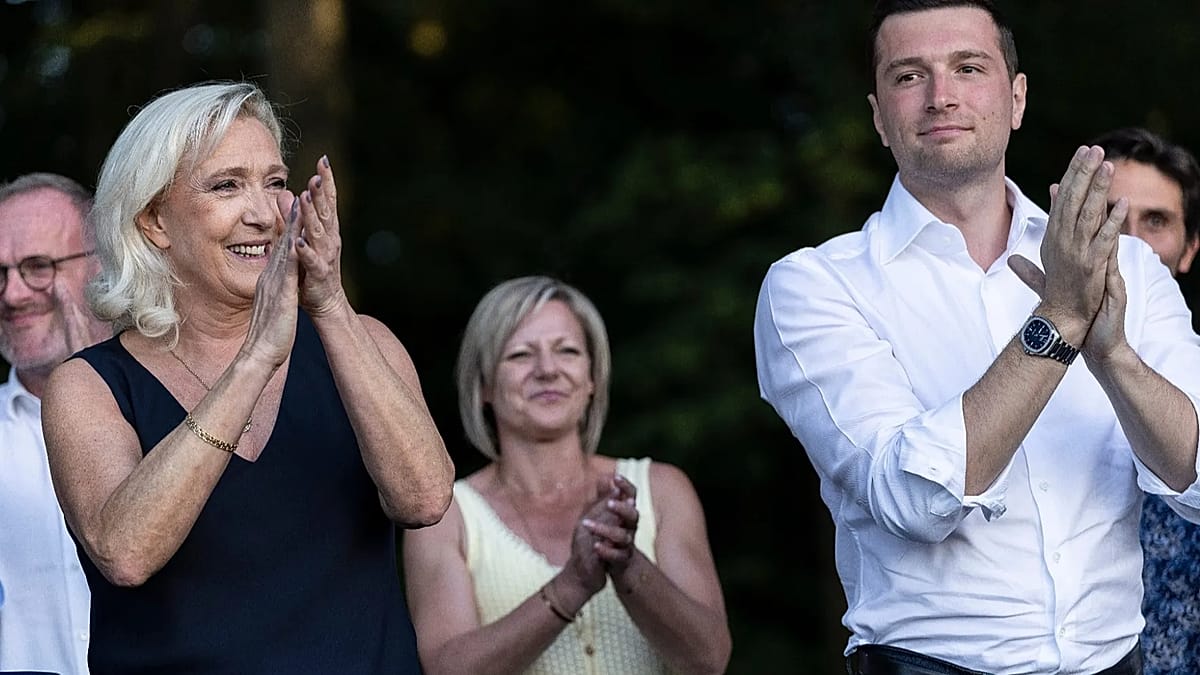
Marine Le Pen’s political future – and potentially the course of France’s 2027 presidential election – will be decided at 13:30 on Tuesday, when the Paris Court of Appeal rules on whether to uphold her five-year ban from holding public office over allegations of embezzling EU funds.
ADVERTISEMENT

ADVERTISEMENT
If the ruling is upheld, it would effectively end Le Pen’s presidential ambitions and leave Jordan Bardella as the National Rally’s (RN) likely candidate for the Élysée.
Despite her conviction, the 57-year-old three-time presidential candidate remains the strongest individual contender, polling 32% in the first round. Bardella, however, is polling between 35% and 37%, according to an Ifop-Fiducial survey released last month.
“Whatever happens, I will not be dead; whatever happens, I will continue to fight for my ideas,” Le Pen told LCI.
Euronews examines the ruling, what is at stake, and the possible outcomes.
The verdict
Le Pen is appealing a March 2025 ruling in which a Paris criminal court sentenced her to four years in prison – two suspended and two to be served under electronic monitoring – a €100,000 fine, and a five-year ban from holding public office with immediate effect.
The court found that Le Pen’s party, then known as the National Front (now the National Rally), diverted European Parliament funds between 2004 and 2016 by paying parliamentary assistants who were in reality working for the party rather than carrying out duties for Members of the European Parliament.
Le Pen defended the practice as a legitimate way of “pooling” parliamentary assistants. She maintained that she had acted in “good faith” and said she had “never felt [she] had committed an offence.”
If the ban is upheld
If the appeals court upholds the ruling, Le Pen would be barred from running in the 2027 presidential election, widely regarded as her strongest chance yet of winning the presidency.
Alternatively, the court could acquit Le Pen – an outcome that even her most optimistic supporters now consider highly unlikely – or reduce her period of ineligibility, potentially allowing her to contest the election.
To remain eligible to run in 2027, her period of ineligibility would need to be reduced to two years or less. Having already served 15 months since her conviction in 2025, she would become eligible again on 31 March 2027 – just over two weeks before the first round of the presidential election.
Some legal experts, however, argue that reducing Le Pen’s period of ineligibility would amount to giving her preferential treatment compared with others convicted of similar offences.
Even if she is ultimately barred from standing, Le Pen’s future political role remains uncertain. She has said she would campaign alongside Bardella but has ruled out seeking the post of prime minister.
If Bardella takes over
If the court bars Le Pen from running, Bardella, the RN’s current president, is widely expected to become the party’s candidate for the 2027 presidential election.
Le Pen recently pledged to support him “every day”, “with great energy” and “with great conviction and confidence”, but the party has sought to strike a delicate balance, promoting Bardella as a credible presidential contender without overshadowing Le Pen, who remains its “natural” candidate in the eyes of many supporters.
A former lawyer who led the party from 2011 to 2022, Le Pen brings political experience that Bardella, a 30-year-old Member of the European Parliament, does not yet possess.
The two have also displayed subtle ideological differences. While Le Pen has repeatedly insisted she is “neither right-wing nor left-wing”, Bardella has said he “shares the essential values” of “right-wing voters”.
Even so, Bardella now enjoys a slight lead over Le Pen in voting-intention polls.
What next?
On Sunday, TF1 confirmed that Le Pen will appear on its 8pm news bulletin following the verdict.
Many RN figures have made clear they want the party’s presidential plans settled quickly, and French media have reported that if Le Pen’s ban is upheld, Bardella could announce his candidacy within days.
Whatever the court decides, Tuesday’s ruling is set to reshape France’s presidential race less than a year before voters head to the polls.
Read the full article here