


 Weather

Bulgaria holds its eight parliamentary elections in five years on Sunday, with former president Rumen Radev’s new party leading polls in a vote many hope will end now-chronic political instability.
ADVERTISEMENT

ADVERTISEMENT
Radev, a former air force general who resigned as president in January, formed his Progressive Bulgaria coalition after the resignation of the government in December.
His party leads with 33% support according to the latest polls, positioning him as a key power broker in what is expected to be another fragmented parliament.
The election follows five years of near-permanent crisis in which no government has survived a full term.
Instead, the country has cycled through caretaker administrations, fragile coalitions and short-lived alliances that have often collapsed amid scandal.
Public trust has all but evaporated. Voter turnout, once a barometer of democratic engagement, has entered a state of chronic decline.
This prolonged instability has unfolded against a backdrop of deepening internal divisions and mounting external pressure.
Russia’s all-out war in Ukraine has exposed a stark fault line running through both society and the political class – one that continues to define the national conversation.
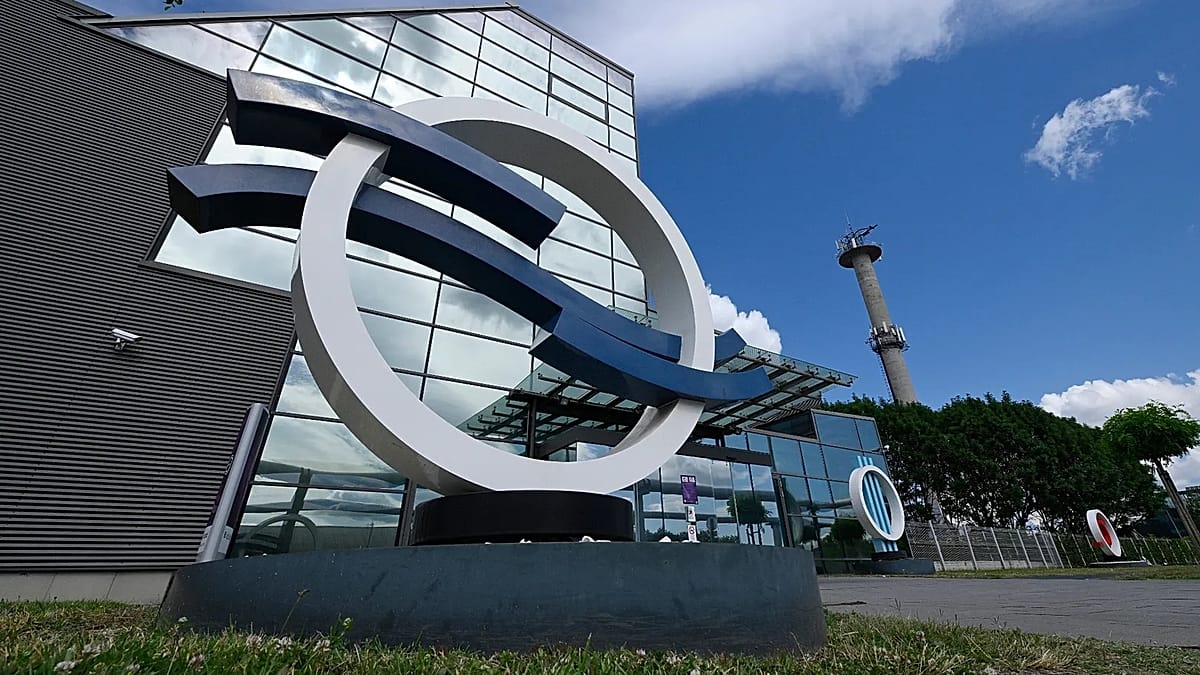
And yet, paradoxically, Bulgaria has, in this same period, taken major steps forward in its European integration – joining Schengen and adopting the euro – often without a functioning government or even a passed state budget.
Meanwhile, delays in reforms have slowed access to EU recovery funds, raising the risk of losing billions.
New player, perfect timing?
The latest collapse came after a wave of mass protests at the end of 2025 – the largest seen in decades – initially sparked by a disputed draft budget but quickly transforming into a broader revolt against the political status quo.
At the centre of public anger were two familiar figures: GERB’s leader and former Prime Minister Boyko Borissov, and Delyan Peevski, a controversial political heavyweight sanctioned under the US Magnitsky Act. Critics accuse them of operating in tandem, consolidating control over the state and concentrating power mostly with Peevski, even though he was not officially part of the ruling coalition.
The protests were fueled in part by the opposition alliance We Continue the Change-Democratic Bulgaria (PP-DB), which attempted to reinvent itself after losing credibility for having previously governed alongside the very figures it opposes.
Its renewed vow – “never again” – struck a chord, helping drive thousands into the streets and ultimately forcing the government’s resignation.
But just as that momentum peaked, a new contender stepped in.
Radev resigned early and launched his own political project, positioning himself as the man who would “break the oligarchy”. Within weeks, he had surged to the top of the polls.
Pro-European or Orbán-style?
Polling suggests Radev’s new outfit Progressive Bulgaria could secure first place, with over 33% support.
While this is unlikely to translate into an outright majority, it positions him as a key decisionmaker in what is expected to be another hung parliament.
His rise has fueled comparisons to Hungary and Prime Minister Viktor Orbán in particular. Yet the parallel cuts both ways.
On the one hand, the record turnout in Hungary’s recent elections – which ended Orbán’s 16-year rule and showed that change is possible anywhere in Europe – has raised hopes among some in Bulgaria that a similar mobilisation could break the cycle of apathy and instability.
On the other hand, critics warn of a different parallel. Earlier this year, shortly before Radev founded Progressive Bulgaria, one of his close associates – now also a candidate – Slavi Vassilev stated in an interview for Nova TV: “If Radev were to lead a party, he would be pro-European, but within a Europe that prioritises its own worldview”, something he claims the current European elite fails to do.
“In my opinion, he will move closer to the policies of … Orbán,” Vassilev said, while rejecting the idea that either Orbán or Radev pursued pro-Russian policies.
His recent track record paints a different picture. Throughout his presidency, Radev has taken positions on Russia’s ongoing war in Ukraine that have diverged from those of all Bulgarian governments during his mandate.
He has opposed military aid to Kyiv, argued that such support risks dragging Bulgaria into the war, and consistently called for dialogue with Moscow.
His past remarks – including describing Crimea as legally “Russian” – and his public clash with Ukrainian President Volodymyr Zelenskyy during a 2023 visit to Sofia have further fueled controversy.
In a recent speech, Radev has criticised Brussels in increasingly sharp terms, accusing the EU of prioritising ideology over economic pragmatism and becoming “a hostage to its ambition for moral leadership”.
According to him, economic decisions are no longer based on actual benefit but on ideological correctness, and market and investment policies are no longer guided by profit maximisation.
He argues that European leaders should prioritise economic interests, as the United States, China and Russia do.
Shortly before Bulgaria officially joined the eurozone, Radev attempted to call a referendum on the issue.
This was rejected by both parliament and the Constitutional Court, yet he continued to argue that the people should have been consulted and that adopting the euro was premature.
During his campaign, Radev has even called for politicians who “introduced the euro over the heads of the people” to be punished.
Now, his domestic message centres on dismantling what he describes as an entrenched oligarchic system – often openly pointing his finger at Borissov and Peevski.
Fragmentation and uncertain alliances
GERB remains in second place, with Borissov still its dominant figure despite stepping back from the premiership in recent years.
Borissov is still a very well-known conservative figure in Europe and also, in his own words, a “good friend of Orbán.” Still, Borissov has repeatedly rejected political comparisons with the Hungarian leader, with his team insisting that Bulgaria must not deviate from its pro-European path.
Nevertheless, a recent decision by GERB Prime Minister Rosen Zhelyazkov to join US President Donald Trump’s Board of Peace – without parliamentary consultation and out of step with most EU countries except Orbán’s Hungary – has sparked controversy and intensified tensions between the government and the opposition.
In a March interview with Euronews, caretaker Prime Minister Andrey Gyurov described it as “the decision of an oligarch,” again referring to Peevski and reinforcing opposition claims of state capture.
Peevski’s party is projected to finish fourth, while the nationalist Vazrazhdane, or Revival, party of Kostadin Kostadinov – which advocates leaving the eurozone – continues to gain ground with a strongly anti-EU message.
Despite leading in the polls, Radev is unlikely to govern alone.
Campaign rhetoric has made coalition-building appear very difficult. In a recent debate organised by the platform of independent journalists called Off Air, Radev’s camp has ruled out cooperation with both Borissov and Peevski.
GERB has distanced itself from Peevski, while PP-DB has rejected any partnership with Borissov. Peevski did not appear or send a representative to the final debate, nor did Revival.
Still, Bulgaria’s recent political history suggests such red lines are often flexible.
A defining vote for Sofia, watched in Brussels
With no clear path to a majority, the next government is likely to emerge from tense and potentially unstable negotiations.
For voters, the immediate question is whether recent developments in Hungary will inspire greater turnout, or whether Bulgaria may instead move towards a model that echoes Orbán’s style of governance.
The outcome will not only shape the country’s domestic trajectory but also be closely watched across the EU, as the bloc fears further instability in any of its member states.
Read the full article here