




 Weather
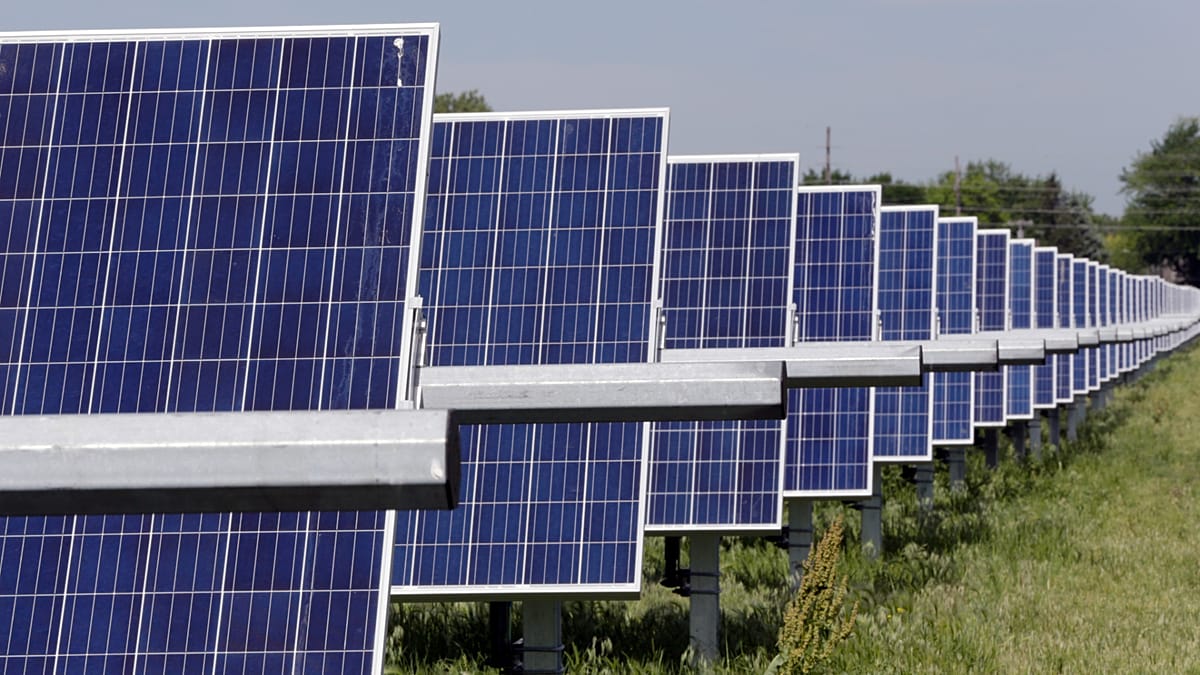
Solar systems generate 13.4 percent of EU electricity and are a cornerstone of the European energy grid. Solar inverters are the brains behind these systems, converting the direct current generated by panels into the alternating current used by homes and businesses.
ADVERTISEMENT

ADVERTISEMENT
Although 61 percent of solar inverters imported into the EU come directly from China, the European Commission is now banning financial institutions such as the European Investment Bank (EIB) and the European Bank for Reconstruction and Development from financing projects that use Chinese components. The measure applies only to projects in development and future installations, and stems from national security and cybersecurity concerns.
“Today’s inverters are connected to the internet so that the manufacturer can carry out software updates and perform maintenance. This means you have to trust that the inverter manufacturer will not carry out malicious software updates that force the inverter to damage the electricity grid. With Chinese inverters, one must also trust the Chinese government, which can instruct any Chinese company to follow its orders. In this way, China could indirectly control hundreds of gigawatts of inverter capacity, which essentially means it could control the European power grid,“ shared Christoph Podewils, Secretary General of the European Solar Manufacturing Company, an EU industry association.
“80 percent of all newly installed solar power systems across the EU rely directly on Chinese-made inverters. That controls such a big share of the hardware of the EU’s fastest-growing power source can pose a critical risk that could destabilise the electrical grid and trigger countrywide blackouts”, he added.
Podewils pointed to a cybersecurity study done by the Czech Technical University in Prague. It found that Chinese-affiliated researchers have spent years studying foreign power grids, including research into cascading failures, false data injection attacks and methods for identifying critical nodes whose disruption could trigger large-scale outages. The study argues that distributed energy resources such as solar systems and batteries increasingly appear in this research as both grid assets and potential attack surfaces.
The sector is split
Clean-energy developers are scrambling to rewrite procurement contracts. The funding freeze takes immediate effect, so projects using EU financing must halt procurement and replace Chinese hardware.
Timelines are being pushed back by six to twelve months as developers wait for European-made inverters. With roughly 20 percent of EU solar installations receiving EIB support, hundreds of projects are affected. Among them is Spain’s Solaria Utility Portfolio, a €1.7 billion programme to build 100 solar plants across Spain, Italy and Portugal.
Developers must now source equipment from European manufacturers or trusted partners such as Japan and the United States. Key suppliers include Germany’s SMA Solar Technology, Austria’s Fronius International, Italy’s Fimer and the Netherlands’ Victron Energy, though the rapid transition is creating logistical bottlenecks.
Jürgen Reinert, CEO of SMA, told Euronews: “The decision may add some complexity for project developers relying on EU investments. Developers will need to review supplier choices more carefully and reassess certain project assumptions. At the same time, we see a broader shift: beyond cost and performance, factors such as system security, transparency and regulatory compliance are becoming more important in procurement decisions.”
Companies will also need suppliers to certify that internal components, including circuit boards and semiconductors, are not sourced from China. Customs checks are expected to create additional administrative delays.
The ban is expected to raise procurement costs by around 2 percent, as European and allied alternatives are pricier, and manufacturing capacity cannot expand overnight.
Chinese manufacturers benefit from highly automated production and can typically offer products 20 to 30 percent cheaper than European competitors. China also controls about 98 percent of the solar and battery component supply chain, meaning European firms still rely on Asian inputs, increasing transport and intermediary costs.
The transition away from Chinese imports is also expected to create temporary supply bottlenecks as logistics shift toward regional European transport networks.
“SMA, for example, is well established and has proven experience in delivering complex systems,” Reinert said. “In many cases, the impact will depend on project-specific factors such as timelines, certification requirements and financing structures rather than on supply constraints alone.”
The effect on EU citizens
Developers are expected to absorb higher manufacturing costs, project delays and supply-chain restructuring. Over time, some of these costs may be passed on to consumers, resulting in modest increases in electricity prices.
“Costs may increase a bit. But the long-term challenge is the resilience of our supply chains,” David Greau, secretary general of French energy syndicate Enerplan, told Euronews. “The reindustrialisation of the entire value chain, from solar panels to inverters, is part of this effort. We need a strong European industry.”
The decision will also affect the rollout of renewable energy. As major projects replace Chinese hardware, the addition of new low-cost renewable power to the grid will slow temporarily.
“It’s necessary to ensure that timelines are aligned, imposing Made in Europe requirements when the industry is able to deliver,” Greau added. “With economies of scale, European products should become competitive, even if additional support is needed during the ramp-up phase. The entire sector will benefit in the long term.”
The anticipated reduction in consumer energy bills is likely to arrive later than expected under the EU Solar Energy Strategy, which projected relief in 2025-26 and a 4 to 25 percent decline in wholesale electricity prices by 2030.
The road to resilience
Between 2027 and 2030, European manufacturers are expected to scale up local production under the Net-Zero Industry Act. Higher domestic production costs are likely to become embedded in baseline electricity tariffs, resulting in structurally safer, but slightly more expensive, long-term energy prices.
Supporters argue that the trade-off is a more secure power grid. Removing Chinese software from critical energy infrastructure reduces the risk of state-sponsored cyberattacks causing large-scale blackouts, while providing a significant boost to European industry.
Read the full article here