





 Weather
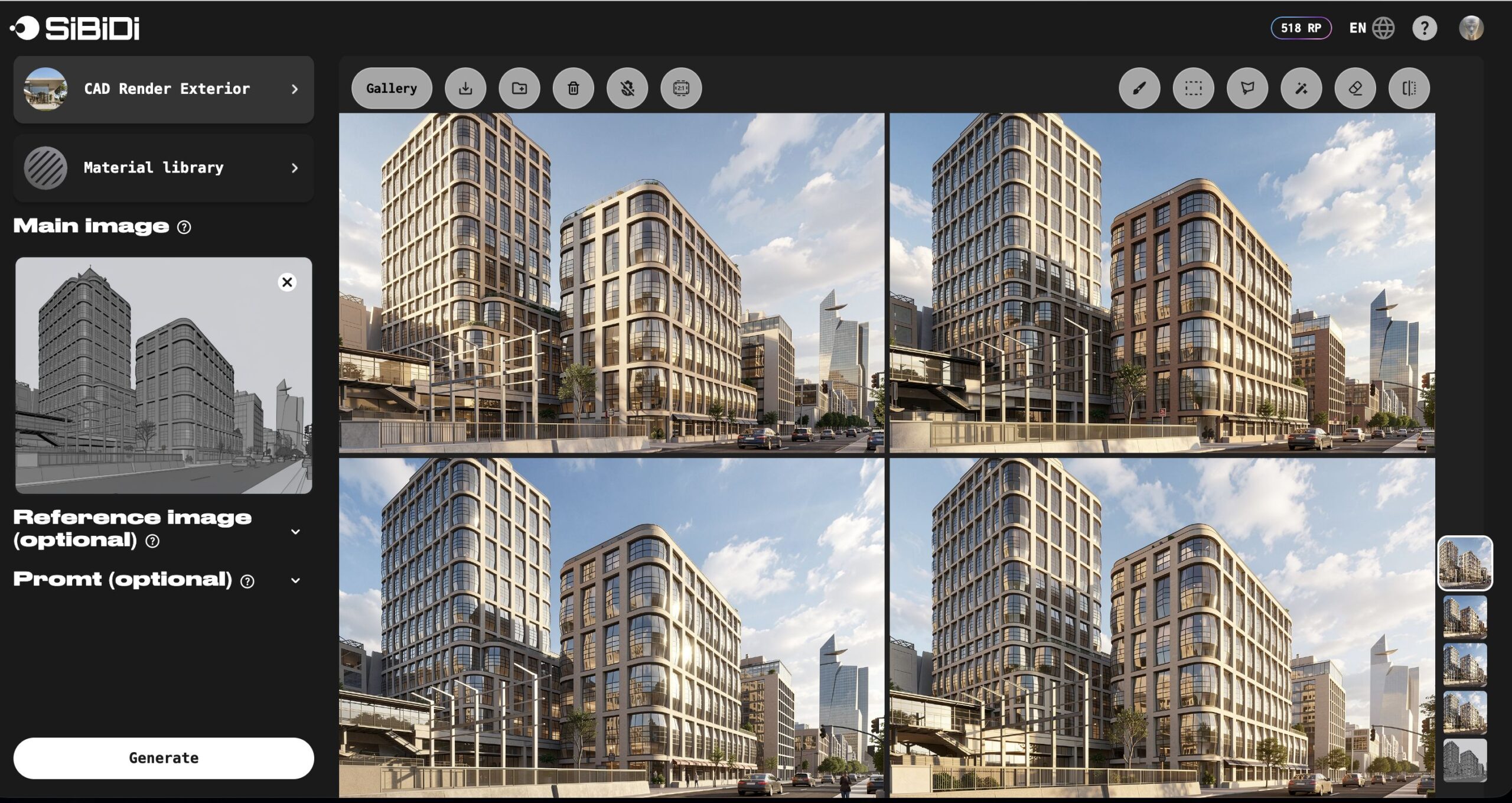
Many people are curious about what is SiBiDi AI and whether it’s related to the Skibidi internet meme. The names sound similar, but the SiBiDi AI rendering platform has nothing to do with entertainment content. It’s a professional tool for design and architecture.
In real-world projects, designers and architects often face a common challenge. They need a tool that delivers fast results without sacrificing accuracy. Many solutions are either too complex or, conversely, so simplified that quality suffers.
This is where interest in SiBiDi arises as a modern approach to AI rendering software. AI architectural visualization is essential where project accuracy matters.
And considering that designers and architects work under the pressure of time and deadlines, especially when clients expect quick results without compromising quality, the demand for an AI-powered rendering platform with process control is growing. It then becomes clear why tools like SiBiDi are gaining attention in the professional community.
What Makes SiBiDi Different
To understand what SiBiDi AI is, it’s worth looking not at the description, but at how it performs in real-world use. First and foremost, what catches the eye is that this tool has no complex settings. The main idea is simple: you don’t just get an image, you control the result and see how it changes as you work.
In daily tasks, this makes a significant difference. Especially when you’re working on projects where every detail matters, and there’s no time for trial-and-error. Before looking at the features, it’s important to understand the basic logic behind how it works:
-
precise preservation of the architectural structure;
-
consistent results without random changes in the scene;
-
full control over materials and settings;
-
quick updates to visualizations without unnecessary iterations.
In real-world projects, whether it’s a building or an interior, even a small error can alter the perception of the entire concept. That’s why it’s important not just to “get a render,” but to achieve a controlled result.
Preserves architectural accuracy
In SiBiDi, the key focus is on architectural accuracy. This means that geometry and proportions remain precise. When working with CAD models, this is particularly noticeable. There are no distortions or accidental changes in shape. You can be confident that the result matches the original design, which eliminates many unnecessary checks during the process.
Full control over materials and finishes
It’s worth noting the work with surfaces. There is full material control here, which gives you more freedom when working with details. In design, materials are just as influential as the form of the space itself.
-
You can precisely customize textures.
-
It’s easy to test different finish options.
-
The logic of the entire scene is preserved.
-
There’s no need to rebuild the model.
After this, it becomes clear why this approach is particularly valuable for those working as AI for interior designers. Here, it’s important to quickly test different styles without losing control of the project.
Real-time editing and real-time control
Another feature that often solves many workflow challenges is real-time control. Changes are displayed immediately, without a long wait for a re-render. In the actual process, you change a parameter and immediately see the result. This reduces the number of “blind” steps and helps you speed up decisions when working with a client or team.
Ideal for AI architectural visualization
Ultimately, it becomes clear that the entire system is tailored for AI architectural visualization. What matters here is not just speed, but the balance between accuracy, control, and predictability. This approach is especially useful in daily work. Fewer chaotic changes, a more transparent process, and a stable result you can rely on during design.
Workflow Integration
SiBiDi AI rendering software doesn’t change your usual workflow. It integrates into it. For example, you can easily convert CAD models to renders without overhauling the entire process. This is important because most professionals are already working in their CAD systems and do not want to change tools.
-
the project is created in CAD;
-
it then moves to visualization without unnecessary conversions;
-
the process remains familiar;
-
render preparation time is reduced.
After this, it becomes clear why SiBiDi is often used as part of working systems for AI for architects.
No Prompt AI
Interaction with the system is a different subject that frequently attracts users’ attention. Traditional AI tools need you to write prompts, set settings, and enter instructions. However, not everyone finds this convenient, particularly in a professional setting. SiBiDi employs a prompt-free AI methodology.
Complex instructions are not necessary in this situation. The user only needs to upload resources and utilize the interface to manage the outcome. This is the idea of no prompt AI, in which visual control takes precedence over word commands. In practical terms, this means:
-
fewer technical barriers;
-
faster decision-making;
-
a process that’s easy to understand, even for new users;
-
more predictable results.
This approach makes the SiBiDi AI rendering platform accessible not only to technical specialists, but also to designers who work more with visual logic than with code or commands.