




 Weather
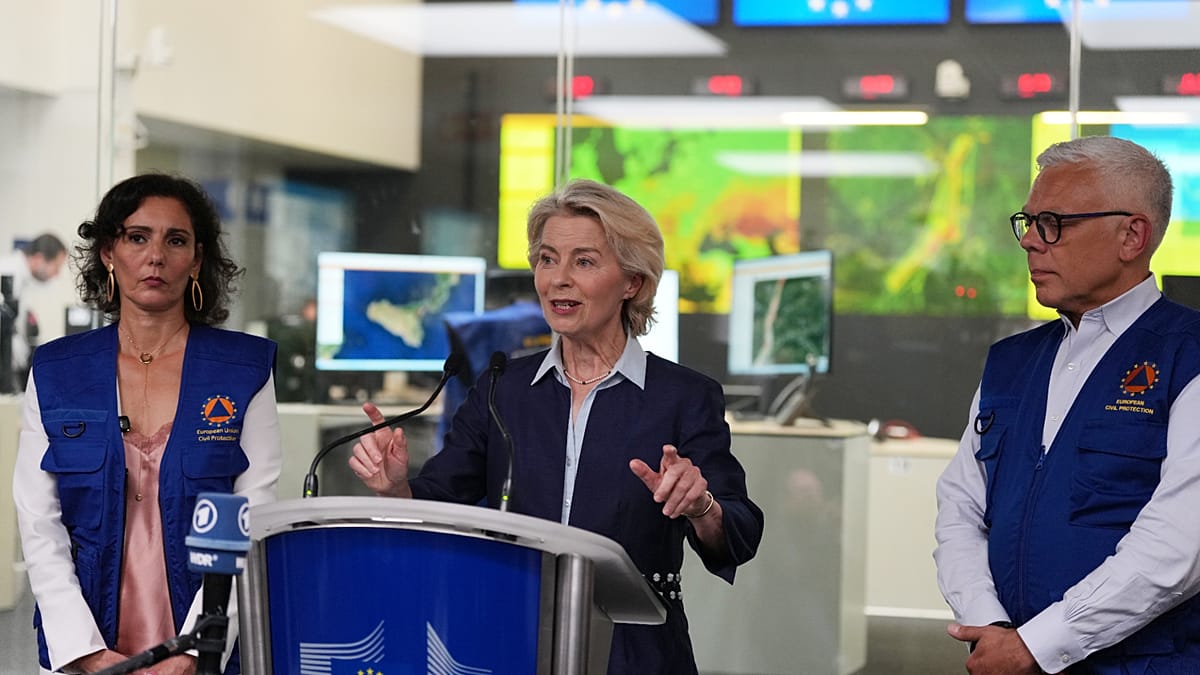
European Commission President Ursula von der Leyen warned that the European Union must adapt its civil protection systems to a world of increasingly frequent, simultaneous and severe emergencies, as an exceptionally early wildfire season placed national firefighting services under growing pressure.
ADVERTISEMENT

ADVERTISEMENT
“We must be prepared for a world where extreme events happen more often, in more places, and at the same time,” von der Leyen told reporters on Monday from the European Emergency Response Centre, a unit from the Commission’s civil protection department.
The Commission chief acknowledged that disasters are changing in nature as climate change is making extreme weather more volatile and crises can increasingly happen simultaneously and overwhelm individual countries.
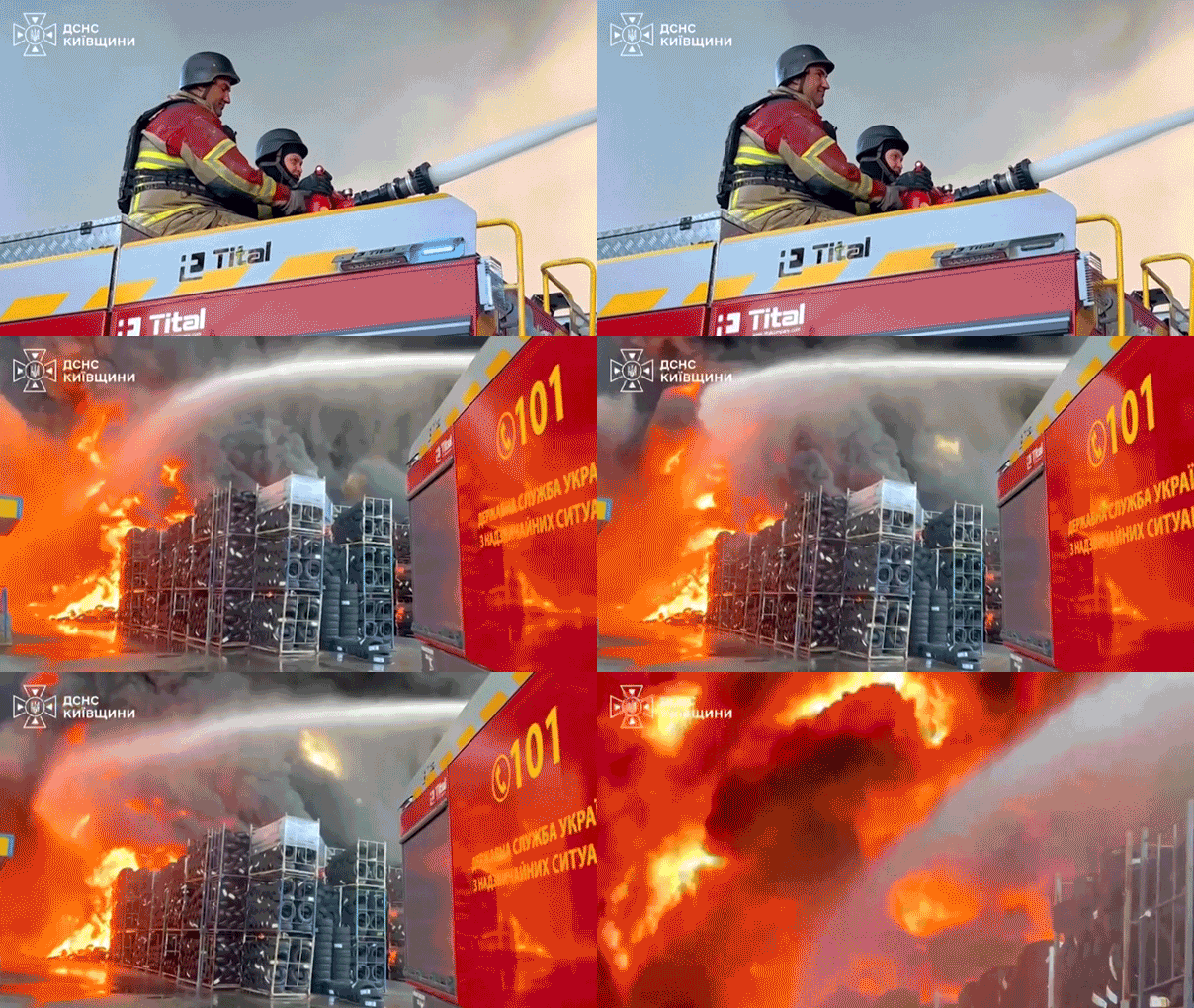
Von der Leyen highlighted the multinational scale of this summer’s wildfire response, saying the bloc’s civil protection mechanism has been activated 10 times for wildfires since April.
Nearly 800 firefighters were pre-positioned in high-risk areas, while teams from 25 countries were deployed during the summer, as four heatwaves were recorded in Europe since May.
Humanitarian Aid and Crisis Management Commissioner Hadja Lahbib, speaking side-by-side von der Leyen, said roughly 300,000 people were evacuated this summer due to the wildfires.
“We have a good strategy, but we need to step up because climate change is not knocking at the door, it’s inside the room. It’s inside Europe, unfortunately, we are the fastest warming continent,” said Lahbib.
Where is the money coming from?
More than 600,000 hectares have burned across the EU this year, according to the Commission – more than twice the long-term average over the past two decades.
Faced with increasingly frequent climate disasters, von der Leyen argued that simply mobilising resources once fires, floods or earthquakes strike is no longer enough. The EU wants lessons from each crisis to feed into better preparedness and earlier intervention.
But EU governments are under pressure to reduce spending, with tension mounting as talks resume to decide on the EU’s proposed long-term budget for 2027–2034, with Germany, Austria, Denmark, Finland, the Netherlands and Sweden seeking to cut it.
In a recent interview with Euronews, Climate Action Commissioner Wopke Hoekstra acknowledged the tight fiscal situation but maintained that upfront investment is cheaper than repeatedly paying for climate damage.
“All evidence shows that making the upfront investments is way cheaper than just being hit by fire, being hit by floods and then paying for the damage. That’s just way more costly,” Hoekstra said.
Preparedness against hybrid threats?
At the same time, the EU’s approach to civil protection is increasingly shifting from preparing for isolated disasters to planning for multiple crises unfolding simultaneously.
Floods, wildfires, and other extreme-weather events now sit alongside cyberattacks, sabotage of critical infrastructure such as energy infrastructure and hospitals, and other “hybrid” threats that can disrupt everyday life without looking like a conventional military attack.
Recently, the European Commissioners from Eastern Flank countries have urged von der Leyen to take urgent action over growing Russian threats to the Baltic states, including by creating a new high-level coordinator for the region.
In March 2025, Lahbib warned of the need for stronger coordination, emergency reserves and a more resilient population, including guidance for households to cope on their own for at least 72 hours.
Read the full article here