





 Weather

President Donald Trump’s escalating trade war with Canada is raising fresh concerns in battleground states ahead of the November midterms.
The U.S. and Canada have imposed tariffs on billions of dollars’ worth of goods, while Washington has also banned nearly $1 billion in Canadian imports, including alcohol, dairy products and motorcycles.
The latest measures took effect Sept. 29 as negotiations remain unresolved.
Trump says the tariffs will bring manufacturing back to the United States and protect American industries. But businesses could cut production, consumers could face higher prices and manufacturers could delay investments.
A FRESH MIDTERM HEADACHE FOR THE GOP JUST HIT A NATIONAL RECORD
“The cost of living, cost of goods, cost of doing business is such an important factor for Americans who are going to be casting a ballot,” David Clement, policy director of the Consumer Choice Center, told Fox News Digital.
Clement identified Ohio, Illinois, Michigan, Pennsylvania and Wisconsin as among the states most exposed to Canadian retaliation because of their manufacturing, agricultural and cross-border supply chains.
“American manufacturers or American businesses who rely on Canadian inputs are going to start to feel the pain right in the lead up to going to the ballot box,” he said.
The trade fight has escalated since Canada’s retaliatory tariffs took effect in September. At a recent G20 trade ministers meeting, U.S. Trade Representative Jamieson Greer acknowledged that key issues remain unresolved.
Ohio
Ohio is among the states most vulnerable to Canadian retaliation, with roughly $2.3 billion in exports exposed, according to Clement.
The state’s machinery, transportation, minerals and metals industries depend heavily on Canadian buyers and cross-border supply chains. Tariffs could make Ohio goods more expensive and reduce demand for products made by the state’s manufacturers.
Michigan
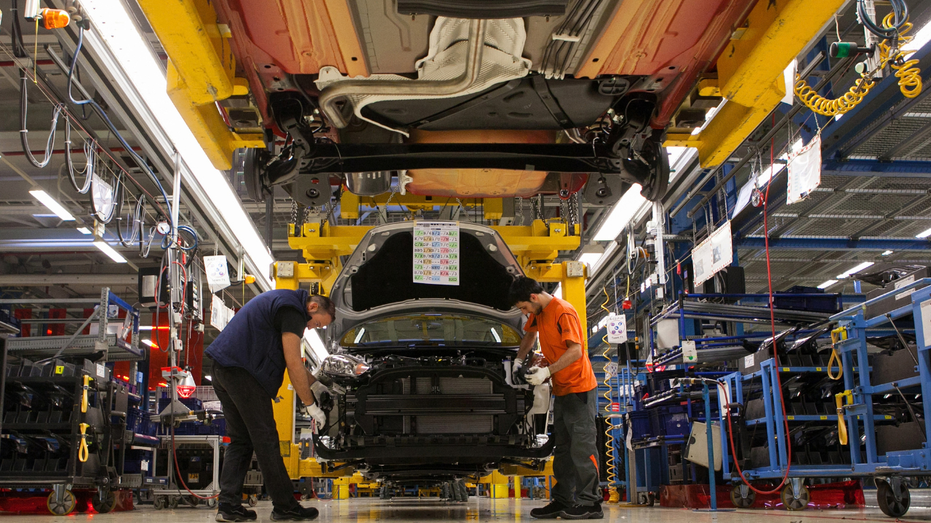
Michigan may face the clearest risk because of its deeply integrated auto industry and close ties to neighboring Ontario.
Auto parts can cross the U.S.-Canada border multiple times before a vehicle is completed, meaning tariffs can increase costs at each stage of production.
A MUST-WIN MIDTERM STATE IS THE REAL LOSER OF TRUMP’S CANADA TRADE WAR
“Most Americans don’t know that a single component on a U.S.-assembled vehicle can cross the border upwards of eight times before it’s actually completed,” Clement said.
The stakes could rise further if the administration moves ahead with a possible 50% tariff on Canadian auto exports beginning Jan. 1 if the countries fail to reach an agreement.
Pennsylvania
Pennsylvania could have just under $1.8 billion in exports exposed, including machinery and equipment, according to Clement.
The state’s manufacturers depend on Canada as a major customer, while many also rely on Canadian inputs. That creates a double burden if tariffs make materials more expensive and finished products harder to sell.
Illinois
Illinois faces exposure across manufacturing, agriculture and transportation.
Its businesses sell machinery, food products and chemicals to Canada, while companies across the Midwest rely on Canadian materials and components. Tariffs could make those exports less competitive and eventually push higher production costs onto consumers.
Wisconsin
Wisconsin’s economy is closely linked to Canada through agriculture, manufacturing and food production.
The state exports dairy products, machinery and agricultural equipment. Canadian tariffs could make those goods more expensive and give Canadian buyers an incentive to seek alternatives.
Wisconsin farmers and manufacturers are particularly vulnerable because many operate on narrow margins and depend on predictable access to Canadian customers.
CLICK HERE TO GET FOX BUSINESS ON THE GO
Even if Democrats make gains in November, Clement said a change in congressional control would not necessarily end the tariffs because presidents have broad authority over trade policy.
But as the dispute continues, its impact on prices, jobs and businesses could become a decisive issue in the states that determine control of Congress.