


 Weather
WASHINGTON (AP) — — President Donald Trump on Thursday appeared to add a condition to the newly signed agreement with Saudi Arabia for a civilian nuclear program, saying the deal would require the kingdom to normalize its relations with Israel through the Abraham Accords.
When the deal was announced Wednesday, neither the U.S. Energy Department nor the Saudi government made any mention of it being contingent on the kingdom’s relations with Israel.
Trump’s social media post a day later asserting that the agreement was subject to the Saudis joining the accords was unexpected and almost certain to make finalizing the deal complicated. The accords expanded the number of Arab and Muslim-majority nations with diplomatic ties with Israel. Getting Saudi Arabia to join would be a monumental diplomatic achievement.
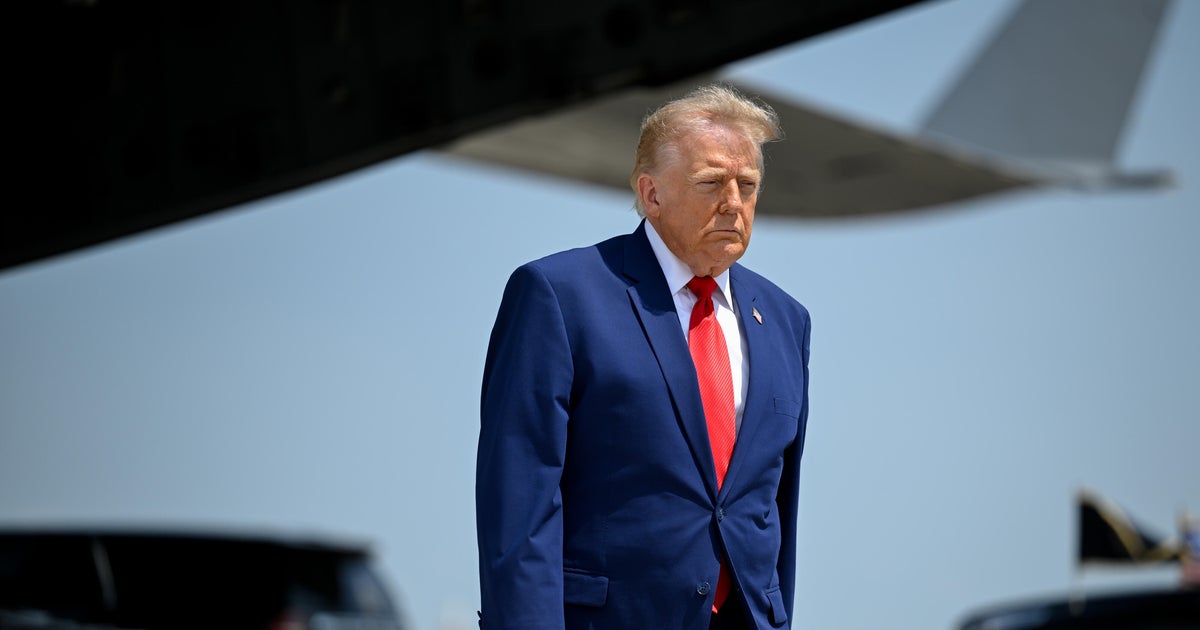
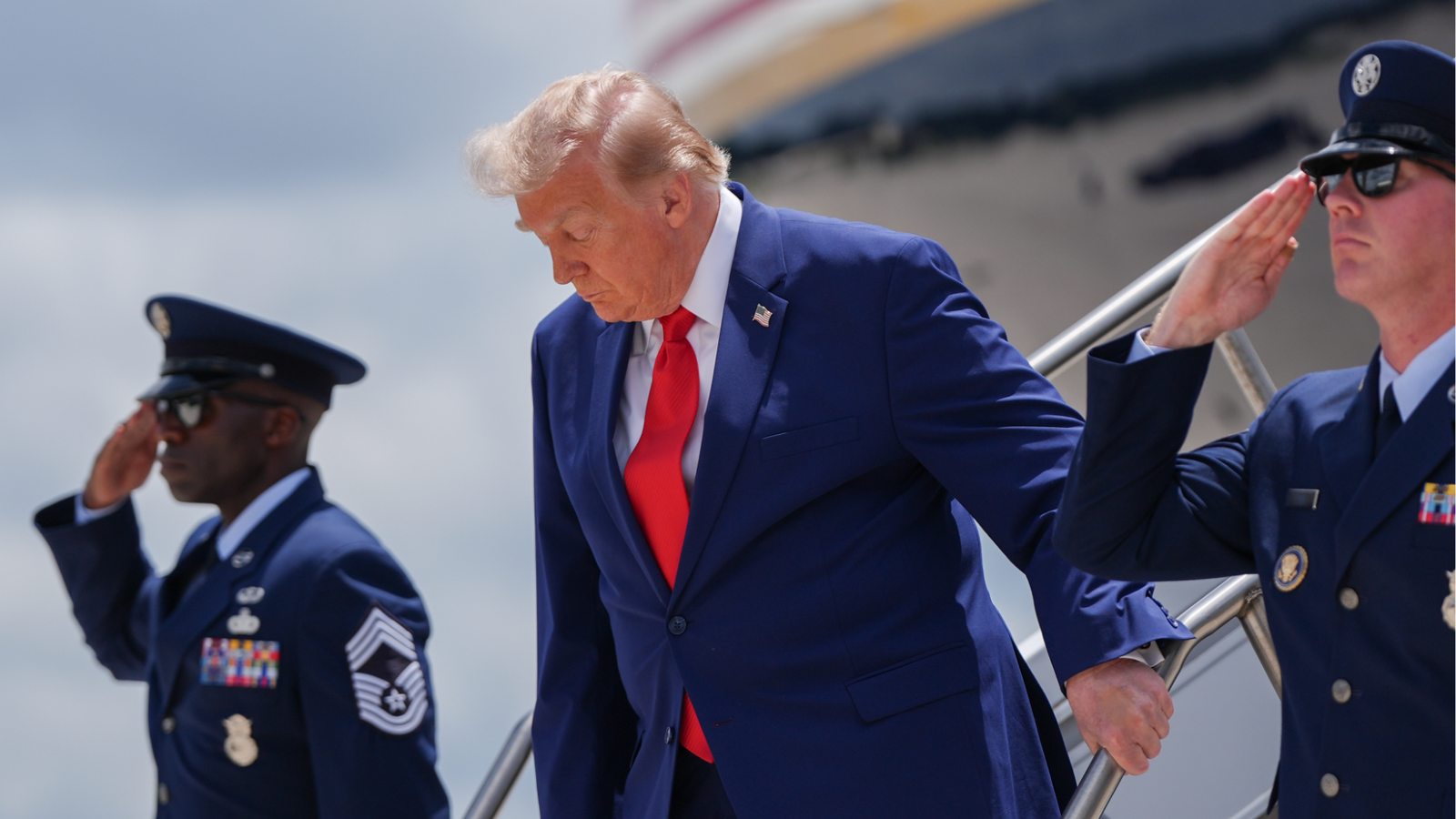
President Donald Trump arrives on Air Force One at Dobbins Air Reserve Base, Wednesday, July 22, 2026, in Marietta, Ga.
AP Photo/Julia Demaree Nikhinson
The Republican president also said the pact does not allow for enrichment of uranium. Nonproliferation experts have raised concerns that the deal fails to include guardrails to prevent enrichment of uranium to weapons-grade levels.
Trump said the agreement “will be approved, but is totally subject to Saudi Arabia joining the very respected and successful Abraham Accords.” He added that the U.S. “is not opposed to Civil (Non-Enriched) Nuclear Facilities.”
When asked by a reporter why the condition was not mentioned in the initial announcement, White House press secretary Karoline Leavitt said the president was the “final dealmaker” and has called on Saudi Arabia to join the accords “on numerous occasions.”
The Saudis have previously made clear that normalizing relations with Israel would first require the establishment of a clear path for Palestinian statehood. Israeli Prime Minister Benjamin Netanyahu has rejected the idea of Palestinian statehood as being untenable for his country’s security.
The Saudi Embassy in Washington declined to comment Thursday on Trump’s new assertions about the deal.
Netanyahu’s office in a statement applauded the prospect of Saudi Arabia joining the accords as a “historic leap forward for peace in the Middle East.” The statement made no mention of the deal to bolster Saudi’s civil nuclear program.
President has sought to build on the 2020 accords
Trump has sought to build on the 2020 accords, which also formalized commercial ties between Israel and some Arab and Muslim-majority nations. Saudi Arabia is the most important Arab power in the Middle East, and Trump believes the kingdom joining the accords is critical to establishing long-term stability in the region.
The new nuclear deal is expected to last 30 years and involve U.S. firms in the program’s development. It could allow for the building of a uranium-enrichment facility in Saudi Arabia following a joint U.S.-Saudi study, according to a person familiar with the matter who was not authorized to comment publicly and spoke on the condition of anonymity.
The agreement is to be submitted to Congress for review, according to the U.S. and Saudi governments.
The agreement does not include the International Atomic Energy Agency’s “additional protocol,” which would allow for more monitoring, inspections and verification, according to a second person familiar with the agreement.
The oil-rich kingdom’s Energy Ministry on Wednesday said the agreement bolsters “efforts to diversify energy sources, advance cutting-edge technologies, and expand opportunities for cooperation and investment in ways that serve the mutual interests of the two friendly countries.”
Enrichment is not an automatic path to a nuclear weapon — a nation also must master other steps, including the use of synchronized high explosives, for instance. But it does open the door to weaponization, which has fueled concerns over Iran’s program.
Administration says deal is good for US firms
Secretary of State Marco Rubio told reporters Thursday in the Philippine capital of Manila that the agreement would make certain that Saudi Arabia works with American companies instead of “competitors” to build its civil nuclear program. China, South Korea, France and Russia are among alternative partners that Riyadh could look to.
“We’re not the only show in town, but we’re the best show in town,” Rubio said. “We want to make sure that it’s our companies they’re picking.”
Trump has talked up his push to extend the accords, but the aftermath of Israel’s war in Gaza and the nearly 5-month-old U.S. and Israel war against Iran have complicated his efforts.
The agreements have proven unpopular among the public in certain signatory countries such as Morocco and Bahrain, sparking widespread protests.
Still, the Trump administration remains optimistic that an agreement with Saudi Arabia on joining the accords can be sealed by the end of Trump’s second term.
Deal faces early scrutiny from Congress, Israel and nuclear experts
The White House and Saudi Arabia have not made public the text of the nuclear cooperation agreement, known as a “123 agreement,” alongside what the Trump administration described as a “bilateral safeguards agreement” that was signed Wednesday by U.S. Energy Secretary Chris Wright and Saudi Minister of Energy Abdulaziz bin Salman.
But it already faces scrutiny from Congress, some Israeli officials and nuclear experts.
As details of the deal emerged Wednesday, opposition on Capitol Hill and elsewhere began to snowball, with Republicans and Democrats both questioning the wisdom of the agreement. In addition, conservative commentators who have generally supported Trump’s polices asked why the president would give Saudi Arabia such a deal without getting anything in return.
Then on Thursday, Trump abruptly announced that the deal is entirely contingent on the Saudis joining the accords.
The United Arab Emirates, a neighbor to Saudi Arabia, signed a 123 agreement with the U.S. to build its Barakah nuclear power plant with South Korean assistance. But the UAE did so without seeking enrichment, something nonproliferation experts have held up as the “gold standard” for nations wanting atomic power.
Rubio, as a Republican senator representing Florida, backed a bipartisan 2018 proposal that called for requiring Congress to approve any 123 agreement with Saudi Arabia. The bill was reintroduced by a group of Democratic lawmakers in March but has not passed into law.
___
Price reported from Manila, Philippines. Associated Press writers Sam Metz in Jerusalem and Matthew Daly, Seung Min Kim and Matthew Lee in Washington contributed to this report.
© 2026 by The Associated Press. All Rights Reserved.