




 Weather

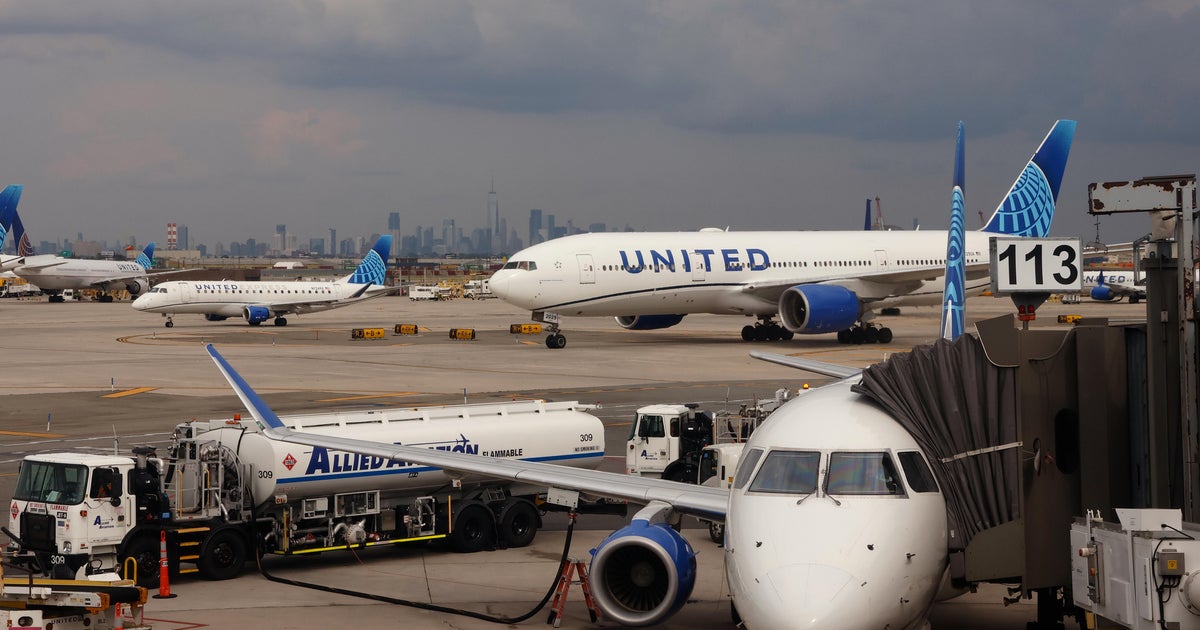
Airspace across the United States slowly began returning to normal on Saturday after a rare national ground stop canceled thousands of flights and stranded travelers.
Transportation Secretary Sean Duffy said in a news conference Saturday, “We are back at full operations.”
He thanked the pilots, airline staff, air traffic controllers and the FAA for their professionalism during the ground stop.
“They safely landed all of our aircraft,” he said, also thanking the passengers for their patience during the significant disruption.
“Planes are pushing back, taxiing, and taking off, and it is safe to fly,” Duffy said earlier in a social media post on Saturday.
“You will continue to see some delays and cancellations as carriers reschedule flights and reposition aircraft/crews where they are needed most.”
More than 4,100 flights were canceled Saturday, according to flight tracking website FlightAware, while around 3,200 others were delayed.
How did the FAA ground stop happen?
The ground stop began at 3:36 p.m. EST Friday when the FAA ordered the stoppage while approximately 3,500 flights were in the air.
“The FAA issued a ground stop out of an abundance of caution while 3,500+ planes were in the air,” Duffy said. All airborne planes were able to land safely.
It was lifted around 8:20 p.m. EST Friday.
This marked the first nationwide ground stop since January 2023, when a key FAA computer system malfunctioned. Before that, the last national ground stop occurred after the Sept. 11, 2001 attacks.
Around 9,159 flights were canceled on Friday and 7,190 were delayed, according to FlightAware, stranding passengers at major airports across the country.
Officials attributed the ground stop to aging system infrastructure and legacy technology.
“What we have is an incredibly old air traffic control system,” Duffy said.
Duffy said Saturday that a preliminary investigation found that an L3Harris contractor was working in a remote FAA location and switching old copper wire to fiber while replacing a router. The router that was being switched then started flooding other routers, overloading the system. There were 1,000 attempts to log on every four to five seconds, he said.
The transportation secretary said the FAA is working to determine if the issue was human error or if a faulty router was installed. Duffy said that many contractors “take our money and provide really poor service.” He also said that L3Harris, a technology and defense company, owned the system.
FAA Administrator Bryan Bedford said updating the wires was a routine maintenance issue that the agency had been working on for years. After the router began flooding the system for 45 minutes, the FAA could not determine the cause of the instability. The instability then spread to 17 facilities, he said.
“Out of an abundance of caution,” the FAA decided to issue a ground stop, Bedford said. He said he stands behind that call.
Bedford said there was zero evidence of anything nefarious or anything AI-related.
A preliminary investigation by the FAA indicated that the outage was caused by a telecommunications failure. Duffy explained Friday that FAA routers became overloaded with data, leading to inconsistent information flow. Senior government sources told CBS News that the issue was isolated to specific hardware: Cisco 600 series routers manufactured between 2001 and 2006.
Duffy said in a post that the FAA is working to modernize “this aging infrastructure thanks to a $12.5 billion down payment secured by President Trump, but that isn’t ENOUGH.” The Trump administration boosted its request for air traffic control funding to $50 billion late Friday.
Homeland Security Secretary Markwayne Mullin said in a Friday briefing there were no indications the ground stop was the result of a cyberattack. Duffy said Saturday he doesn’t believe it was a cyberattack, but that it was an FAA system that didn’t “meet the moment.”
Can Americans still travel safely?
Several U.S. officials said it is completely safe for Americans to fly.
“Our top priority right now is making sure travelers get home safely to their families as quickly as possible,” Duffy said. He added on Saturday that the U.S. has the “busiest” and “safest” airspace in the world.
Delays remain possible at major airports nationwide, including those in Boston, Atlanta, Miami, Pittsburgh, New York City, Los Angeles and Baltimore.
Duffy said travelers should check with their airlines before heading to the airport. Delta said on Saturday it would offer customers flexible rebooking options. The airline said it was continuing to restore operations after a four-hour ground stop.
“Customers traveling today should expect delays and additional schedule adjustments as we work to reposition flight crews and aircraft, ” Delta said.
American Airlines said on Saturday the airline has taken a number of steps toward recovery, but travelers should continue to monitor the situation as operations return to normal.
“While we are taking every step to limit the impact on our customers and team members, the lingering effects of this major disruption to the national airspace system will continue today, including additional delays and cancellations.”