



 Weather
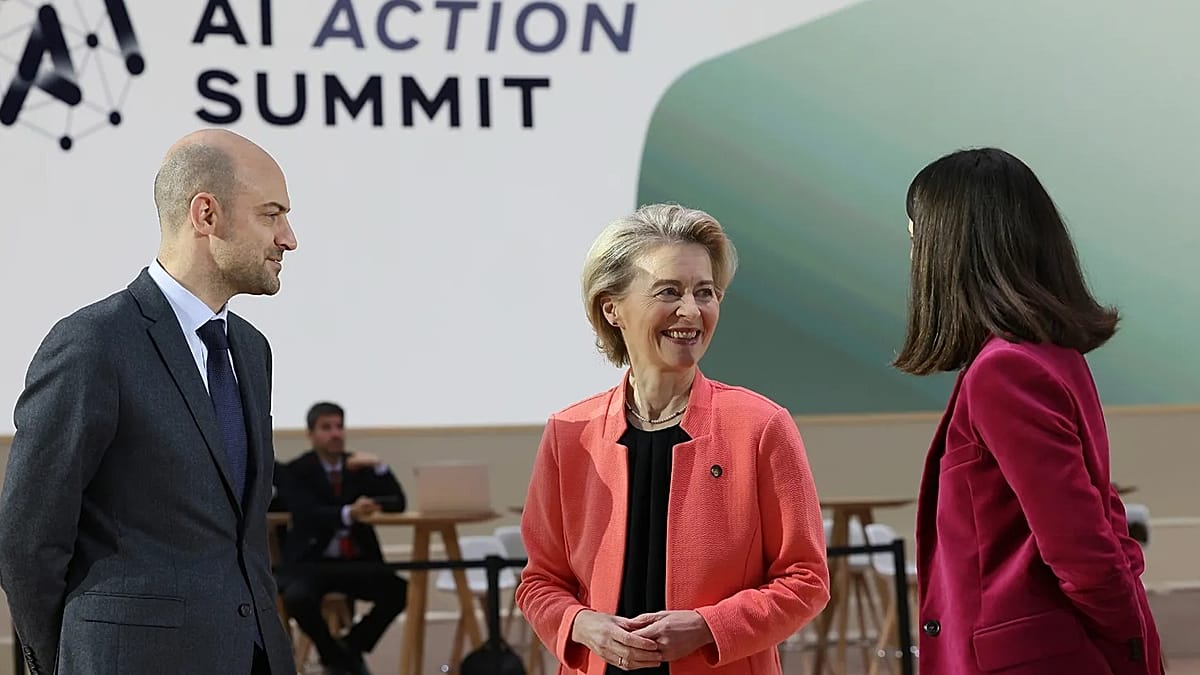
Europe produces excellent AI talent, but many of its best researchers, engineers, and founders are leaving for other countries. Most go to the US, UK, or the Gulf countries for better opportunities.
This dynamic creates a familiar European paradox. Despite strong universities, world-class research, and a highly educated workforce, Europe struggles to turn these strengths into global AI champions.
Recent data show the scale of the challenge. One mapping of global AI professionals found that Europe has about 30% more AI talent per capita than the US and nearly three times as many as China. Still, Europe experiences a substantial net outflow of senior-level AI professionals.
A 2024 report by the research organisation Interface found that European countries are “losing significant AI talent, both national and international, to the United States”. Germany sends large numbers of AI professionals abroad, mainly to the US and UK. France also loses more AI professionals than it gains. Switzerland and Germany attract some regional talent but also experience outflows to the US and UK.
Atomico’s 2025 State of European Tech data paints a similar picture: Europe continues to lose more tech talent than it gains to destinations such as the US, Canada, and Australia. Net tech talent inflows to Europe fell sharply, from around 52,000 in 2022 to just 26,000 in 2024.
Highly trained and highly mobile
The loss is especially costly given who is leaving. Europe’s AI workforce is highly educated and highly internationalised. On average, 57% of AI professionals in Europe completed their undergraduate studies outside of Europe, whereas in the US, the figure is 38%.
For instance, in Ireland, approximately 28% of AI professionals have Indian undergraduate degrees, and in the UK, the figure is about 14%. Many of these internationally mobile professionals eventually relocate again, often to the US.
Compensation is the most obvious driver of AI brain drain. Salaries and equity packages offered by US tech giants, hyperscalers and leading AI labs are difficult for European companies to match.
Across comparable roles, AI salaries in the US are typically 30% to 70% higher than in most of Europe. Mid- to senior-level AI engineers in the US often earn base salaries of $140,000 to $210,000, with total compensation much higher because of bonuses and stock. In Western and Northern Europe, senior AI engineers typically earn $90,000 to $150,000, while in Southern and Eastern Europe, salaries are often well below $100,000.
Equity is equally decisive. Stock options and early-employee upside remain rare and less generous across much of Europe, even among scale-ups. For senior engineers and founders demanding meaningful long-term upside, staying in Europe often appears untenable.
Computing and the scale-up gap
Beyond compensation, many AI researchers are motivated by where they perceive the frontier to be. The US concentrates a large share of the world’s top-tier AI labs, massive compute clusters and frontier-model projects. For researchers who want to work on the biggest models, the largest datasets and the most resource-intensive experiments, relocation seems inevitable.
Europe’s research landscape remains more fragmented. While the continent hosts excellent universities and public research institutes, fewer institutions combine world-class research, large-scale computing and aggressive commercialisation under one roof. Horizon Europe and national funding programs exist, but funding and access to computing often fall short of what is available in leading US labs.
For founders, the problem often appears at the next stage: growth. Deep-tech and AI startups in Europe typically face smaller and more cautious late-stage funding rounds than their US counterparts. Series B and later rounds are harder to raise, slower to close, and come with stricter conditions.
This pushes some founders to relocate, or shift their headquarters or senior teams, to the US, where growth capital is deeper, decision-making is faster, and the ecosystem is seen as more tolerant of failure.
Rules, risk and fragmentation
On top of financial and operational challenges, Europe’s regulatory approach to AI adds a layer of complexity. The EU has positioned itself as a global leader in “trustworthy” and rights-based AI, culminating in the AI Act. For some companies, this is a competitive advantage. For others, it is a source of uncertainty.
Entrepreneurs repeatedly identify compliance costs, uncertain implementation timelines, and sluggish public procurement as major barriers to innovation. Fragmentation between member states in tax, labour law, and support schemes makes scaling a single AI business across the EU far more complex than scaling within the US’s unified market.
Mobility and magnets within Europe
Talent moves within Europe, too. For example, in 2023, Switzerland and several smaller countries attracted roughly 18% of intra-European AI professional relocations, mainly from France, Germany, and Italy, because of high salaries, prominent universities, and geographic proximity. Historically, the Netherlands and the UK accounted for about 23% of such moves, suggesting a trend of ‘brain exchange’ marked by both significant inflows and high overall mobility.
Even these hubs consistently lose experienced professionals to the US, even as they attract a significant influx of AI specialists. Germany is a clear example: it faces a persistent outflow of senior talent to the US, the UK, and Switzerland.
Trying to turn the tide
EU institutions are increasingly aware of the problem. Member states have agreed on a Council Recommendation to create a European framework for attracting and retaining research, innovation, and entrepreneurial talent, in line with the European Research Area’s goal of “balanced talent circulation”.
The European Commission has also rolled out a set of targeted initiatives, including a Talent Pool for non-EU workers, legal gateway offices, Talent Partnerships and the Marie Skłodowska-Curie Actions “Choose Europe” program, which aims to co-fund the recruitment of top international AI researchers and link grants to long-term career prospects.
Read the full article here