





 Weather
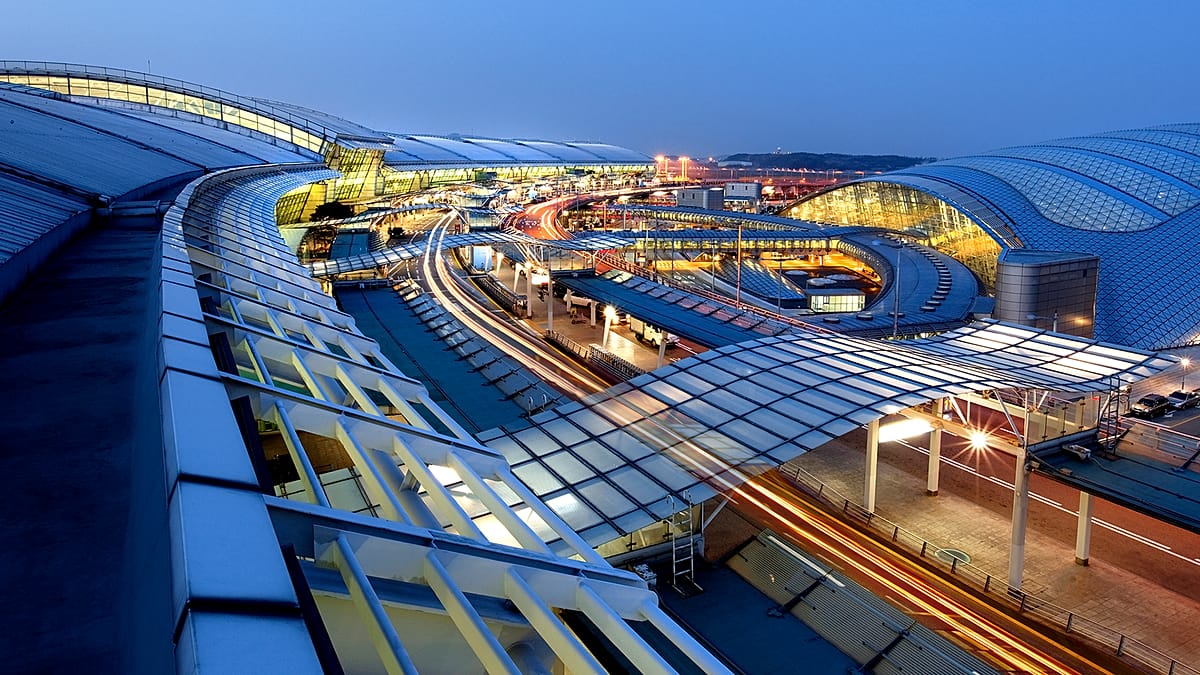
South Korea’s Incheon airport has become the busiest in the world for international passenger traffic for the first time, according to new data.
ADVERTISEMENT

ADVERTISEMENT
Located about 48 kilometres from the capital Seoul, it acts as the main gateway to the country.
The airport handled 38.39 million international passengers in the first six months of 2026, according to preliminary data from the Airports Council International (ACI).
London Heathrow Airport in the UK ranked second with 37.79 million passengers, followed by Singapore’s Changi Airport with 34.53 million.
South Korean airport sees traffic rise from Middle East conflict
The surge in passengers at Incheon airport has been attributed in part to the disruption to travel in the Middle East caused by the US-Iran war.
The conflict has redirected traffic away from key hubs like Dubai, instead increasing passenger numbers on routes through East Asia, Incheon International Airport Corporation (IIAC) was quoted as saying by the Yonhap news agency.
The number of transfer passengers at Incheon in the first half of this year rose 18.1% to 4.24 million compared to the same period last year, the airport added. The number of transfer passengers with final destinations in Europe surged 63.2% year on year to 210,000.
Incheon, which opened in 2001, serves 101 airlines flying to 183 cities, including 158 international destinations.
An expansion project, completed in 2024, increased the airport’s annual capacity to 106 million passengers.
This is the first time Incheon has topped global rankings for international traffic. The airport came 10th in the world in 2002, climbing to fifth in 2018 and third in 2024 and 2025.
Dubai International Airport, which ranked second both in 2024 and 2025 based on full-year statistics, is forecast to fall outside the top five this year.
Earlier this week, ACI figures confirmed that London Heathrow Airport has been overtaken by Istanbul Airport as the busiest in Europe by total passenger numbers.
The UK capital’s hub saw 7.9 million passengers pass through its terminals in July, while Istanbul’s handled 8.15 million.
Read the full article here