





 Weather
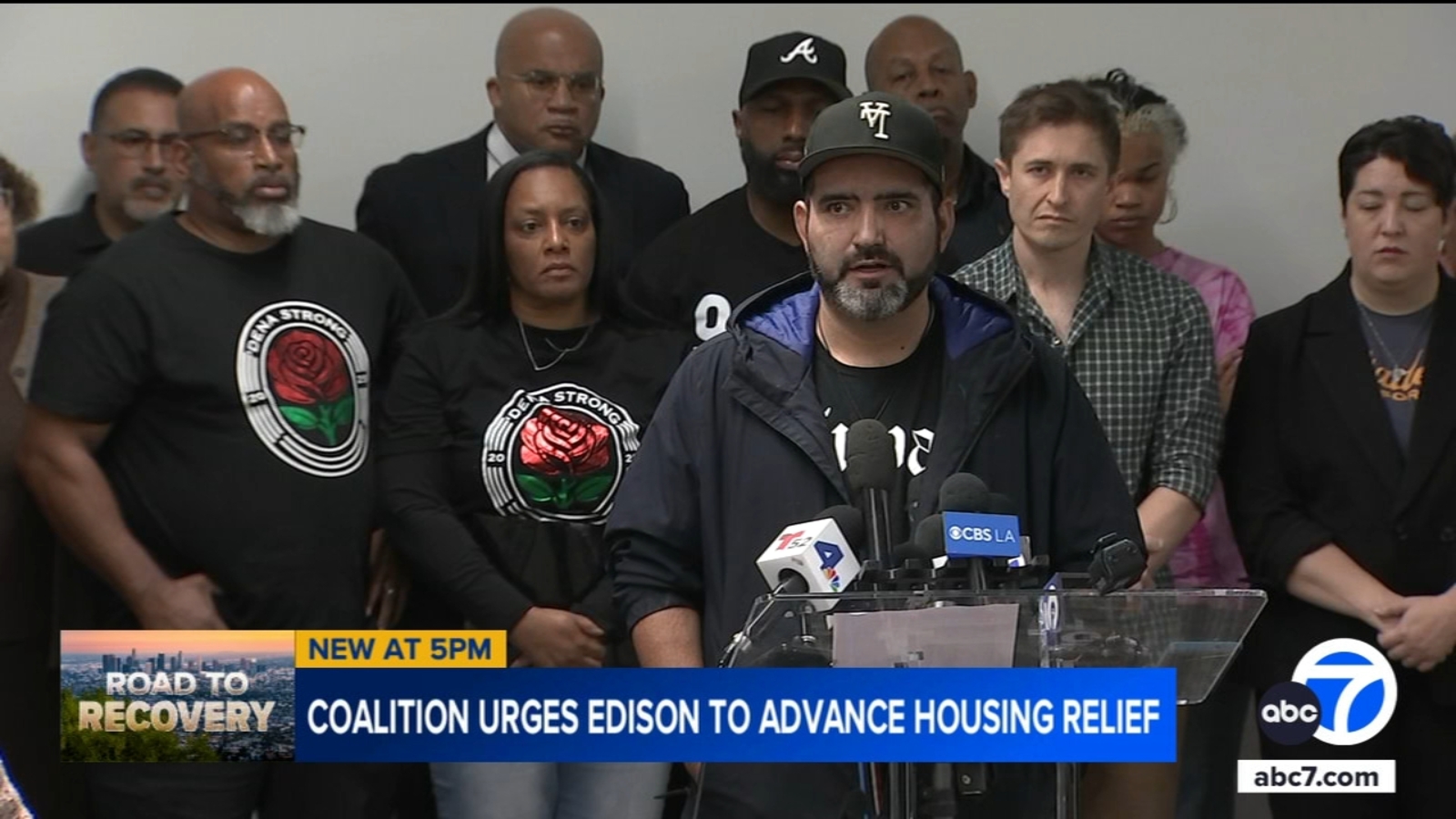
Gabriel Gonzalez, a Southern California native and Eaton Fire survivor had not publicly shared what life has been like for him over the last year, until today.
“I spent probably eight months out of the year in my car, having difficulty finding showers, finding anything,” said Gonzalez.
Nearly one year since the Eaton Fire, roughly 80% of families remain displaced. Tuesday, a coalition of survivors, non-profits, and community leaders called on Southern California Edison to further help in housing relief.
Gonzalez, a small business owner, said he had just signed a lease in Altadena the month before the fire, losing $80,000 in plumbing tools when the Eaton Fire ripped through the home he moved into. “It’s been quite a struggle to get back on my feet,” he said.
Gonzalez stepped out of the shadows where many survivors stand today, joining a coalition of organizations calling on Edison to pay up to $200,000 per displaced household in housing relief, stressing the utility can later be reimbursed through the California Wildfire fund, which ratepayers contribute to.
“Edison’s fire did not just destroy or contaminate thousands of homes. It also destroyed affordability overnight. Rents doubled and tripled across the region,” said Joy Chen, executive director of the Eaton Fire Survivors Network. The group outlined its demands in a proposal.
“This press conference is not about sympathy. It’s about responsibility. It is about accountability,” said survivor Damon Blount.
Pedro Pizarro, CEO of Edison International spoke with Eyewitness News, pointing out the California Wildfire Fund requires final payments or settlements before it distributes funds to a utility.
“What we’re doing is instead setting up our claims program, having that fast-pay option to move as quickly as possible, to not just provide temporary compensation, but provide the entire package. So individuals can move on with their lives more quickly,” said Pizarro.
The coalition said Edison’s program requires signing a legal waver. They called on the utility to issue housing relief without strings attached and said it should not replace or duplicate long-term compensation, arguing other utilities have taken similar actions.
“We’re simply asking Edison to advance the money now and be reimbursed later,” said Chen. For his part, Gonzalez is weighing his options, considering moving out of state.
“There’s nothing here to help us and it’s really frustrating,” he said.
© 2025 Television,