



 Weather

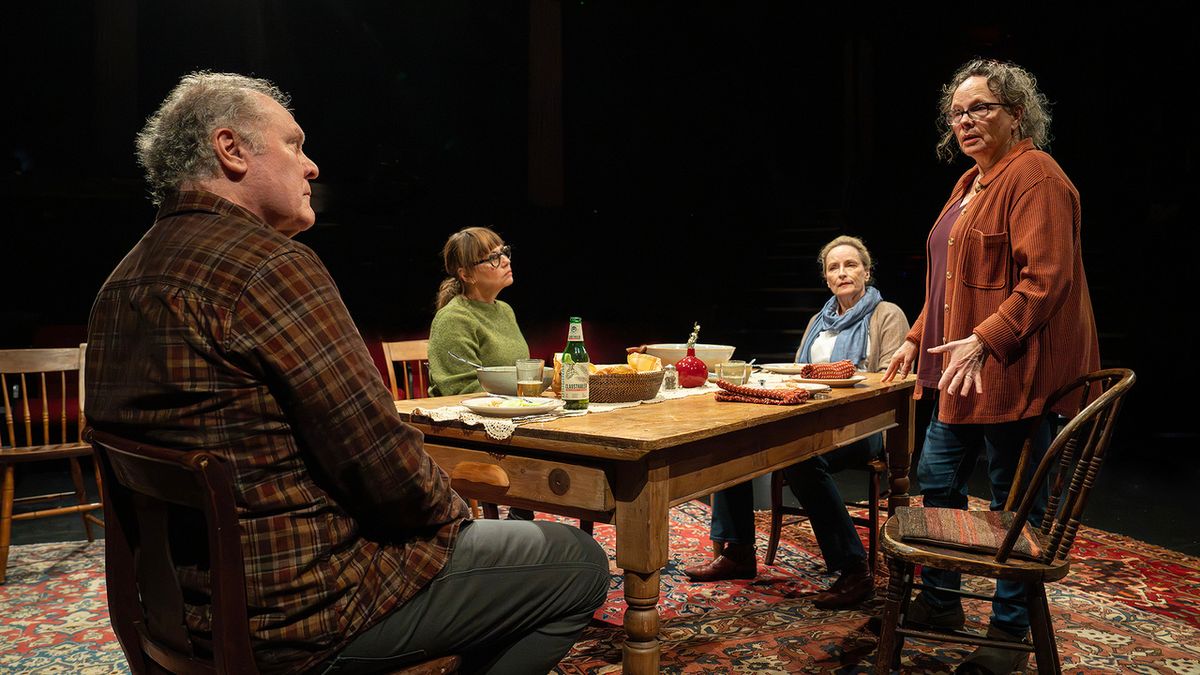
The Public Theater’s production of We’ll See, written and directed by Richard Nelson, officially opened on Tuesday, November 3, 2026, coinciding with the midterm elections, the day on which the play is set. Find out what the critics are saying!
The production reunites members of Nelson’s Apple Family ensemble, with Sally Murphy returning as Jane, Maryann Plunkett as Barbara, Laila Robins as Marian, and Jay O. Sanders as Richard. Yvonne Woods joins the cast as Yvonne, Richard’s partner.
We’ll See marks another installment in Nelson’s series of plays centered on the Apple family, bringing the characters together against the backdrop of a significant moment in American political life.
The creative team includes scenic designer Jason Ardizzone-West, costume designer Susan Hilferty, lighting designer Jennifer Tipton, and sound designer and composer Scott Lehrer.
Nicole Caroselli serves as production stage manager, with Molly Foy as stage manager.
Sara Holdren, Vulture : It’s a crushing, deeply believable story, and Plunkett’s telling of it is one of the best stretches in the show. Suddenly, the smothering sense of a playwright who wants to talk about certain things diminishes. (Oh, how the Apples love quoting to one another — Whitman, Sally Rooney, Oliver Sacks, George Eliot. I, too, adore the last lines of Middlemarch, but you really have to earn a big gun like that.) Instead, a character speaks from deep within herself. Despite a surface that might suggest otherwise, it happens too seldom in We’ll See. Don’t get me wrong: Today, I’m thrilled for the Apples and for all of us, but Nelson’s title still applies. Liberals, whether playwrights, characters, or politicians, need more than occasional wins and good intentions.
 Melissa Rose Bernardo, New York Stage Review: Even after a dozen plays about three Rhinebeck families — the Apples, the Gabriels, and the Michaels — Nelson has more tales to tell: The beautifully naturalistic We’ll See: Conversations Among the Apple Family on the Night of the Midterm Elections, just opened at the Public’s Barbaralee Theater, brings the Apples around the dinner table once again; happily, our affection for them, and the incomparable cast, has not waned.
Frank Scheck, New York Stage Review: Since then, the family created by Richard Nelson and brought to life by a consummately talented cast have been through good times and bad, happy election results and not. So it was a pleasure to make their reacquaintance on the evening of November 3, when it was clear that both they and I were severely on edge.created by Richard Nelson and brought to life by a consummately talented cast have been through good times and bad, happy election results and not. So it was a pleasure to make their reacquaintance on the evening of November 3, when it was clear that both they and I were severely on edge.
Jonathan Mandell, New York Theater: This has been Nelson’s approach ever since the first of his Apple Family plays, “That Hopey Changey Thing,” which was set during another midterm election, on November 2, 2010. In the sixteen years since, there have been some dozen more plays about a family in Rhinebeck — not always the Apples, sometimes the Gabriels or the Michaels. But, remarkably, all of them have been performed by the same extraordinary core cast. The performers are the secret sauce of the series. It would be difficult to overstate how lovely it is to become reacquainted with this ensemble.
 Amelia Merrill, New York Theatre Guide: Despite the threats to democracy the siblings sigh over, there is no sense of urgency in We’ll See. They share feel-good stories to cheer each other up, which becomes a neat contest of who’s a better person and neighbor. It’s all fine and dandy and maybe relatable (many of us chase the dopamine hit of random acts of kindness, both given and received), but it does not make for compelling drama.
Thom Geier, Culture Sauce: Nelson’s recent plays seem to mirror the concerns of the lefty regulars who attend the Public Theater, of good people trying to make sense of a country that often seems to have abandoned its virtuous ideals for coarser, crueler discourse. We can identify with the concerns of Richard’s grown daughter, whom he says spends her days “trying to resist the total collapse of hope.” How far we’ve come from Obama’s envisioned a national ethos built on the audacity of that feeling. What Nelson’s little bubble of a play proves is that the mere act of coming together, in a theater or over a dining room table, may be the best defense against despair.
David Gordon, TheaterMania: It’s obviously Nelson relishes in writing for Plunkett, and as always, she knocks it out of the park in the way she manages to convey so much through so few words. But I was especially taken by Murphy, whose Jane has found herself left behind in a world that is rapidly moving forward. It helps that costumer Susan Hilferty has given her an excellent green sweater that makes her stand out amid the sea of brown that is Jason Ardizzone-West’s classic set and Jennifer Tipton’s lighting.
Average Rating: 78.6%