






 Weather
PASADENA, Calif. () — A Pasadena firefighter who battled the Eaton Fire says a 12week detox program lowered several toxin levels in his blood, offering a measure of hope amid ongoing concerns about the health risks of wildfire smoke.
Fighting fires has always been dangerous, but research since the wildfires last year shows the toxins in the smoke changed proteins in firefighters’ blood and elevated their lead levels.
Even as he was racing to the Eaton Fire frontline, Capt. David Marquez knew it would be the firefight of his career.
“We knew this was something different. Pretty quickly,” Marquez said.
As people’s homes filled with loving memories vaporized into smoke filled with toxins, Marquez quickly felt the effects of breathing it all in.
“One of the big moments for me was around five in the morning or six in the morning, when we were trying to pick up our hose to go elsewhere, watching my entire crew vomit,” he said.
“In the days that followed, how did you just physically feel?” 7 On Your Side Investigates reporter Kevin Ozebek asked.
SEE ALSO: SoCal Firestorms: One Year Later
It’s been one year since one of the most destructive and deadly wildfires devastated Southern California. Now, a year later, where do we stand? And what’s being done as many try to rebuild their lives?
“It was a lot of fatigue, brain fog, coughing,” Marquez said.
For the past 12 weeks, Marquez has taken a host of supplements as part of a firefighter detox program.
“This is called ‘Detoxification Factors,'” he said, pulling out one of the bottles. The program includes regular blood tests, and the first showed he had extraordinarily high levels of four toxins.
“When I got my first results at the start of this process, it was extremely hard to read. You start thinking about, ‘Am I going to be here in 10 years?'” Marquez said.
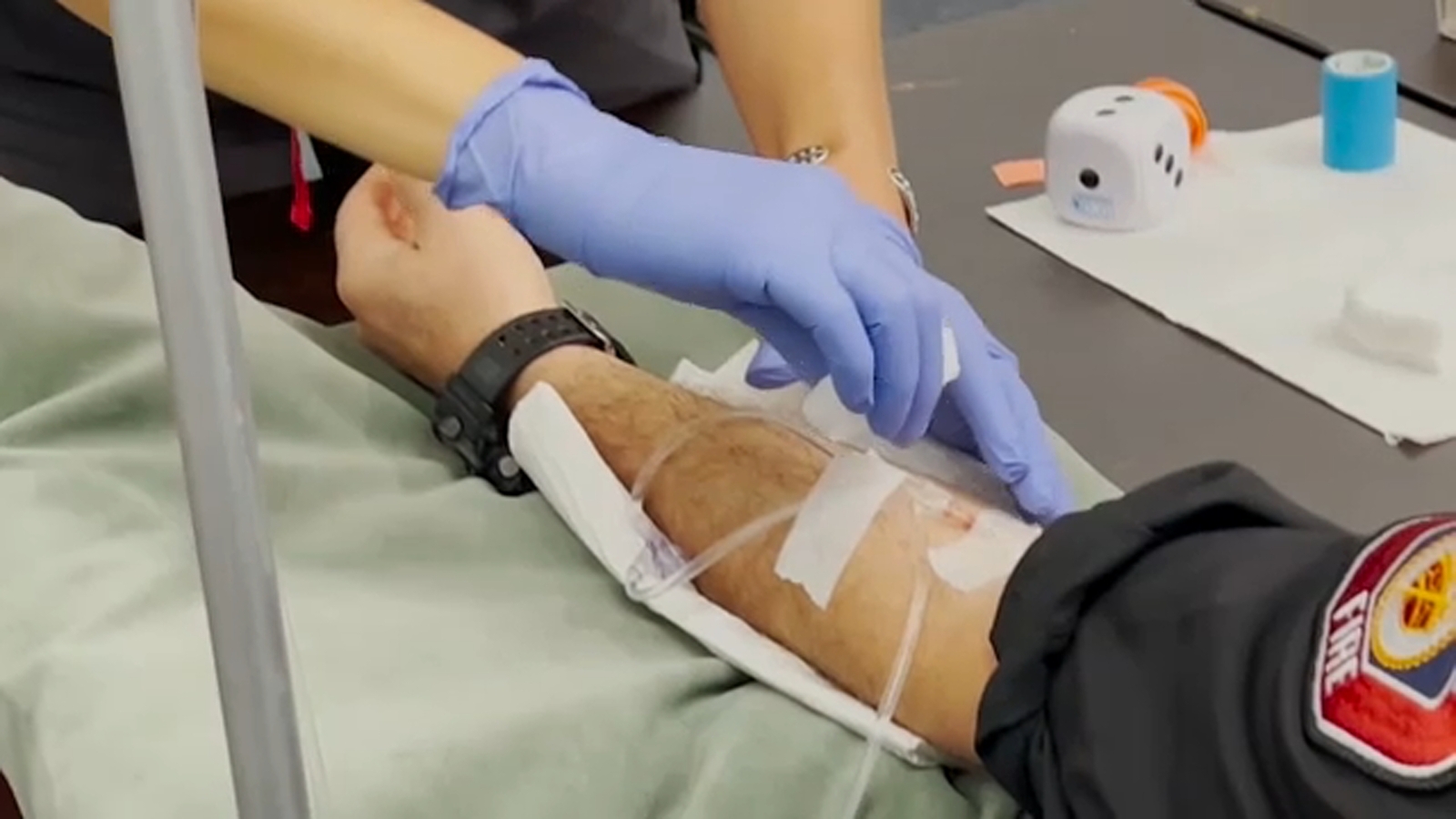
The program also includes regular IVs containing glutathione — a naturally occurring antioxidant described as transforming toxins so the body can expel them through sweat and urine.
By his final treatment, three of those toxins were significantly down, according to results reviewed during the program. The industrial chemical BPA in his blood went from a reading of 7 micrograms per gram to 4, and AFB1 — a highly toxic fungus — went from 12 nanograms per gram to 4.
The regimen of IVs and supplements was developed by Dr. Jen Riegle of the Integrative Healers Action Network.
“Do you think this glutathione is the key to eliminating that shortened lifespan in all firefighters?” Ozebek asked.
“I think it’s a key,” Riegle said.
“It’s hope for me. And it’s hope for every firefighter out there who has a family, who asks themselves the same question: ‘Will I be here in 10 years?'” Marquez said.
As the research continues, so does the duty of being a firefighter. Never knowing what health hazards lie straight ahead, Marquez and his colleagues still answer the call to serve.
And just to prove how frequently firefighters can be exposed to toxins and how the program may not be a cure-all, Marquez’s final test results showed a sudden increase in nickel in his blood. He hopes it becomes routine for all firefighters to do regular blood testing and detox therapy.
© 2026 Television,