


 Weather
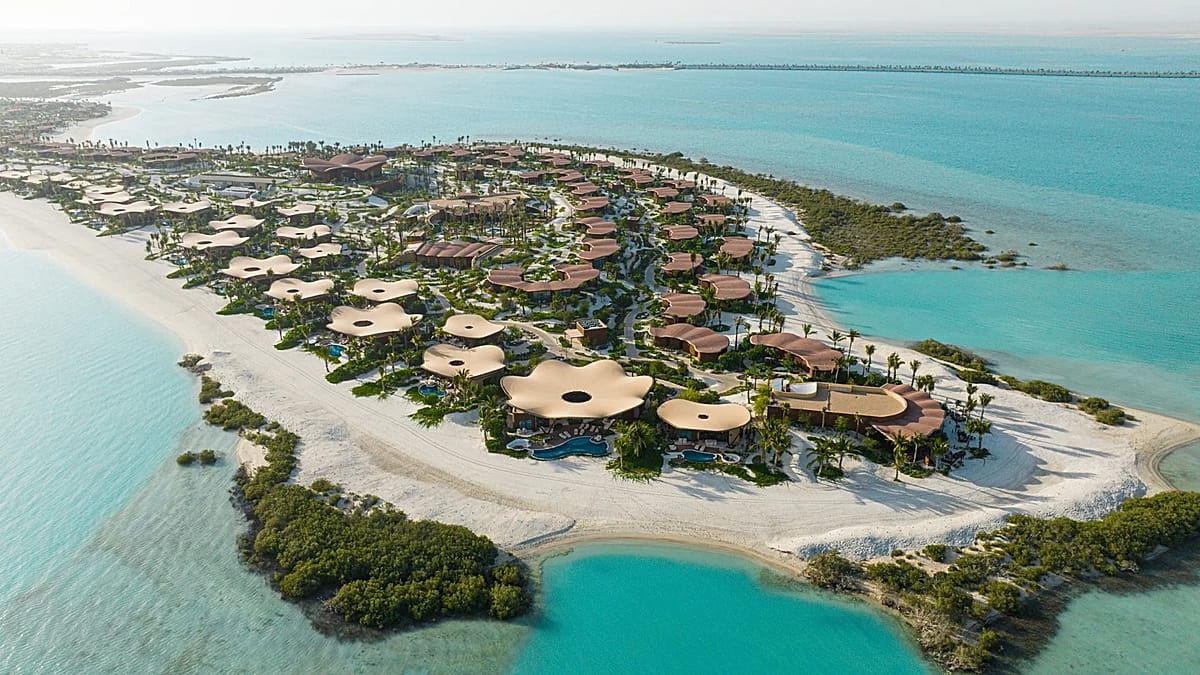
When people think of a luxury destination by the sea, the image that usually springs to mind is the Maldives: turquoise waters, white-sand beaches and villas perched above the ocean. Saudi Arabia wants to tap into that image, but go far beyond it.
ADVERTISEMENT

ADVERTISEMENT
On the kingdom’s western coastline, one of the world’s most ambitious tourism developments is taking shape: The Red Sea, a vast ultra-luxury project that aims to become a new international benchmark.
Covering 28,000 square kilometres, the destination encompasses an archipelago of more than 90 untouched islands. However, development will only be permitted on 22 of them in order to preserve the natural ecosystem and reinforce the exclusive nature of the project.
“We are committed to conserving and protecting the natural environment,” Stephen Cheesebrough, Head of Development at Red Sea Global, tells Euronews.
Much more than the Maldives
Inevitable comparisons with the Maldives are constant, although Cheesebrough believes the Saudi project offers something very hard to find elsewhere.
“It’s true that the islands may remind you of the Maldives, with crystal-clear water and white-sand beaches. But that’s where the similarities end,” he says.
“Our landscapes are far more diverse. In addition to the islands, we have mountains, volcanoes, deserts and kilometres of virtually untouched coastline. A visitor can spend the morning scuba diving among coral reefs and that same afternoon head into the desert or dine in the mountains. Very few destinations in the world offer such a variety of experiences in such a compact area.”
This contrast between sea, mountains and desert is precisely one of the main selling points Saudi Arabia hopes will set it apart from other luxury destinations in the Indian Ocean or the Caribbean.
With 1,800 kilometres of untouched coastline, almost pristine reefs and some of the planet’s most important marine ecosystems, Saudi Arabia’s Red Sea coast is looking to attract travellers who have already visited the classic exclusive hotspots and are searching for something different.
Regenerative tourism
The project places the emphasis not only on luxury, but also on so‑called regenerative tourism, which goes a step beyond traditional sustainability. “Today, it’s no longer enough to protect the natural environment; the real challenge is to improve it,” Cheesebrough says.
“Our goal is to show that it is possible to create a major tourism destination and, at the same time, enhance the environment. It isn’t simply about building sustainable hotels, but about creating destinations that actively help restore nature.”
The entire complex runs on renewable energy, reuses all water through recycling systems and aims to avoid sending waste to landfill – an approach that also reflects a shift in the preferences of luxury travellers.
“After the pandemic, people are much more aware of the impact their trips have. They want extraordinary experiences, but they also want to know they are visiting places that are committed to the planet,” he notes.
Gateway to the country
The destination currently has 11 hotels in operation, and other resorts will open over the coming months, particularly on Shura Island, conceived as the beating heart of the project. There, international hotels, restaurants, shops, a marina and an 18‑hole championship golf course will be clustered together.
Alongside accommodation, the development offers adventure experiences such as scuba diving, sailing, hiking, water sports and the new ADRENA district, which brings together more than 20 activities, including the country’s largest saltwater surf pool.
But Red Sea Global does not want visitors to remain only within its resorts. “Many guests use The Red Sea as a starting point to discover other parts of Saudi Arabia. Afterwards, they visit AlUla, Jeddah or other destinations around the country. We want The Red Sea to act as a gateway to exploring Saudi Arabia as a whole,” Cheesebrough stresses.
A year‑round destination
One of the challenges is to dispel the notion that Saudi Arabia can only be visited in winter. The aim is to operate 12 months a year. “We do not want to be a seasonal destination. The key is to attract travellers who are looking for exceptional experiences. People interested in luxury, yes, but also in nature, the sea, outdoor activities and authenticity.”
Red Sea International Airport, which currently connects to cities such as Riyadh, Jeddah, Dubai, Doha and Milan, has handled more than 78,000 passengers since the start of 2026, including over 11,000 international travellers, as well as almost 2,000 aircraft movements.
Connectivity will continue to grow as new hotels come on stream. “We are in talks with several European airlines and our aim is to gradually expand the international network. There would be no point in creating a destination of this scale without ensuring that travellers can reach it easily,” he explains.
The project also includes a significant residential component. Looking ahead to 2030, The Red Sea aims to bring together 50 hotels with around 8,000 rooms and more than 1,000 residences, with the capacity to welcome around one million visitors a year.
“The world is always looking for new destinations. And I genuinely believe that is what The Red Sea represents. It is not just another luxury resort. It is a completely new place, where nature, sustainability, hospitality and unique experiences come together. I believe anyone who visits will understand that straight away,” he concludes.
If the project lives up to expectations, Saudi Arabia will not only have opened a new destination to the world. It will also have shown that high‑end tourism can become an ally of the conservation of one of the planet’s most extraordinary ecosystems.
Read the full article here