



 Weather

For Kathy Kramer, a 42-year Macy’s Thanksgiving Day Parade vet and balloon pilot for the last 25, one of the day’s best moments happens before the festivities even start.
As each balloon team steadies and readies themselves for the 8:30 a.m. kickoff at the Central Park West starting line, there’s a contagious energy that begins to surge among the performers and volunteers — some of whom have been up since their 5 a.m. costume call times at NYC’s Hammerstein Ballroom.
Over four decades in, Kramer told The Post, the scene still gives her chills.
“There’s a Macy’s person announcing who’s coming into the parade, welcoming them … I get this little shiver down my leg,” she said.
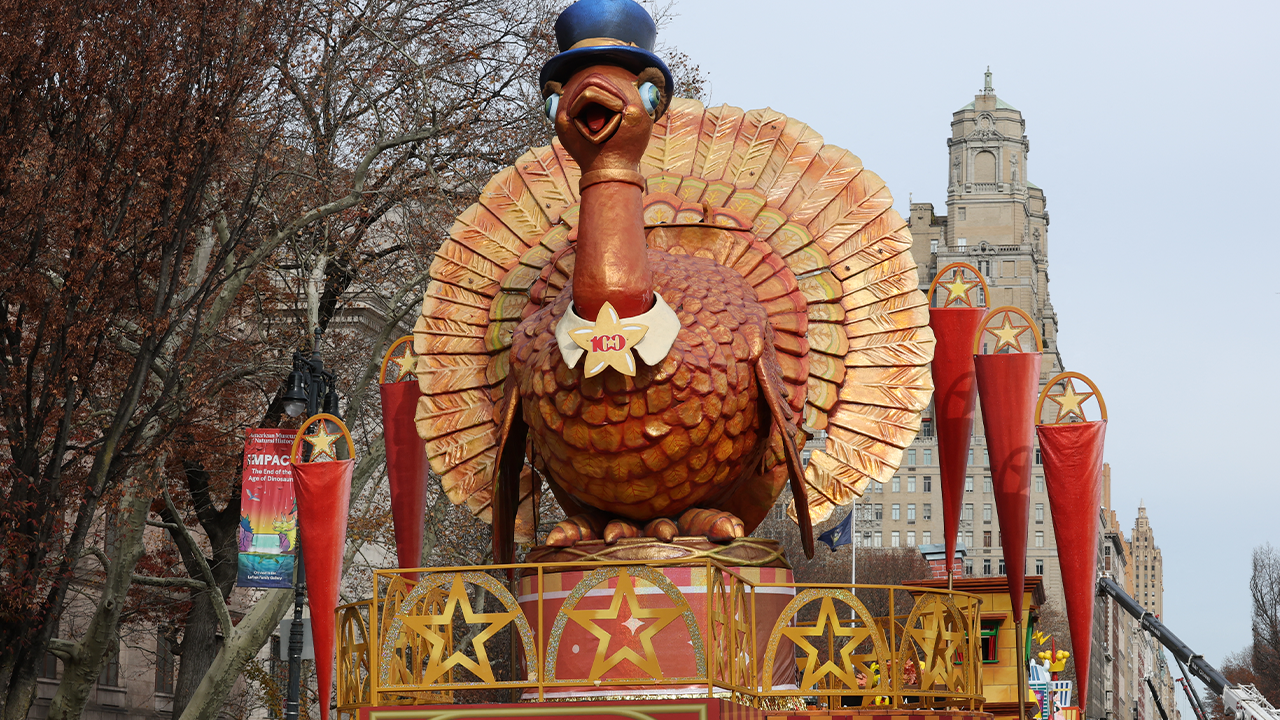
“[The announcer] says something like, ‘Snoopy, join the parade!’” the 64-year-old continued, referring to one of the day’s most beloved floaters — which she hopes to lead in this year’s historic batch of 100 inflatable elements — over double the usual 30 to 40, to celebrate the event’s 100th anniversary tomorrow, barring bad weather that threatens to ground the 400-plus–pound soaring spectacles.
“Then everybody cheers, and off we go!”
After a quarter-century on the job, Kramer, who started out with Macy’s in 1984 as a 22-year-old Queens warehouse worker, has fingers crossed that fearsome forecasts don’t rain on the most beloved aspect of the 2.5-mile parade, which proceeds with or without balloons.
Now the retailer’s Director of Lease Services and Operations, she’s filled a variety of roles over the years for the Turkey Day shindig.
“[My first job] was to walk down the parade listening to one of the boy bands of the ’80s — it might have been Boyz II Men, NSYNC or one of those guys,” Kramer recalled. “If there was a hitch in their music, my job was to hit the reset button on the float and make sure it came back.”
In the early aughts, Kramer stepped into one of Macy’s most exclusive roles as a balloon pilot.
As leaders of the helium hierarchy, pilots guide each balloon safely down the 2.5-mile parade route, constantly monitoring speed and positioning, while communicating with a team of up to 90 volunteers via headset and rehearsed hand signals. All while walking backward, no less.
“Looking up at the street, the parade’s coming right at me,” Kramer explained. “The way the balloons are designed, some fly maybe on an angle, like they’re running or doing some kind of physical activity. Part of my job is to make sure as it’s coming down, we fly it with the appropriate orientation.”
It’s a job Kramer takes seriously — though she’s just as intent on her team having fun.
“They’re all volunteers getting up early and putting a whole day in,” she said. “One of the best parts is when you have a chance to breathe and pause as you’re going down, making contact with all the people on the sides out watching and cheering.”
So, you want to be a pilot
So just how does one snag a spot to help guide a balloon down the parade runway?
According to Macy’s, applicants for the unpaid position can either be a company employee, parade partner, or “sponsored” by a friend or family member who works there.
Untethered, everyday parade fans are not allowed — though some post pleas on social media for a sympathetic retail worker to sponsor them anyway.
Each team is composed of a head pilot, two co-pilots (the eyes and ears who walk a few blocks ahead and behind the aircraft), three captains for on-ground support and a larger group of handlers — the newest set who directly control the balloon’s flight by maneuvering its “bones,” the spool-like handles attached to its tethering lines.
Careful orchestration prevents snags like wind gusts, sharp turns, and even the treetops in Central Park South and West causing punctures — or worse.
In its century-long tenure, a slew of balloon accidents have marred the parade’s otherwise jovial atmosphere.
The worst even made The Post’s front page in 1997, when 40-mile-per-hour winds blew the Cat in the Hat into a lamppost, injuring four.
Today, the required threshold for the world-famous balloons to fly on parade day is 23 mph for sustained wind, 34 mph for gusts.
And with the Big Apple’s forecasted nor’easter expected to bring sustained winds of 25 mph and gusts of up to 35 mph on Turkey Day, experts are questioning if the balloons will fly at all.
“It’s probably the most significant chance in recent years of having no balloons,” Dan DePodwin, vice president of forecasting at AccuWeather, told The Post on Monday, as it’s been 55 years since the iconic balloons were last grounded.
“My dream come true”
When incoming second-time balloon handler Janine Macken made the handler list for the first time last year, she knew it carried a sense of responsibility.
But when her hubby arranged her spot through a family tie as a Christmas surprise, the 56-year-old New Jersey mom and lifelong parade fan felt nothing but “psyched.”
“I was legit speechless,” Macken told The Post, joking that after many holidays, her family knows “not to talk to me” during Thanksgiving parade time. “This was my dream come true. I’ve always wanted to march in the parade.”
Though she felt some nerves leading up to the big day, starting as a handler on the Mario balloon in the 2025 Macy’s Balloon Fest (the annual early November test flight typically held at MetLife Stadium) helped her feel more prepared for the iconic Thanksgiving pageant.
When the big day finally came, Macken could hardly contain her excitement to help fly the iconic Macy’s star — the final spectacle of the day after Santa’s grand reveal.
“We did jumping jacks for warm-ups as a group, with arm circles,” said Macken, joining in as best she could with a minor ankle injury and making sure not to hydrate too much (handlers cannot leave their tether to use the bathroom).
When the time finally came for Macken and her team to bring up the rear, she had the feeling of being on a roller coaster about to drop.
“It was like, ‘Here we go, it’s parade time,’” Macken recalled.
She quickly discovered that manipulating the bone according to her pilot’s commands through the route was a “real workout,” requiring total mental and physical focus.
“You’re in the New York City streets, so they can make it like a tunnel of wind,” said Macken. “There were times where it was incredibly intense…It’s like fighting with the wind.”
But more often than not, the gleeful, cheering crowd reminded her just how lucky she was to be part of such an iconic event.
“People get out at four in the morning to get their spot,” said Macken. “They’re still there even though we’re at the end, full of excitement and just cheering you on. That was just such an incredible feeling.”


