





 Weather
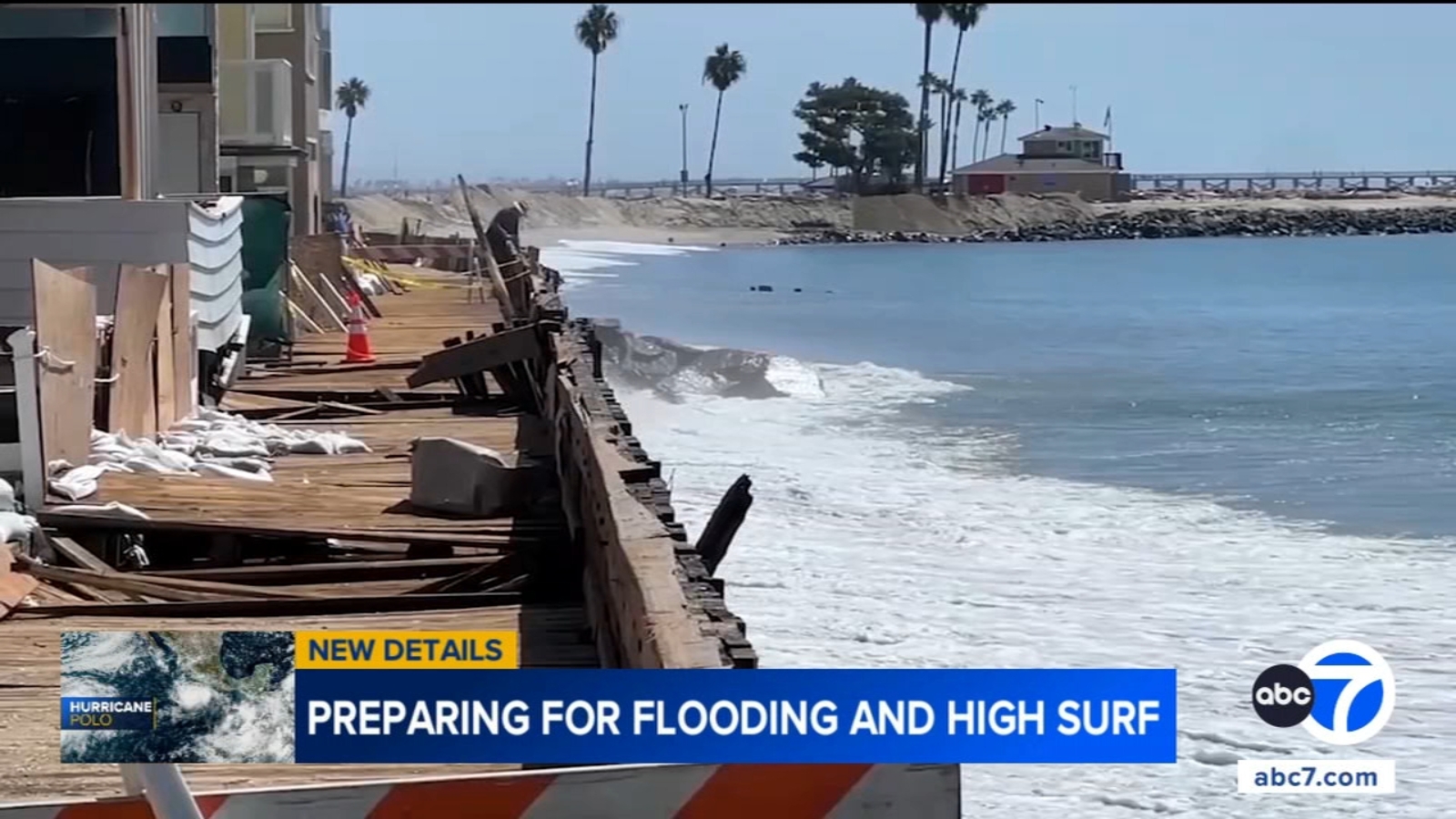
LONG BEACH, Calif. () — Long Beach is preparing for another round of coastal flooding and high surf as Hurricane Polo moves off the Pacific coastline, raising concerns about additional damage to vulnerable shoreline communities.
Long Beach officials had already declared a local emergency Tuesday as the city prepared for potential impacts from the El Niño weather pattern.
El Niño refers to the warmer-than-average phase of the El Niño-Southern Oscillation (ENSO), a natural cycle where sea surface temperatures across the central and eastern equatorial Pacific Ocean rise and fall, making way for hurricanes such as Polo.
Although Hurricane Polo is not expected to hit Southern California, powerful waves generated by the hurricane threatens to damage shoreline communities. Saturday is expected to be Hurricane Polo’s window of influence for Southern California surf.
Tracking Hurricane Polo: See latest trajectory for SoCal impact
Hurricane Polo continues to churn in the Pacific as a category 4 storm. See the latest projected trajectory and possible SoCal impact.
The National Weather Service expects strong rip currents and coastal flooding from Tuesday through Wednesday along coastal areas of Orange and San Diego counties.
In Long Beach, several-foot-high berms have been built along the shoreline to help protect homes and businesses near the water.
Residents who experienced damage from Hurricane Marie say they are watching the latest forecast closely.
Long Beach resident Vitalii Helberg, who lives near the boardwalk, said his home suffered flooding and damage when waves from Hurricane Marie battered the shoreline.
“We got a little bit of flooding on our patio and half of our street was extremely flooded,” Helberg said.
Officials say the current preparations are intended to reduce the risk of similar damage if conditions worsen.
“We saw 18 feet of height of sand disappear in three days and so now that’s obviously been built up a little bit,” said Jake Heflin, assistant fire chief with the Long Beach Fire Department.
“We’re obviously not quite there to where we were originally but we’re still doing what we can to move as much sand as we can to fortify the berm and extend the beach,” Heflin added.
At the height of the previous swell event, 24 homes were evacuated, according to Heflin.
Experts say rising ocean temperatures may also be contributing to conditions that fuel hurricanes.
“Warm waters are what leads to hurricanes and we are experiencing a marine heatwave, so our water temperature is rising and then we are also gearing up for El Niño which also causes warm waters,” said Sarah Lesser, education supervisor at the Aquarium of the Pacific.
“It’s sort of like those two events are stacked on each other which just increases our water temperature even more,” she added.
As Hurricane Polo moves offshore, officials are urging residents to prepare for the possibility of renewed flooding and evacuations.
“Have a plan with your family if you do need to leave where are you going to leave? If you’re going to evacuate, where are you going to go, who are you going to stay with?” Heflin said.
© 2026 Television,