




 Weather
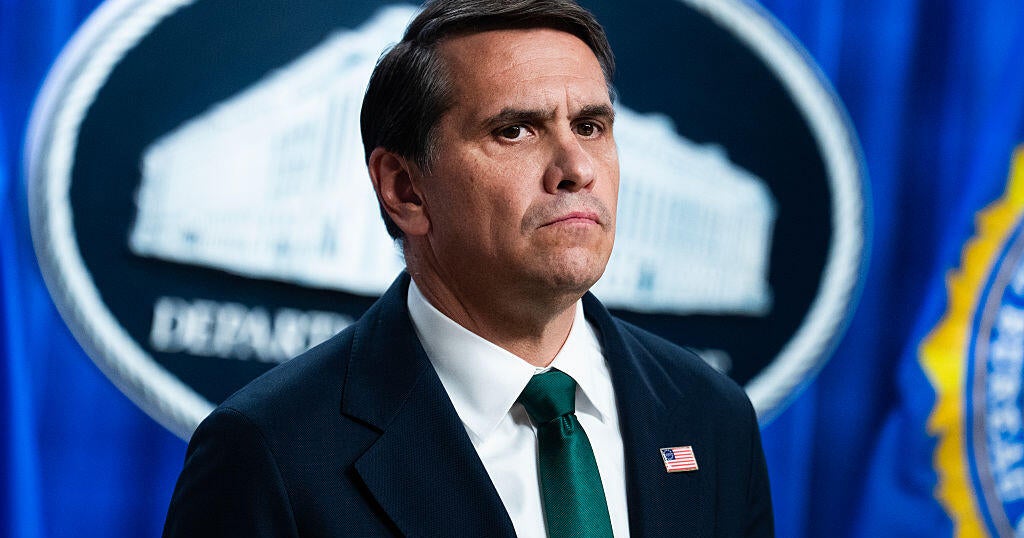
Washington — A federal judge temporarily blocked the Justice Department from moving forward with work on the new $1.7+ billion Anti-Weaponization Fund, including making any payouts.
U.S. District Judge Leonie Brinkema said in a brief order dated Thursday that the temporary hold allows her time to consider whether to grant longer-term relief sought by a group of plaintiffs who are challenging the new fund, which was announced by the Justice Department earlier this month.
Brinkema’s order prevents the Justice Department from “taking any further action pursuant to the creation or operation” of the program “to ensure that no funds are irreversibly disbursed” from it. It covers the transfer of money to the fund, consideration of any claims submitted and disbursement of any payments.
Andrew Floyd, a former federal prosecutor who investigated and prosecuted people involved in the Jan. 6, 2021, assault on the U.S. Capitol, and Jonathan Caravello, a California professor who was arrested while protesting an immigration raid, as well as nonprofits, filed their lawsuit last week arguing that the fund is unlawful.
They argued that the fund is a “collusive agreement” between President Trump and his administration that “has no congressional authorization, no basis in law, and no accountability.”
In response to Brinkema’s order, Skye Perryman, president and CEO of Democracy Forward, which is representing the plaintiffs, said the court “recognized the urgent need to prevent taxpayer dollars from being distributed through a secretive and unprecedented political compensation scheme before the legality of that program can be fully reviewed by the court.”
“This is a victory for transparency, the rule of law, and the American people,” she said in a statement. “No administration has the authority to spend public money through a political rewards program that Congress never authorized. We look forward to the next stages in this case.”
The Anti-Weaponization Fund was created by the Justice Department as part of a settlement of Mr. Trump’s civil lawsuit against the Internal Revenue Service over the leak of his tax returns by a former government contractor.
The Justice Department said the program aims to “provide a systematic process to hear and redress claims of others who suffered weaponization and lawfare.” A five-member board would determine payouts from the $1.7 billion pot.
But the Trump administration has come under pressure over the fund, including from Republicans on Capitol Hill, due to concerns that people involved in the Jan. 6 attack would seek and receive payments. Mr. Trump granted clemency to more than 1,500 people who were convicted of crimes stemming from the Capitol assault and has suggested they were treated unfairly.
There have not yet been any official announcements by the Justice Department naming the five commission members who would approve claims and set the criteria for who would be entitled to a cut of the fund.
The lawsuit is one of many filed in recent days to stop the fund’s implementation. Two other law enforcement officers who clashed with rioters on Jan. 6 sued to block the fund, as have government oversight and accountability groups.
Legal experts, however, are skeptical that the lawsuits could obtain permanent relief and dismantle the fund.