




 Weather
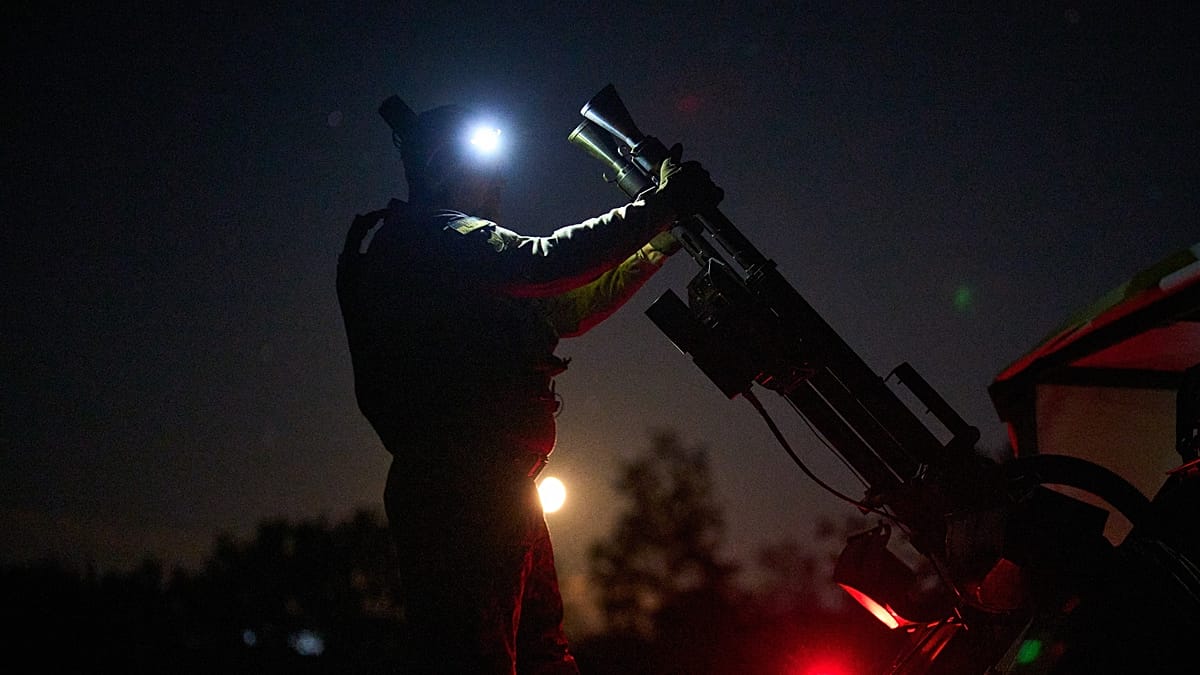
The European Security Council would fast-track traditional EU bureaucratic gridlock during security emergencies. Under the proposal, it would rely on what European Commission President Ursula von der Leyen called a “counter-hybrid playbook” to address grey-zone hostile actions.
ADVERTISEMENT

ADVERTISEMENT
In her 2026 State of the Union address, she explicitly said that these new mechanisms are meant to be “fully aligned” and “complementary” to NATO rather than replacing it. And speaking at Euronews’ Defence & Space Summit, EU defence chief Andrius Kubilius said the ESC would “not [be] against NATO” but be “exactly the opposite”.
“It is how to make Europe stronger, which will make NATO stronger”, he said.
The full initiative would feature three main elements. First, there’s the ESC itself, which is envisioned as an agile political forum that expands the EU leaders’ summit to include key non-EU partners. Second, the Emergency Security Protocol would require member states to convene immediately if one faces a hybrid threat. The third part is a dedicated fund for Strategic Defence Enablers, which focuses on joint investments in air defence, cyber security, and space systems.
The EU’s goal
The EU wants the ESC to address a critical gap in Europe’s fragmented and slow defence architecture.
State-sponsored hybrid warfare involves hostile “grey-zone” actions, like infrastructure sabotage, cyberattacks and drone incursions. Since these operations fall below the threshold of conventional military conflict, they do not automatically trigger NATO’s collective defence mechanisms.
“The idea has got a new lease on life amid growing doubts about the US willingness to uphold NATO’s Article 5 security guarantee and fears that Washington might block political decision-making […] or frustrate operational command within NATO, and that therefore European fallback options should be strengthened,” said Steven Blockmans, deputy director at the International Centre for Defence and Security.
The ESC aims to address three problems. First, it seeks to bypass the EU’s unanimity deadlock through qualified majority voting to prevent vetoes from paralysing foreign policy. Second, the Emergency Security Protocol would act as Europe’s version of NATO’s Article 4, bringing member states together to coordinate responses to non-military crises. Third, it includes non-EU partners like the UK, Ukraine, Norway and Canada, turning ad-hoc coalitions into a permanent security framework.
This fits into the EU’s long-term goal of strategic autonomy and a self-reliant European Defence Union. Over the next decade, the bloc aims to reduce its dependence on US military logistics by unifying Europe’s fragmented defence sector and streamlining joint procurement and manufacturing.
What’s on the proposal?
The ESC would provide a permanent year-round forum for crisis management. The idea is “having dedicated meetings of the EU Council, calling it the European Security Council [to] have more structured discussions about security and defence in a way that the EU Council wouldn’t always have”, explained Luigi Scazzieri, senior policy analyst at the EU Institute for Security Studies.
The goal is to strengthen political coordination on defence and security, and provide strategic, long-term direction. It would bring together EU leaders and international partners, including Ukraine, Canada, Norway, and the UK.
The ESC would also allow members to plan and carry out rapid defence responses, including to growing hybrid and unconventional military attacks.
“The ESC would close the gap between detecting a threat and deciding what Europeans will do about it”, said Ionela Maria Ciolan, Research Officer on security and defence at the Wilfried Martens Centre for European Studies.
Under the proposed “Emergency Security Protocol”, modelled on NATO’s Article 4, members may call consultations if they believe their security, territorial integrity, or political independence is under threat, and coordinate a response.
According to Ciolan, the protocol would not replace Articles 42(7) or 222 of the treaties, which require member states to intervene when another member state is subjected to armed aggression or terrorist attacks. Rather, it would provide “an earlier political entry point,” trigger an emergency meeting, and assess whether the situation calls for national action, EU crisis tools, NATO consultations, or, in the worst cases, consideration of a treaty clause, she added.
The ESC and NATO
The proposed ESC is not supposed to override NATO. Crucially, it would act independently of Washington while keeping NATO as the central framework for defence. Scazzieri, said the division of labour is clear: “Essentially NATO does collective defence, this European Security Council would not”.
NATO handles collective military defence under Article 5, while the ESC focuses on grey-zone and hybrid threats. The Emergency Security Protocol would trigger immediate security consultations without relying on the US.
“It would be about sanctions, […] how to prioritise spending limited EU money, […] bringing together a slightly different group of countries that doesn’t come together in a NATO context, including those EU members that are not NATO members,” said Scazzieri.
But despite official claims of synergy, the initiative has raised concerns among member states like Estonia, which fear it could duplicate NATO functions. Parallel alert systems and consultation bodies could create bureaucratic confusion, while excluding the US could increase tensions.
However, Scazzieri sees little risk of duplication because the two would use different tools and perform different functions.
“There’s obviously always going to be a bit of turf-war bias in institutions where NATO, for example, might see the EU is now setting up a European Security Council. Are they going to discuss the same things? I see little risk of that because all of this would be seen from the EU’s toolbox,” he said.
For Blockmans, a more ambitious ESC would eventually need to connect political decisions with military capabilities.
“It would need to be compatible with NATO and the European Union. And that would presuppose […] an intergovernmental agreement that foresees […] the participation also of, for example, the NATO secretary general, just as you might imagine the European Commission president and the European Council presidents to be included as well.”
Powers remain to be defined
The Commission’s proposal does not resolve the unanimity gridlock within NATO or the EU Council, Blockmans argued.
“A new body composed of like-minded and trusted states […] would be breaking through these decision-making blockages, of course, although one might assume that decision- making within that new body would also proceed on the basis of consensus”.
For Scazzieri, the ESC won’t speed up decision-making either. “It cannot exist as a legal body in its own right” and therefore will not make binding decisions, unlike the EU Council. Yet real decision-making power is key to boosting the ESC’s legitimacy and “provide national parliaments of the participating states with a democratic backstop,” Blockmans explained, delivering the change the EU plans for its security and defence policy.
The structure and composition have yet to be decided too. Besides the UK, Norway, Canada and Ukraine, Blockmans says nothing excludes the possibility of Korea or Japan joining too.
The EU would also need to define how EU member states fit into the configuration alongside international partners, what role they will play in discussions, and whether they will carry more weight than non-EU states.
“Whether it should replicate a sort of United Nations Security Council system with a two-tier mechanism of permanent members and then rotating non-permanent members, there’s no clarity on this whatsoever,” said Blockmans.
The ESC would need practical military capabilities, including NATO- and EU-compatible command structures, a dedicated defence budget, and a multinational European defence force. Without these resources, Blockmans argued, the ESC could make political decisions but would lack the means to turn them into military operations.
What do the member states think about it?
The Commission has not made a formal proposal, nor have the national governments been asked to endorse a detailed plan yet, so it remains to be seen who will support or oppose the ESC. Still, for Ciolan, it’s possible to identify a group of potential supporters.
Italy is likely to join the initiative, as it backs stronger European defence cooperation and a single EU representative in the Ukraine peace talks, while Spain generally favours deeper common defence, Ciolan said.
Germany and France have suggested a coordinated defence approach through the ESC in the Meseberg Declaration, “Renewing Europe’s promises of security and prosperity”, in 2018. Generally, she added, national governments affiliated with the European People’s Party (EPP) are expected to be more supportive of the initiative.
Resistance, Ciolan argued, is more likely to come from those that fear losing their national veto over foreign and defence policy, being marginalised by other, more influential member states, or weakening the transatlantic framework.
Read the full article here