



 Weather
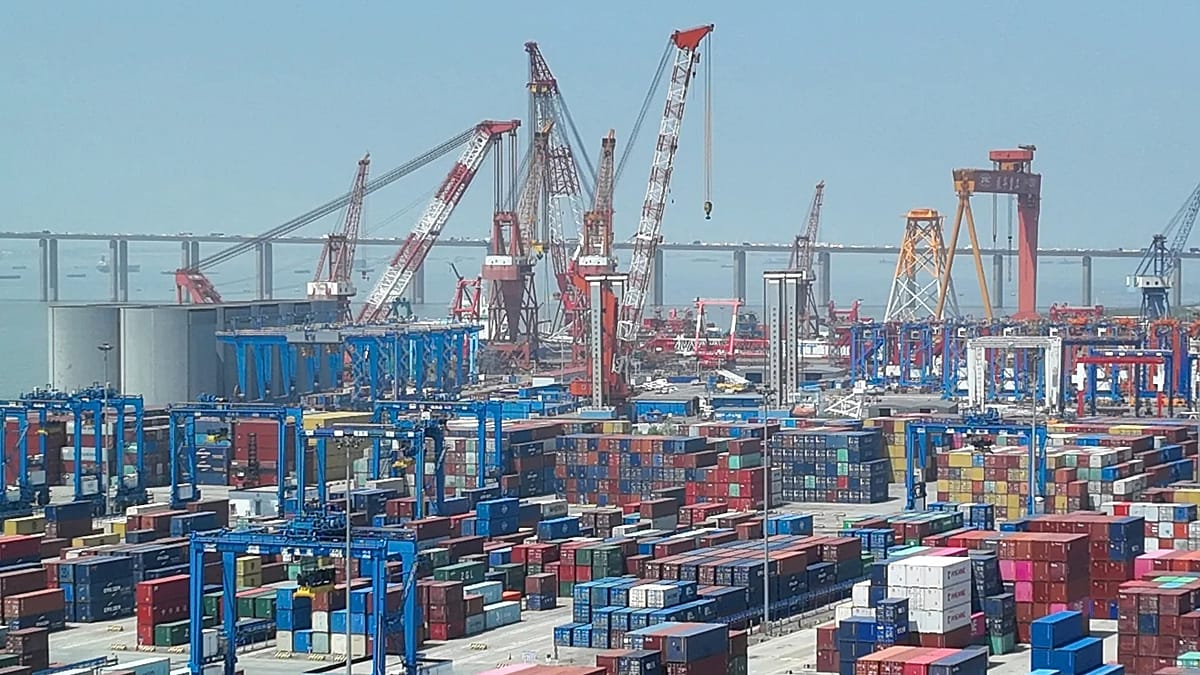
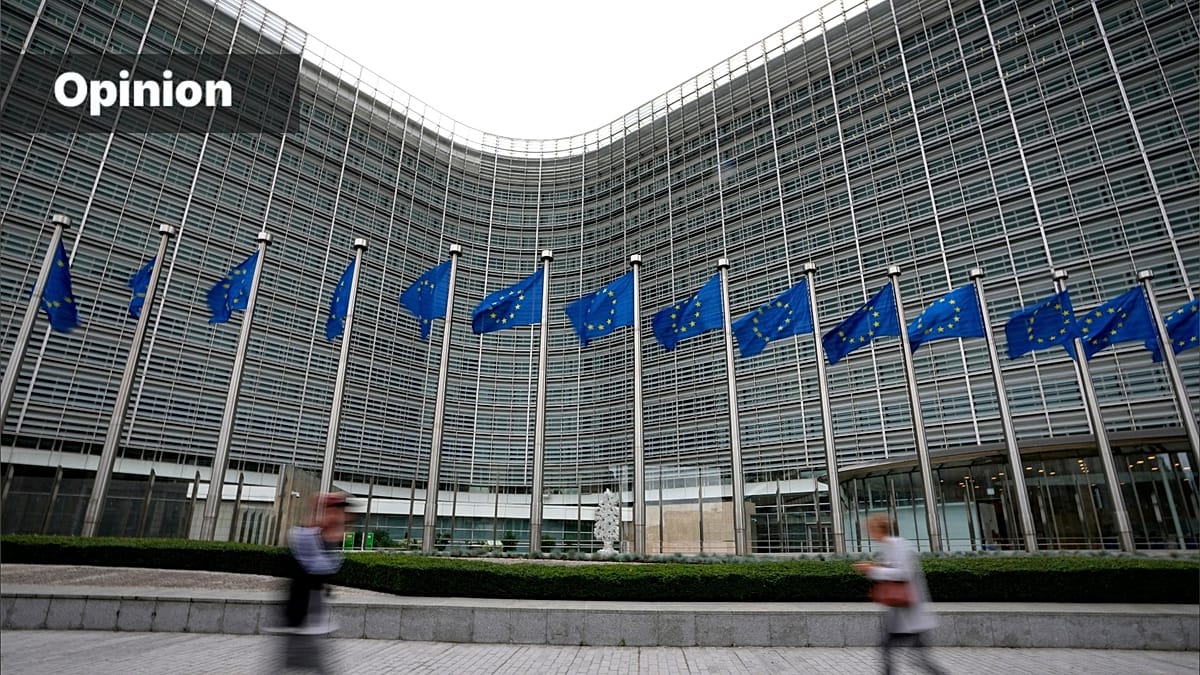
As the EU seeks to shield its market from a surge of low-cost Chinese imports, alarm is growing in Europe at a new phenomenon: Chinese companies advertising ways to circumvent the bloc’s tariff barriers.
ADVERTISEMENT

ADVERTISEMENT
France, Italy, Spain, the Netherlands and Lithuania have jointly alerted the European Commission on “increasingly blurred and complex actions” to avoid EU custom duties.
In an informal proposal drafted last month that refrains from naming any Chinese company, the four urged improvements to the EU’s anti-circumvention tool, which “would allow the EU to guarantee the legal effect and the effectiveness of its existing trade defence measures.”
Euronews has found online Chinese companies openly offering ways to sidestep EU trade defence measures, including the anti-dumping duties Brussels imposes on imports sold in the EU at prices below their normal value in China.
The circumvention practices include establishing manufacturing facilities in countries not targeted by EU extra tariffs or making minor changes to products. These are not all illegal, unless EU businesses bring solid evidence that they harm their industry, but many are considered at least controversial, prompting the European Anti-Fraud Office (OLAF) to launch investigations into the true origin of certain products.
And with the EU facing a wave of Chinese overcapacity, tariff circumvention has become an even more pressing concern. European producers have lodged a growing number of complaints with the Commission, alleging unfair trade practices in various sectors and stretching the resources of EU officials.
Transhipment through third countries
One route already being pursued by Chinese companies is to establish manufacturing facilities in so-called “gateway countries” that benefit from favourable trade agreements or are not subject to EU anti-dumping duties, such as Morocco, Tunisia, Turkey, or various southeast Asian nations.
Other methods include minor product modifications designed to alter customs classification and as transhipment through “gateway” countries to create the impression that goods were produced there while they are in fact entirely made in China.
Euronews’s research found that some Chinese companies do not even hide their activities and openly offer services online to circumvent trade barriers.
A company called Xin Rui Da Logistics, a logistics supplier from Shenzhen, specialises in “anti-dumping research and providing transit trade solutions for third countries”, according to its website.
The company says it “has solved the problems of trade barriers such as anti-dumping, countervailing, quota restrictions and CIQ [Customs, Inspection, and Quarantine] for many Chinese enterprises with export restricted products and foreign importers”, and explains that it re-exports from “Malaysia, Sri Lanka, Taiwan, India, Thailand, Singapore, Indonesia, Bangladesh, Hong Kong”.
Xin Rui Da Logistics currently works on products ranging from e-bikes to categories of steel and aluminium and plywood products – all of which have hit been hit by EU anti-dumping duties in recent years.
The company did not respond to a request for an interview.
Selling transformed chemicals
The chemical sector is particularly exposed to the risk of tariff circumvention, with competition between the EU and China growing especially intense. European producers are already under pressure from excess Chinese production capacity, which has seen a deluge of imports and increased competitive pressures in the EU market.
After a complaint by EU producers, the European Commission imposed anti-dumping duties on one specific chemical imported from China: titanium dioxide (TiO2), a strategic chemical used in green technologies and aerospace. The duties were provisionally introduced in July 2024 and made definitive on 9 January 2025.
Yet some Chinese producers have looked for ways to adapt to the new tariffs to export the chemical to the EU.
Nina Zhu, director of Zontai Titanium Dioxide, a company based in Guangdong province in southern China, wrote on Linkedin a few months before the EU imposed its tariffs: “EU anti-dumping duties will be implemented at the end of the year. It is recommended to prepare inventory in advance to provide you with various titanium dioxide solutions.”
Contacted by Euronews, Zhu confirmed that the company could supply products with a TiO2 content below 80 percent in order to avoid EU tariffs.
Later, in 2025, the NanJing Titanium Industry International described its recently commercialised new type of mixed TiO2 as “top-quality with excellent performance,” adding: “What’s more, its unique features allow you to bypass certain regional anti-dumping duties, saving costs significantly. A game-changer for your business!”
The company did not reply to Euronews’ requests for comment.
In some cases, Chinese companies begin offering such services as soon as the EU launches an anti-dumping investigation that could result in additional duties.
That was the case following the Commission’s decision to open an anti-dumping investigation into Chinese TiO2 producers on 13 November 2023, which ultimately led to the imposition of the new tariffs in January 2025.
In a LinkedIn post dated 23 January 2024, a manager at Titan Industry, a Shandong-based company, offered EU customers certificates of origin for shipments routed via Vietnam or Thailand “to cope with the anti-dumping duties imposed by the EU”. Such certificates could have hidden the true origin of product made in China.
Since then, the company has removed the post from social media, telling Euronews that it had stopped offering such transhipment solutions as they were not allowed.
Instead, it said it is “establishing a new TiO2 factory in Vietnam”.
‘Whack-a-mole’
Vietnam, like several other Southeast Asian countries, is often considered a “gateway country” where Chinese companies invest in order to export to the EU. In some cases, however, companies do not maintain a genuine manufacturing presence in the country at all.
According to trade expert Deborah Elms of the Hinrich Foundation in Singapore, the situation is a “whack-a-mole” problem.
“If you went after a particular firm for illegal transhipment, you’ll discover it’s a post office box address for a company that changes its name and moves to somewhere else very quickly,” she told Euronews.
“If the tariffs are high enough, there is an incentive for companies always to try to skirt this through illegal means.”
Linlin Liang, the spokesperson of the China Chamber of Commerce to the European Union (CCCEU), told Euronews that the CCCEU was not aware of the Chinese companies offering online solutions to get around EU tariffs.
“In general, circumvention risks are not unique to any single country,” Liang said, adding that the EU has a “well-established anti-circumvention system” and that what matters is that these “instruments are applied in a transparent, evidence-based, and proportionate manner”..
“Regrettably, to date EU trade defence measures have largely targeted imports from China,” she said.
Beijing has repeatedly threatened the EU with retaliation if it tightens its trade defence measures. But with the EU trade deficit with China reaching a record €359.9 billion in 2025, the European Commission declared in a statement last week that “the current state of the trade and investment relationship is not sustainable”.
The EU’s executive arm is expected to propose strengthening the EU’s trade defence system to EU leaders in mid-June, when they meet for a summit. China does not appear by name in the draft conclusions shared by diplomats, but it is expected to be the core of discussions when leaders meet.
OLAF investigates
The issue of tariff circumvention has become significant enough that OLAF has taken over investigations into such cases, its 2025 annual report said.
The report pointed in particular to a case involving e-bikes that would likely have been imported from Indonesia into the EU if the bloc’s anti-fraud authority had not intervened.
It found that most of the components actually originated in China and had only been processed in Indonesia, meaning the goods should have been labelled as originating from China. OLAF assessed that the scheme could have led to €7.2 million in avoided EU import duties had the products been exported to the EU. In the end, they were not.
Thomas Grjebine, an economist at the French Centre for Research and Expertise on the World Economy, told Euronews that “the greater the Chinese competition becomes, the more difficult it is”.
He recently warned about the impact of Chinese competition on EU industry in a major report for a French government advisory body.
“We are not going to launch investigations into thousands of products, it’s complicated,” Grjebine said. “On top of that, investigations are conducted at the European level, whereas customs checks are carried out mainly at the national level.”
Beyond trade defence measures targeting specific products, questions are being raised about the protection of entire industrial sectors, as industries such as EU automotive, metals and chemicals face a surge in cheap Chinese imports.
But China, which is investing billions of dollars in building factories in Morocco, Tunisia and Turkey, already knows how to get around sector-wide tariffs – confronting the EU with ever more challenges.
Read the full article here