




 Weather
As millions of EU citizens plan their summer holidays, the European Parliament this week gave the green light to an overhaul of air passenger rights, which have been in force since 2004 and will now be updated for the first time in 22 years.
ADVERTISEMENT

ADVERTISEMENT
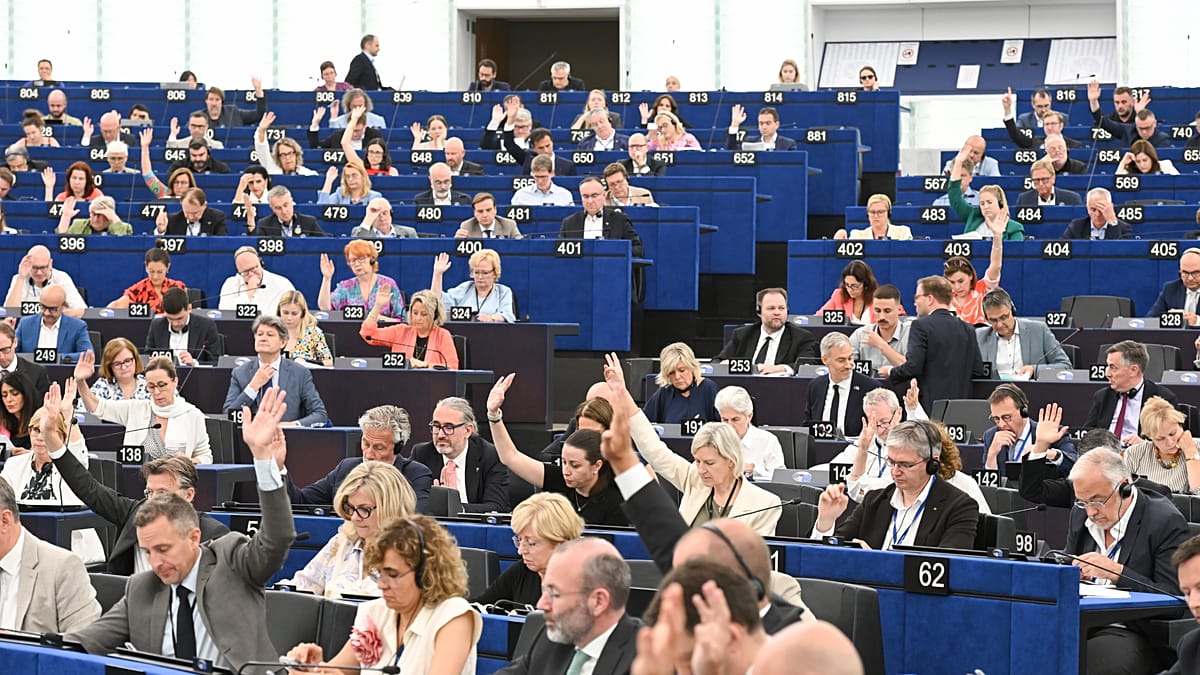
The rules seek to ensure passengers are sufficiently protected against travel disruption, such as denied boarding and delayed or cancelled flights. An overwhelming majority of 646 members of the European Parliament voted in favour of the new rules during Tuesday’s plenary session, meaning the bloc now has a new rulebook.
“It’s the biggest improvement in passenger rights since the beginning of this century,” the European Parliament’s lead negotiator, Member of the European Parliament Andrey Novakov (EPP, Bulgaria), told Euronews. “Today we have rights that won’t stay on the ground when you take off.”
The final deal, agreed by the European Parliament and the EU Council last month, had been on the negotiating table since the European Commission proposed a revision of the air passenger rights framework in 2013.
‘Real progress, but not what we hoped for’
Compensation payments of between €250 and €600 if a flight is cancelled or delayed by more than three hours were already in place and will not change. But families travelling with children under 14 will no longer be charged extra to sit together. Another new provision is that ticket prices displayed online will always include one free item of hand luggage.
“We either kept the status quo or improved the quality and quantity of air passenger rights,” said Novakov, who celebrated the fact that the revised rules will “decrease the administrative burden on passengers when compensation is needed. Now, the airlines will contact citizens to explain how to receive it.”
Consumer groups, however, are more cautious.
“It makes it clearer for consumers to claim compensation, but it doesn’t make it easier. Losing pre-filled claim forms at the very last hurdle was a big loss,” Olivia Brown, policy officer at consumer group Euroconsumers, told Euronews.
The European Parliament had advocated for an obligation on airlines to provide pre-filled claim forms to passengers experiencing travel disruption within 48 hours of the incident, but the demand was removed during negotiations with EU countries.
“This would have really been a tangible benefit for consumers,” Brown added.
“What we got is real progress, but I would be lying if I said it’s the big win that passengers were hoping for,” Brown said, adding that the compensation amounts established in 2004 are not necessarily sufficient.
“Prices continue to go up, and our 2026 affordability survey showed that 47% of respondents said they find it difficult to pay for their holidays.”
One size does not fit all
The outcome on compensation payments was also underwhelming for airline associations such as the European Regions Airline Association (ERAA), who said in a press release that there are “no winners” out of the final deal.
Speaking to Euronews, ERAA Director General Montserrat Barriga criticised the fact that all airlines are subject to a “flat compensation fee”.
Barriga said the “deal could have been fairer” as the one-size-fits-all approach of the new rulebook “does not recognise the realities of regional airlines”. She explained that sometimes the compensation “easily exceeds the original ticket price for many regional routes”.
She also argued that negotiators had failed to take into account the fact that regional airlines operate smaller fleets, use the same aircraft throughout the day and have fewer resources and less capacity to deal with disruptions.
Unlike Euroconsumers, however, Barriga welcomed the removal of pre-filled claim forms from the final deal, arguing that the requirement could have harmed smaller airlines with limited staff and digital infrastructure.
“Resources would have been diverted from managing disruptions into developing complicated IT systems,” she said.
ERAA also welcomed the new transparency requirements and the fact that airlines will now have a legal obligation to proactively provide passengers with the information they need to make claims.
The deal that almost wasn’t
For Barriga, the agreement was rushed for political reasons. “It was a big fight between the European Parliament and Council, and there was pressure to close the deal,” she said.
Others, however, argue that negotiators secured the best possible agreement given the political context and circumstances.
“We were so close to not having a deal,” MEP Novakov told Euronews. The European Parliament negotiator also lashed out at EU governments he said had sought to weaken passenger rights.
“I believe many airlines have an influence on transport ministers from EU member states,” he said, referring to negotiations with the EU Council.
Specifically, Novakov highlighted proposals to reduce compensation from €600 to €83 and increase the delay threshold for compensation payments from three hours to five. “That’s how far they went. It was a massive attempt to water down the rights of passengers.”
Euroconsumers’ Olivia Brown also criticised these attempts, saying they represented a major blow to consumer trust: “Rolling back on something as fundamental as compensation rights, in place for 20 years, shows a complete lack of awareness of the situation consumers are facing,” Brown said.
She also suggested airlines would benefit from greater consumer trust: “We have an internal market of 450 million consumers. You can only access it if you’re willing to build support and trust there.”
The new rules will take effect in 2027, but Barriga does not expect significant changes to airlines’ operations, arguing that “there has not been a significant change compared with what we had before”.
“We could have done something else. We even had good discussions with passenger associations, and there are some positive elements. But I think it feels bittersweet for everybody,” she concluded.
Read the full article here