


 Weather
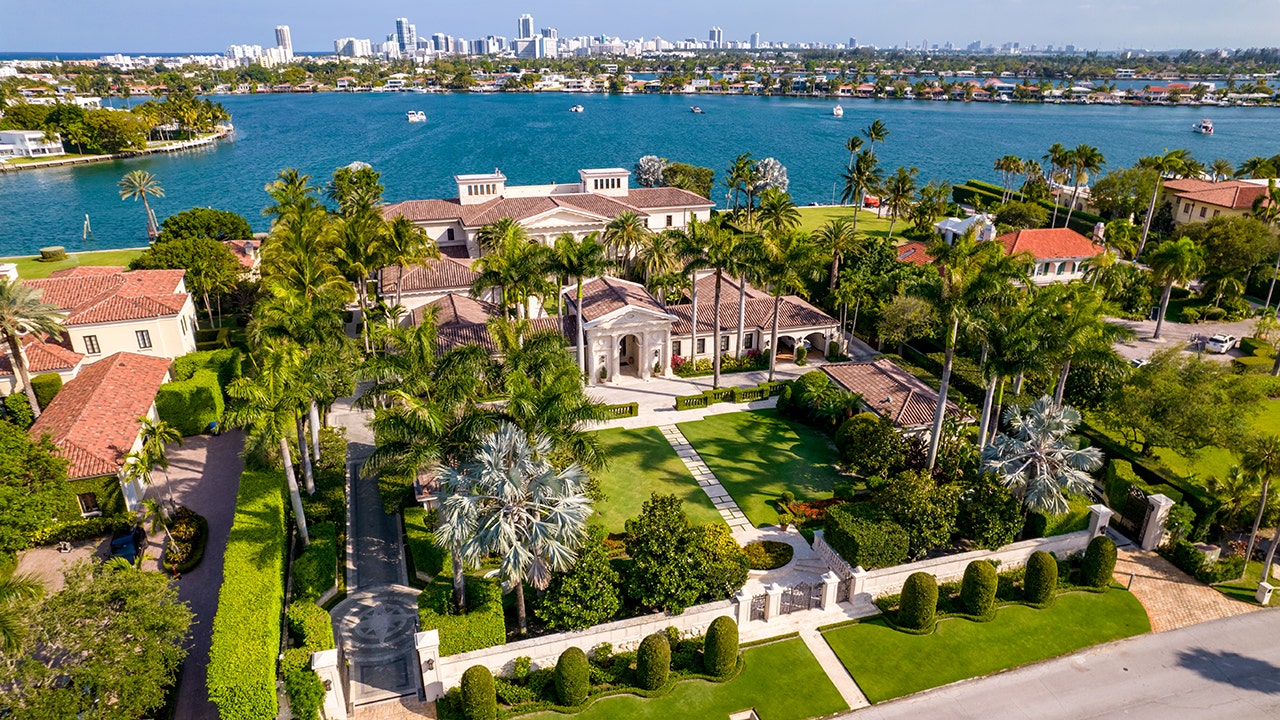
For a South Florida native, the silence and serenity are what hits you first.
Just a stone’s throw from the relentless horn-honking of Surfside and the designer-clad crowds of Bal Harbour Shops, Indian Creek Village exists in a vacuum of enforced peace. There are no sirens, tourists, and certainly no uninvited guests — only the whistle of the Atlantic wind and the rhythmic clap of waves against private piers.
Behind massive entry gates and dense tropical foliage lies a 300-acre fiscal safe haven where America’s billionaires aren’t just buying homes, but investing in a sovereign-level of security that Julian Johnston, one of Miami’s top luxury brokers, says is now the ultimate commodity.
“It is a political sanctuary. I’d say, also, the security itself is extremely tight. I mean, when you drive up, if you don’t have permission to get on, [the police] are actually quite rude and they tell you to go away,” the Corcoran Group agent — who has more than $10 billion in sales under his belt in the area — told Fox News Digital during a private tour of Indian Creek.
MARK ZUCKERBERG BECOMES LATEST CALIFORNIA BILLIONAIRE TO RELOCATE TO FLORID AMID TAX CONCERNS
“I think Indian Creek is an island unto itself,” he continued. “As a community… you’ve got the marina nearby, you can walk to the Four Seasons and go to the beach and it’s a lower-density construction. So there’s not as much traffic, and it’s just a beautiful place to live.”
Commonly known as the “Billionaire Bunker,” successful business leaders and celebrities including Jeff Bezos, Carl Icahn, Tom Brady, Ivanka Trump and Jared Kushner, Julio Iglesias, Adriana Lima, David Guetta, Don Shula and others have long called Indian Creek home. The ultra-exclusive neighborhood made recent headlines for its newest resident, Mark Zuckerberg, who paid a record $170 million for an under-construction property.
The migration is fueled by more than just sunshine; it is a tactical retreat from a wave of tax-the-rich proposals sweeping through blue-state legislatures like California, Washington and New York. While lawmakers and unions move to enact aggressive new levies on capital gains and unrealized wealth, the “Billionaire Bunker” provides a predictable fiscal fortress.
“Even starting with South Beach and Miami Beach, there’s only a thousand homes on the water, approximately… There’s only four real islands in this location that the owners own the roads, so you cannot get on without permission,” Johnston said. “People covet privacy, security… and so with such limited inventory, prices have risen very fast in the last couple of years.”
Zuckerberg’s new estate currently sits as a skeleton of modern concrete bones, still fully exposed to the coastal Miami elements. Parked outside his unfinished home appeared to be an unmarked, blacked-out SUV keeping watch over the lot.
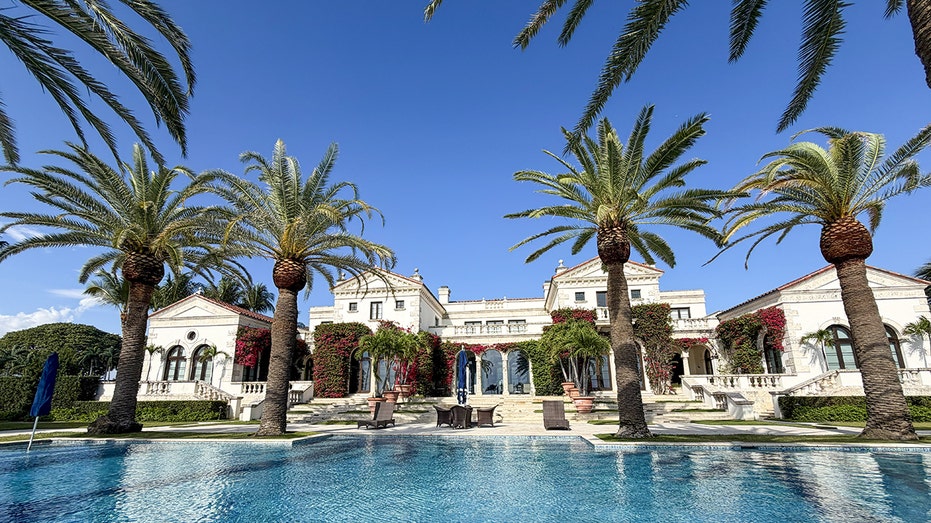
It’s a stark contrast to the finished, bougainvillea-covered Mediterranean arches of the mansion Johnston showed to Fox News Digital. Though that completed home is not formally for sale, its market price is estimated to be more than double what Zuckerberg paid due to its specific location and views.
“Fifty percent of the sales on Indian Creek are off-market. There are some that are just thinking about selling, and it becomes known in the community, and they’ll start getting offers,” he said. “They don’t really want to advertise because that can draw a lot of tire kickers and people that are interested to see the home.”
OVER $126M IN 60 DAYS — FLORIDA REAL ESTATE TYCOONS SAY BLUE-STATE WEALTH MIGRATION IS NOW PERMANENT
The agent noted that it typically takes one year for plans and permits, and three years to build a significant home on the island. He also explained how Bezos bought a 20-year-old Indian Creek property “in beautiful condition” for $75 million “just for somewhere to sleep” while his other two adjacent lots are being developed for his larger estate.
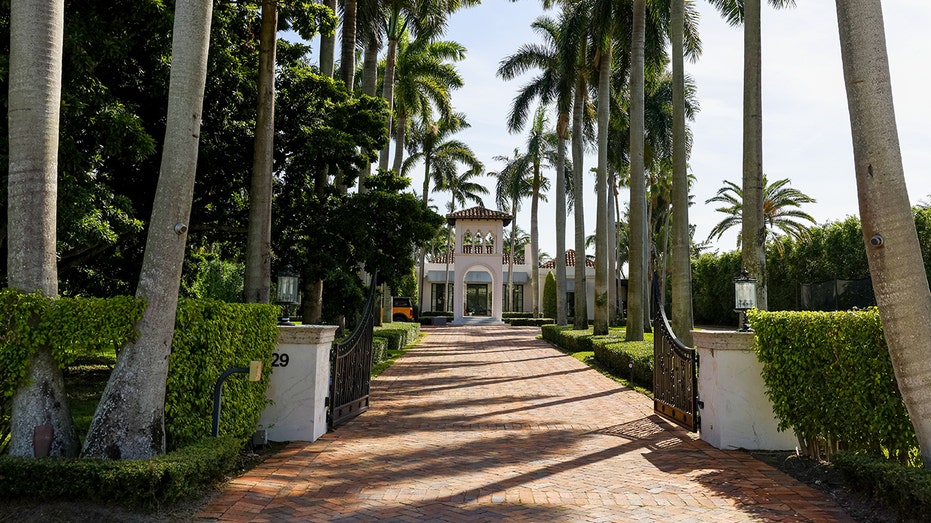
Driving by their residences, Bezos’ homes had long and winding driveways with iron gates and carefully tailored landscaping; Brady’s home appeared to be an almost entirely glass, gray-toned house from the front, with modern yet chic furniture and art visible through the window panes.
“When Tom Brady started building, he was thinking about selling the house for $80 to $100 million. Now he’s turning down offers four or five years later of $200 million,” Johnston said as another example.
“Some developers are doing very high-end homes now, but these end users, they have no budget. So then they’ll elevate those finishes even further, and they’ll build their dream home,” he continued. “I think this neighborhood is not attainable for some of us, including me. I think even some of the owners themselves are shocked.”
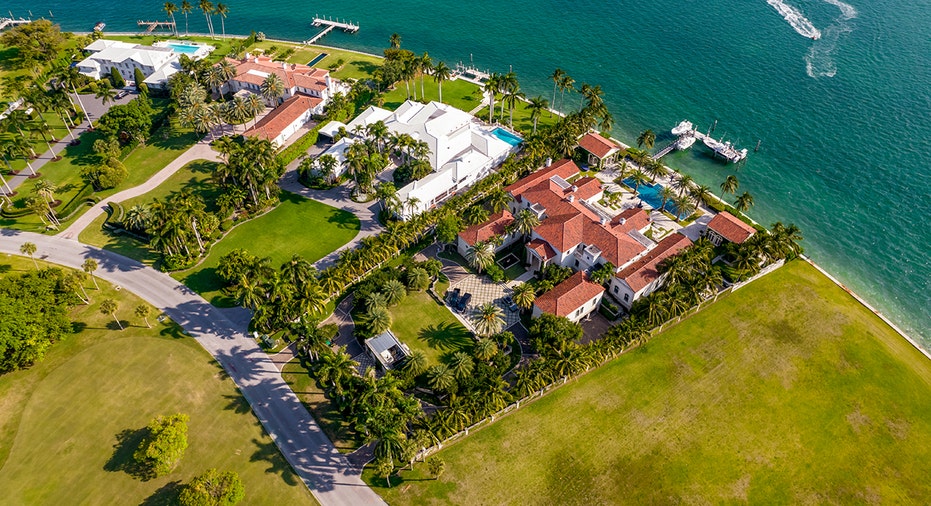
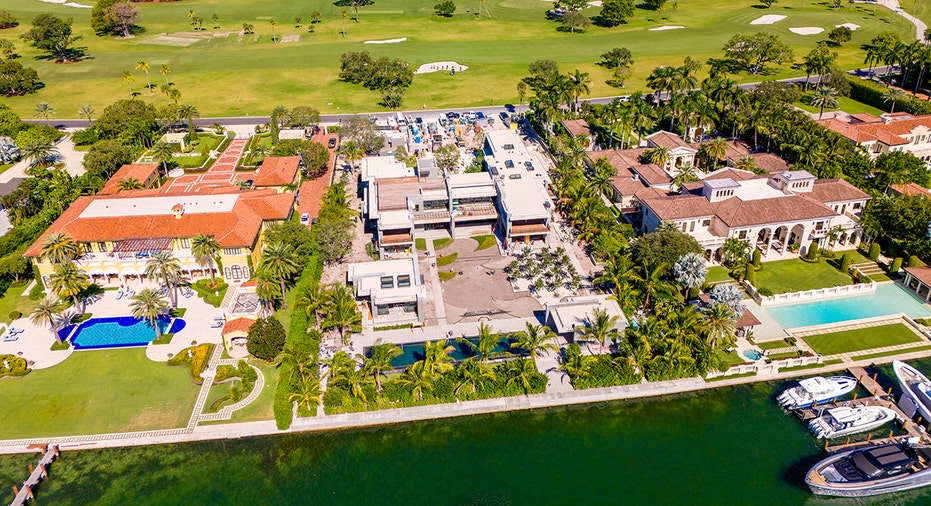
Socializing on and around the man-made island has seemingly replaced New York City and Silicon Valley boardrooms, as the top agent pointed out changes in the way business deals and venture capital decisions are being made outside of their traditional offices.
“One of my clients… he’s a VC, he’s worth about $14 billion, and he would walk out in Manhattan, he’d go, ‘I put on my bulletproof vest, I go to war… Down here, I go out in shorts and a T-shirt, I walk on my conference call to a coffee shop, I finish that, I do another meeting… I found more peace with my life, I’m just as efficient,’” Johnston recalled.
With more than half of $1 trillion in combined net worth living on Indian Creek, it’s solidifying itself as the epicenter of a permanent wealth migration. However, the juxtaposition of the billionaires’ playground and an exceedingly risky market for average buyers is wide — UBS’ Global Real Estate Bubble Index for 2025 recently put Miami in the No. 1 spot for the real estate market with the highest bubble risk on Earth, surpassing the peak of the 2006 housing bubble.
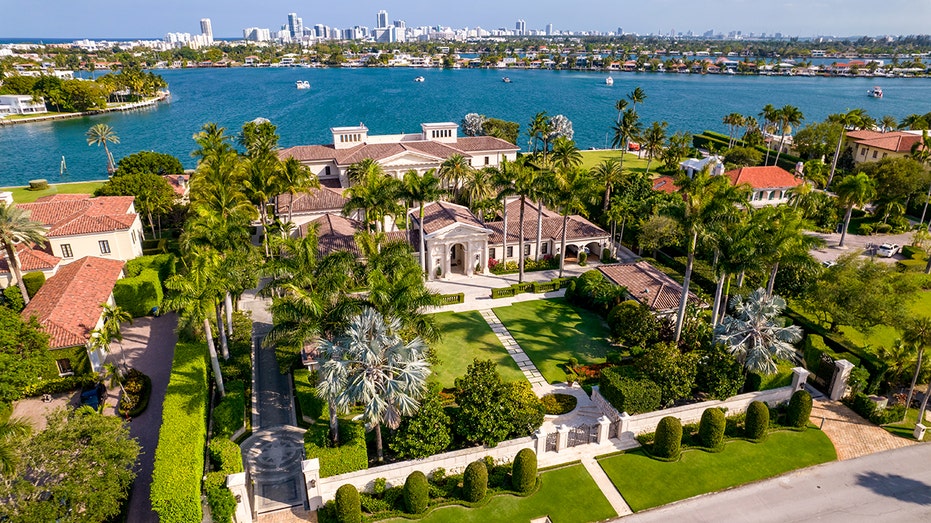
But Johnston argues that the trickle-down effect is funding massive public works, like high-speed transit and nearby affordable housing for the island’s vast support staff.
“I think it’s only going to benefit Miami greatly,” he said. “It has become more expensive and there’s been some push away from that. But the city is doing something about it, developers are reacting to it and there are peripheral areas now that are getting built out with beautiful retail and bus services and public transport, and I think it’s only going to make the city better and better.”
READ MORE FROM FOX BUSINESS