




 Weather
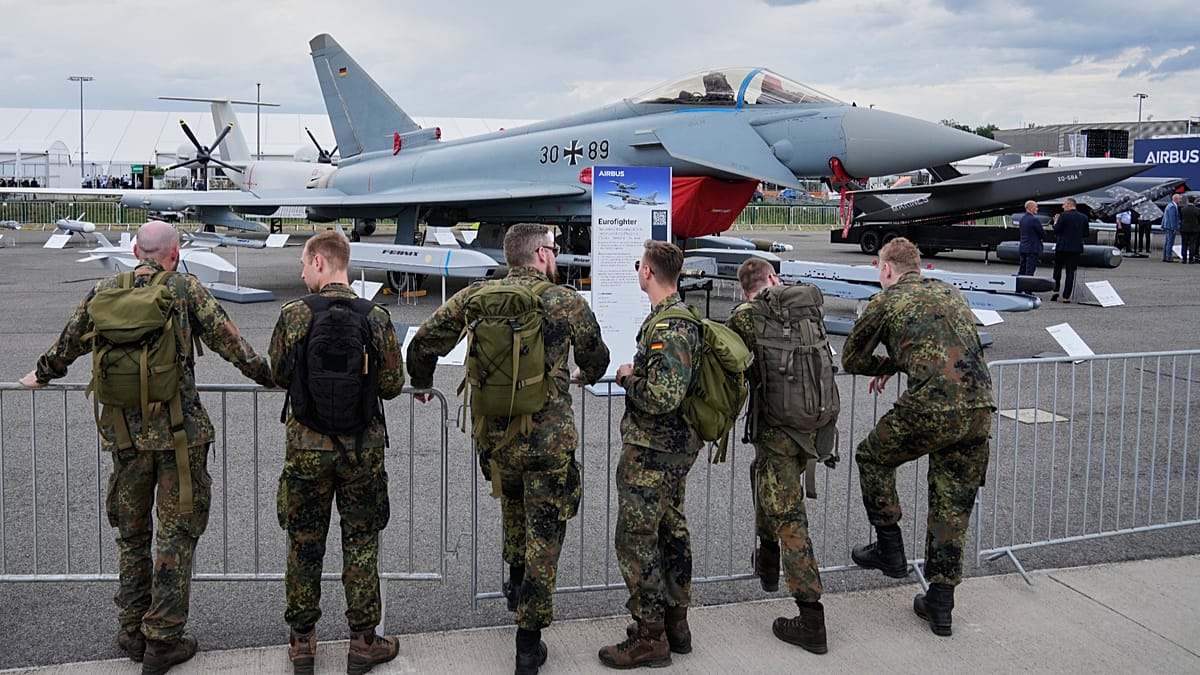
Fighter jets remain one of the main crowd-pullers at the International Aerospace Exhibition (ILA) in Berlin. But a walk around the showground quickly makes one thing clear: aircraft are no longer the only attraction. Drones, autonomous systems and digital technologies have emerged as some of the defining themes of this year’s event.
ADVERTISEMENT

ADVERTISEMENT
The exhibition got off to a disrupted start after pro-Palestinian activists temporarily blocked both access roads to the venue at Berlin Brandenburg Airport (BER), causing delays for visitors. Shuttle buses were unable to operate for a period before police cleared the blockades later in the morning.
By midday, attention had largely returned to the exhibition itself. Across the sprawling site, companies were unveiling new aircraft, defence systems and space technologies, while military officials and investors moved between stands looking for a glimpse of what may shape the industry in the years ahead.
Around 750 exhibitors from 37 countries are taking part, with organisers expecting more than 100,000 visitors. The Bundeswehr is hard to miss. Between the exhibition halls, soldiers staff recruitment stands, military hardware is on display and flight demonstrations regularly draw crowds to the runway.
The displays range from fighter jets and transport aircraft to air defence systems such as IRIS-T, satellites, drones and autonomous vehicles.
Yet despite the presence of some of the military’s most recognisable hardware, it is uncrewed systems that dominate many of the conversations. That focus is reflected throughout the exhibition halls, where companies are competing to showcase new drones, autonomous platforms and technologies designed to counter aerial threats.
New players in the spotlight
To the companies showcasing their latest developments are Rheinmetall, Helsing, Airbus and German drone manufacturer Quantum Systems, which used ILA to unveil its new Pulse P19 aircraft. Presented during a visit by Chancellor Friedrich Merz, the platform can operate either with a pilot or autonomously and has been designed for missions ranging from reconnaissance to counter-drone operations.
Speaking to Euronews, Krista-Marija Läbe, Deputy Spokesperson at Quantum Systems, said the aircraft can carry different payloads beneath its wings, including interceptor drones that can be launched to engage other drones in flight.
For Läbe, however, the bigger story at this year’s exhibition is not any single aircraft or system, but the changing make-up of the industry itself.
“What is incredibly impressive to me is how many new players are here at ILA this year. I think it’s very different from what it was just two years ago,” she told Euronews.
She pointed to the growing presence of Ukrainian companies and younger technology firms alongside the established defence and aerospace groups. “It’s good to see that this exhibition doesn’t just belong to the old players, the traditional primes, but that young, ambitious and emerging companies are playing an increasingly important role as well,” she said. A walk through the exhibition halls suggests she is not alone in that assessment.
Alongside the industry’s largest names, a growing number of start-ups and newer defence technology firms are using ILA to put themselves in front of military buyers, investors and policymakers.
Read the full article here