





 Weather
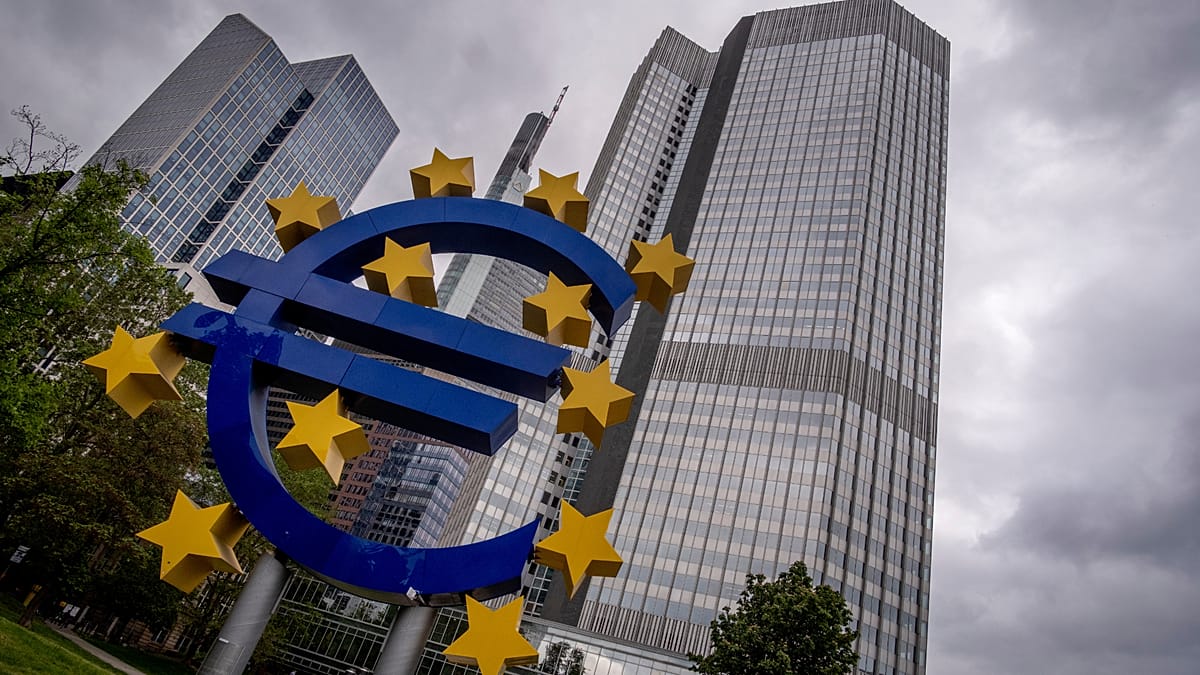
Billions of transactions happen yearly on the EU market. Yet Europe’s overreliance on US-owned payments schemes has increased dramatically.
ADVERTISEMENT

ADVERTISEMENT
In 2023, Visa and Mastercard processed about 4.7 trillion USD in payment volume across the bloc. Transactions in 13 out of 21 eurozone member states still run exclusively on international card schemes. US card brands monopolize almost the entire international segment, handling 61% of the euro-area card transactions.
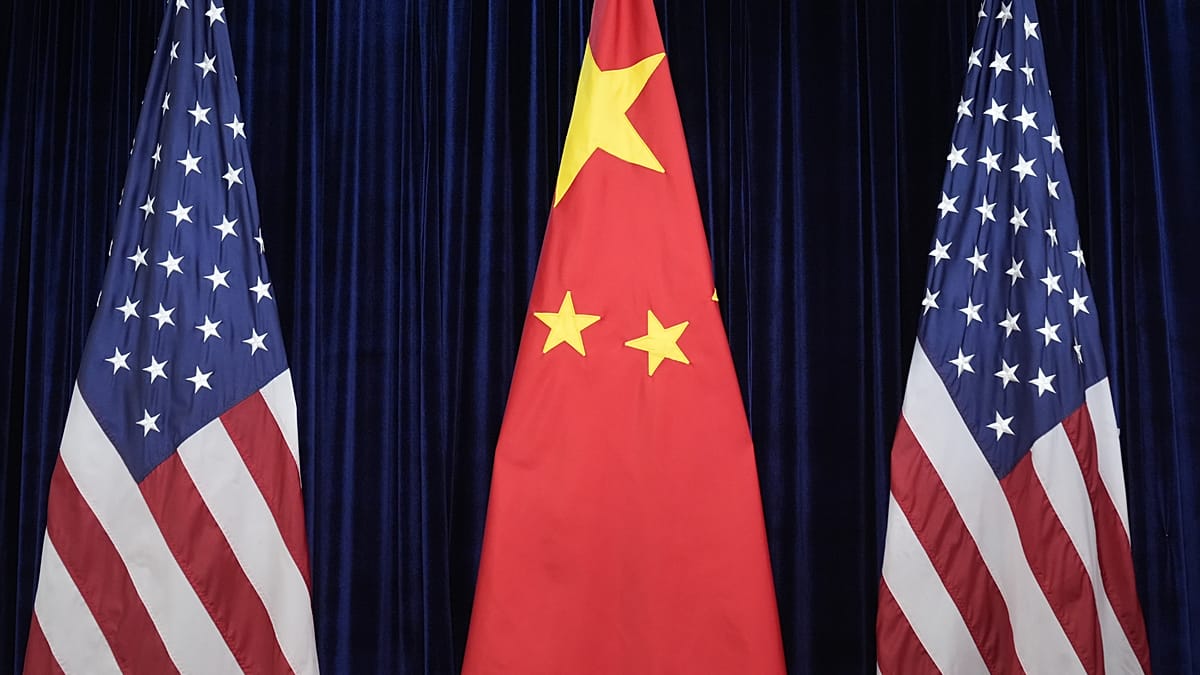
Increasing EU-US tensions have heightened fears of 450 million European citizens being potentially cut off from international financial infrastructures. This brought Europe’s dependency on U.S.-financial systems back into the political focus.
The European Central Bank (ECB) recently warned that “if we lose control of our money, we lose control of our economic destiny. And we surrender a key attribute of sovereignty”.
EU institutions have not issued official endorsements yet, but the Commission and the European Parliament (EP) welcome WERO, for now the only pan-European private-sector attempt to encourage Europe’s payments sovereignty.
Launched in 2024 in Germany, WERO is the first digital wallet and insta-person-to-person (P2P) payments circuit “made in Europe”. Founder European Payment Initiative (EPI) plans to make it a fully-fledged alternative to U.S.-payment networks by 2027.
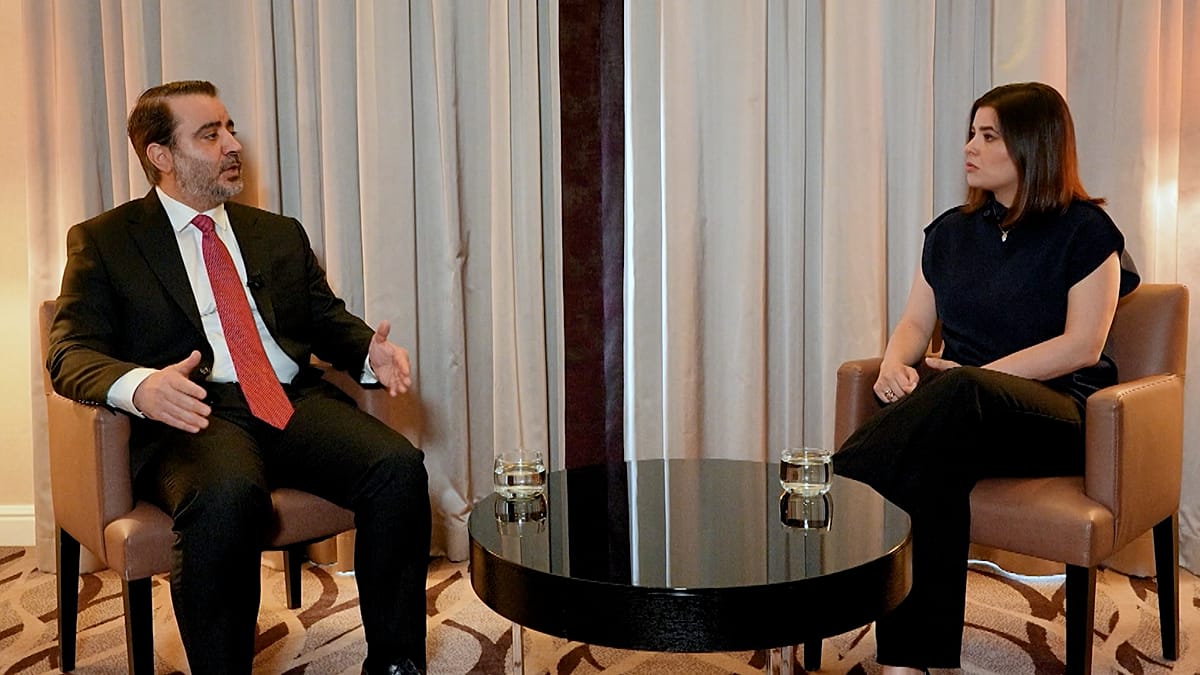
WERO “is about completing the architecture of Europe’s payment sovereignty with a scalable European alternative”, said Ludovic Francesconi, Chief Member and Strategy Officer at EPI.
But how close is WERO to competing with giants Visa and Mastercard?
Judith Arnal, Senior Researcher at the Centre for European Policy Studies and Elcano Royal Institute, sees it as promising, but not guaranteed to succeed.
“It must meet key conditions to compete with Visa and Mastercard. It must be cost-effective for merchants, convenient for consumers, secure against fraud, and offer have proper dispute resolution systems”, Arnal said.
She also warned against anti-US rhetoric. “Rather than eliminating Visa or Mastercard, the EU should build its own alternatives alongside US systems”, Arnal added.
The clock is ticking
Despite multiple efforts to enhance European financial sovereignty, most recently through the Instant Payment Regulation (IPR) in 2024, Europeans’ reliance on foreign payment schemes remains massive. 47% of the eurozone’s card payment value passed through Visa and Mastercard in 2025.
What used to be seen as market efficiency is now regarded as strategic vulnerability. Increasingly strained EU-US relations have sparked concerns over the US weaponizing its payment circuits control to put pressure on the EU, showing that the clock for the bloc’s independence is ticking fast.
According to Francesconi, “the urge and need for concrete actions started about seven to eight years ago, as international alliances started to shift and people took more interest on where our dependencies lied. After that, payments were no longer seen as purely commercial infrastructure — they were labelled as a part of critical economic resilience”.
Reliance on foreign payment systems is a “political statement concerning the sovereignty of Europe”, said ECB President Christine Lagarde, on the urgency of introducing the digital euro. Other EU leaders have echoed the sentiment in recent months.
While the US’ focus remains on tariffs, rather than banking access, President Trump’s repeated political unpredictability and arbitrariness has shown that the EU must seriously come up with ways towards full financial independency.
The EP has been particularly vocal on this. Economic and Monetary Affairs Committee chair Aurore Lalucq warned that Washington can cut off its electronic payment network form Europe’s financial system at any time, calling for an “Airbus of European payment systems”, she added.
If Visa and Mastercard suspend operations, transactions across Europe would be severely disrupted. Cards would stop working, digital wallets would be disabled, and online purchases would be restricted.
It wouldn’t be the first time the US imposes such financial restrictions. After the invasion of Ukraine, Visa and Mastercard suspended operations in Russia in March 2022, sending the country into financial isolation and forcing citizens to rely on cash and domestic payment methods.
In 2024 and 2025, the US levied secondary sanctions on financial institutions that enabled sanction evasion by Russia and Iran. Over 300 banks in China, Turkey, the UAE, and Central Asia risked losing access to American financial systems.
The EU’s moves so far
This financial decency has been a blind spot for the EU for years, and leaders in Brussels are rushing to fix it.
In February 2026, the ECB warned that there is “strong reliance” on international card schemes, and for e-commerce, on large global technology providers. This “overdependence” is problematic due to data protection, traceability, resilience and market power concerns.
Over the last decade, the EU developed a layered approach to build strong European alternatives, without excluding non-European providers. They combine EU-level policy and regulation to make instant account-to-account (A2A) payments widely usable, private-sector efforts to create interoperable European wallets and networks, and a digital euro so that central bank money remains usable in a digital economy.
Introduced in June 2012 by European leaders at a summit during the eurozone crisis, the EU proposed a “European Banking Union” to address the bloc’s fragmentation
According to Arnal, “the Banking Union’s [..] main purpose [is] cutting the feedback loop between the sovereign and the banks.”
“Not having a banking union basically means that the funding capacity of EU banks is lower. This leads, for instance, to capital and liquidity being trapped in member states and not being able to flow cross-border freely”, she added. “If we think about the EU economy, 75% of funding needs are covered by banks, so the role of banks in EU financing is key.”
This strategy is meant to centralise banking supervision across the euro area, ensure failing banks can be resolved neatly without taxpayer bailouts, and create consistent protections across countries. It aims to make European banks more stable and able to operate across borders at scale. Reducing fragmentation also helps create the conditions for European payment solutions to expand. Two pillars are operational, while the third, a common deposit insurance scheme, remains under negotiation, with no fixed completion date – still a long-term objective.
In parallel, European banks and payment providers are developing payment systems to rival or complement US-native services like PayPal. This “account-to-account layer”, says Arnal, “is the one where we are really thriving now.”
WERO is a the private-sector project. It is a digital wallet that allows users to send and receive instant account-to-account payments using mobile numbers, email addresses, or QR codes, bypassing traditional card networks. It launched in 2024 for P2P payments in Germany, France and Belgium, and is now aiming towards upscaling and “improving cooperation at large in Europe”, said Francesconi.
“But we go beyond now as we launch online commercial payments (e/m-commerce) in Germany, Belgium and soon France”, he added.
Then there is the SEPA instant payments law, which entered into force in April 2024. It requires eurozone banks to offer instant credit transfers within seconds at the same price as standard transfers and enable sending and receiving instant payments gradually by 2025.
The third idea is the TIPS instant payment system, which stands for TARGET Instant Payment Settlement. It is a pan-European infrastructure operated by the ECB that allows banks to settle instant payments in central bank money in real time, 24 hours a day. It provides the underlying “rails” that enable instant account-to-account transfers across countries. It has been operational since 2018 and continues to expand as more banks and payment providers connect to it.
Another highly anticipated initiative is the Digital Euro, first announced in 2020, which would create central bank-issued digital cash for everyday electronic payments.
Cooperation with the Digital Euro project is “key”, said Francesconi. “We will be able and are open to discuss the best ways to include digital euro in our wallet”. “A public-private partnership approach is definitely the way to consider regaining sovereignty, and to finally drive such ambition to reality […]. Europe will be strongest if public and private initiatives are designed to reinforce each other rather than operate in parallel or overlapping”, he added.
The EU is losing strategic autonomy
According to Francesconi, “the biggest economic loss is not only financial — it is strategic — we are talking here of control over consumer data, advertising opportunities, growth limits, etc. Without a pan-European solution, Europe lacks a useful layer for its autonomy and leadership for commerce on its own territory, which naturally scales across the single market”.
Europeans are left to rely more and more on fragmented national payment solutions which “receive less and less attention (and support)”, claims EPI’s Chief Member and Strategy Officer. This non-interoperability contributes to the fragmentation of the single market, undermining the EU’s economic competitiveness. Overall, single market fragmentation including payments may cost the EU up to €500 billion in annual GDP.
“This affects the ability to support and develop innovation efficiently, limits negotiating leverage […]. WERO aims to create that scale effect — enabling innovation, competition and efficiency at a continental level”, Francesconi added.
WERO could also strengthen European competitiveness as “the objective is rebalancing and offering an alternative. A strong European solution increases competition, strengthens resilience and gives banks and merchants more choice. Healthy competition benefits consumers and the ecosystem as a whole”, so the EPI’s Chief Member and Strategy Officer.
Citizens are also heavily impacted. The ECB has warned that, despite SEPA, payments are becoming more expensive and costs for consumers and businesses keep rising. Merchants across the eurozone spend approximately €3 billion every year just in fees to accept debit card payments from foreign customers.
But WERO aims to change this. For Francesconi “the difference [with foreign schemes] is crucial […]. WERO offers interoperability, brand recognition and acceptance across borders, transforming instant account-to-account payments into an everyday solution for consumers and merchants […]’.
Read the full article here