



 Weather
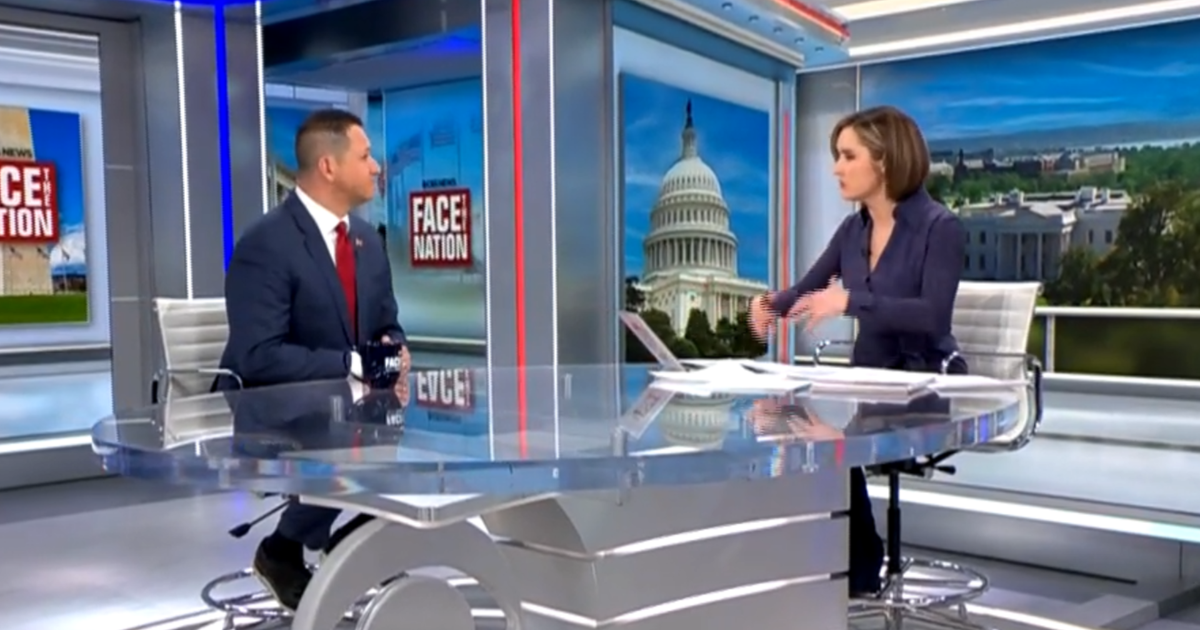
On this “Face the Nation with Margaret Brennan” broadcast, moderated by Margaret Brennan:
- Sen. Mark Warner, Democrat of Virginia
- Rep. Tony Gonzales, Republican of Texas
- David Becker, executive director of the Center for Election Innovation and Research and a CBS News election law contributor
- Dr. Scott Gottlieb, former FDA commissioner
Click here to browse full transcripts from 2026 of “Face the Nation with Margaret Brennan.”
MARGARET BRENNAN: I’m Margaret Brennan in Washington.
And this week on Face the Nation: Mindful of the upcoming midterm elections, the Trump administration moderates its tone on deportations, while ramping up efforts to undermine confidence in our election process.
With an eye towards November and an ear filled with Republican and voter concerns about the deaths of Minnesota residents Renee Good and Alex Pretti at the hands of federal immigration agents, President Trump concedes that lessons might have been learned about the way deportation roundups were conducted in Minneapolis.
(Begin VT)
DONALD TRUMP (President of the United States): I learned that maybe we can use a little bit of a softer touch, but you still have to be tough. These are criminal – we’re dealing with really hard criminals.
(End VT)
MARGARET BRENNAN: With congressional efforts to agree on reforms tied to DHS funding stalled, we will talk to a Texas Republican congressman, Tony Gonzales. His district is home to that family detention facility that housed 5-year-old Liam Ramos and his father last month.
Plus: President Trump prods Republicans to nationalize voting, a move that prompts pushback from Democrats and state election officials.
And what is behind the FBI’s seizure of 2020 election records from Fulton County, Georgia? We will talk to the top Democrat on the Senate Intelligence Committee, Mark Warner, and elections expert David Becker.
Finally, we will talk to former FDA Commissioner Dr. Scott Gottlieb about the alarming spread of measles around the U.S. and get his take on evolving vaccine protocols.
It’s all just ahead on Face the Nation.
Good morning and welcome to Face the Nation.
We begin this morning with the top Democrat on the Senate Intelligence Committee, Virginia’s Mark Warner.
Good to have you here.
SENATOR MARK WARNER (D-Virginia): Thank you, Margaret.
MARGARET BRENNAN: I want to talk about elections and security.
Back on January 28, the FBI went to Fulton County, Georgia and seized ballots and 2020 voting records linked to the presidential election. The director of national intelligence, Tulsi Gabbard, then was spotted outside the elections office.
And she argued that her presence there had been personally requested by the president of the United States and she had broad statutory authority to coordinate, integrate and analyze intelligence related to election security.
What would justify her involvement? Is there any foreign nexus that you have been informed of?
SENATOR MARK WARNER: We have not been informed of any foreign nexus.
The job of the director of national intelligence is to be outward-facing about foreigners, not about Americans. And, remember, many of the reforms that were put in place actually took place after the Watergate scandal under President Nixon, where a president was directly involved in certain domestic criminal activities that appeared with the Watergate break-in.
And my fear in this case is, it almost seems Nixonian. If the president asked Gabbard to show up down in Georgia on a domestic political investigation, first of all, how would he know about the search warrant even being issued? That’s not his job.
And then to have the director of national intelligence down there, which is totally against her rules, unless there is a foreign nexus, and she has not indicated any foreign nexus to us to date.
MARGARET BRENNAN: There’s been no communication with the committee whatsoever on this issue?
SENATOR MARK WARNER: We have – we have asked.
MARGARET BRENNAN: OK.
SENATOR MARK WARNER: We then subsequently found that this was not the first time she was involved in domestic activities. She went down and seized some voting machines in Puerto Rico earlier in the year.
Again, we had no knowledge of that. And then the question of what she was doing in Georgia, there’s been three or four different stories since it broke. First, she said the president asked. Then the president said he didn’t ask her. Then he said it was Pam Bondi, the attorney general.
So we don’t have the slightest idea, other than the fact that the whole thing stinks to high heaven, and the fact is, Donald Trump cannot get over the fact that he lost Georgia in 2020, that he lost the election in 2020. My fear is, now he sees the political winds turning against him, and he’s going to try to interfere in the 2026 election, something a year ago I didn’t think would be possible.
MARGARET BRENNAN: I mean, that’s a tremendous statement.
But just to clarify here, it was Reuters that first reported that Gabbard went to Puerto Rico back in the spring to seize voting machines. Was Congress informed at all or did you learn about it in the press?
SENATOR MARK WARNER: I believe the first we ever heard about this was from the press itself.
MARGARET BRENNAN: Wow.
So the – you’ve laid out that the intelligence agencies usually focus overseas. But the White House is arguing that the director was there for good reason and that federal law, they argue, assigns a DNI statutory responsibility to lead counterintelligence matters related to election security, election voting system risk, software, voter registration databases.
You’re concerned, but are your fellow Republicans on the committee concerned about this?
SENATOR MARK WARNER: Well, here’s the ironic thing, Margaret.
Many of the protections for our election system were put in place during the first Trump administration.
MARGARET BRENNAN: Right.
SENATOR MARK WARNER: We set up CISA, the Cybersecurity Agency, to help work with state and local elections. There was an FBI center set up for foreign malign influence, foreign influence.
And then we put into law something called the Foreign Malign Influence Center at the Director of National Intelligence office. All of those entities have been basically disbanded, CISA cut by a third…
MARGARET BRENNAN: Yes.
SENATOR MARK WARNER: … the FBI center cut back, the ODNI center cut back, which we think is, frankly, counter to the law.
But it all, in terms of the ODNI…
MARGARET BRENNAN: Right.
SENATOR MARK WARNER: … has to be involved – of foreign involvement. There has been no evidence of that to date.
MARGARET BRENNAN: Where is Chair Cotton on this, though?
SENATOR MARK WARNER: We have jointly been making sure that we get updates on election security.
And I think you’re going to see more of that to come, because this is critical. And my concern is that, when we see artificial intelligence tools and others…
MARGARET BRENNAN: Yes.
SENATOR MARK WARNER: … it was almost child’s play what happened in 2016. China, Russia, Iran, others could be interfering. We’ve not seen evidence to date.
MARGARET BRENNAN: Yes.
SENATOR MARK WARNER: Gabbard, if she’s got any evidence, should have provided it to the Congress.
I think this was an effort where Donald Trump can’t get over the fact that he lost Georgia, so obsessed. And it begs the question is, what was Gabbard doing there? And it, frankly, begs the question is, why was the president even aware of this investigation…
MARGARET BRENNAN: Yes.
SENATOR MARK WARNER: … before the search warrant was issued?
MARGARET BRENNAN: Well, we would – we would love to put those questions to the director and have asked to do so.
But now that you are here, can you just button this up for me? Because we’re talking about 2020, and that’s what Fulton County focus was about. But you also said, you think in 2026 there’s an effort to interfere. What evidence do you have of that?
SENATOR MARK WARNER: This was what I’m seeing from the president’s own comments about nationalizing elections…
MARGARET BRENNAN: Yes.
SENATOR MARK WARNER: … and putting Republicans in charge, counter to the Constitution.
We’ve seen these activities in Georgia, where could there be some effort that suddenly gives him an excuse to try to take some of these federalization efforts? We’ve seen ICE. We focus a lot of this activity on ICE, in terms of their going rogue in Minneapolis.
But there is a very real threat, without reforms at ICE, that you could have ICE patrols around polling stations, and people would say, well, why would that matter if you’re all American citizens?
MARGARET BRENNAN: Right. Yes, noncitizens cannot vote.
SENATOR MARK WARNER: Well, because we’ve seen ICE discriminate against Latinos’ families. We’ve seen as well mixed families where someone may be legal and others not.
And, candidly, you don’t need to do a lot to discourage people from voting. And we’ve more recently seen ICE starting to use technology where they can get information about Americans. Recently, there was an individual in Minnesota that got denied a Global Entry card to get through TSA quicker because he or she appeared at a protest rally.
Do we really want ICE having that information?
MARGARET BRENNAN: Is that what DHS said?
SENATOR MARK WARNER: Hypothetically – that was what happened in Minnesota.
Hypothetically, if ICE is getting information, and you’ve got an unpaid parking ticket, would you go vote if you’ve got an unpaid parking ticket…
MARGARET BRENNAN: Yes.
SENATOR MARK WARNER: … thinking that an ICE patrol might be at a polling station?
This is uncharted territory, and yet you’ve got the president’s own words, in many ways, raising concerns, because he says, well, gosh, we Republicans ought to take over elections in 15 states.
MARGARET BRENNAN: We’re going to – we’re going to talk about some of that and the operations at the local level with David Becker, our elections expert, ahead in the show, and the immigration reform.
But I want to ask you about what’s going on with Director Gabbard, because there was a whistle-blower who filed a complaint against her personally and offered to come to Congress to share the information, according to the attorney for this whistle-blower.
This is about a complaint that two inspectors general, one of them Biden era, concluded had a non-credible nature. You’ve viewed a redacted version of the complaint, as I understand it. Do you accept their conclusions?
SENATOR MARK WARNER: Well, first of all, the previous inspector general, who’d been a long-term professional, viewed it as credible.
The new…
MARGARET BRENNAN: Which of the two complaints?
SENATOR MARK WARNER: The original – I can’t talk about the contents of the complaint. I’m old-fashioned. It’s classified.
And the complaint is so redacted, it’s hard to get to the bottom of – I have got additional questions. My concern with what the director did is that this information was not relayed to Congress. There is a process, and we didn’t even – we – and I mean we, the Gang of Eight – didn’t even hear about the complaint until November.
We only saw it in February, and we’ve got this complete contradiction where the then-lawyer for Director Gabbard said she – he shared the responsibility she had to share this with Congress in June, the legal responsibility. She later stated that she was not aware of her responsibility.
Ignorance of the law is not an excuse if you’re the director of national intelligence.
MARGARET BRENNAN: Well, as I understand it, because when it’s deemed non- credible, it is not necessarily an urgent concern that starts the time clock that would force…
SENATOR MARK WARNER: There was – there was a ruling of urgency by the first inspector general. That was contradicted by the Trump inspector general, but the process was still ongoing.
The fact that this sat out there for six, seven, eight months now and we are only seeing it now raises huge concerns, in and of itself.
MARGARET BRENNAN: Well, I know you said you will not share what the intercept and the intelligence was about or the complaint itself, but CBS has been told by a senior intelligence official the whistle-blower complaint included reference to an intelligence intercept between two foreign nationals in which they mentioned someone close to President Donald Trump.
U.S. intelligence did not verify whether the conversation itself was more than just gossip. Will you be able to speak to the whistle-blower? Will you be able to see this underlying intelligence?
SENATOR MARK WARNER: My understanding is, the whistle-blower has been waiting for guidance, legal guidance, on how to approach the committee.
MARGARET BRENNAN: Does the whistle-blower still work for the U.S. government?
SENATOR MARK WARNER: I don’t have any idea.
MARGARET BRENNAN: Will you be able to view the intelligence, the intercept itself that she’s accused of not sharing?
SENATOR MARK WARNER: My question is – we are trying to get both the redactions and the underlying intelligence. And that’s – that is in process. I’m not going to talk to the content itself, but this whole question – remember, this whistle-blower came forward in May. It’s now February of the following year, and we’re still asking questions.
MARGARET BRENNAN: Well, Tom Cotton, the chair, says he’s – he’s comfortable with – with the process to date. But on the…
SENATOR MARK WARNER: I’m not comfortable with the process…
MARGARET BRENNAN: Yes.
SENATOR MARK WARNER: … the timing. And I can’t make a judgment about the credibility or the veracity because it’s been so heavily redacted.
MARGARET BRENNAN: Well, the director is frustrated with you personally, and issued this really long, blistering statement, saying you’ve repeatedly lied to the American people, that the – the media also lies, and that – that she never had the whistle-blower complaint in her possession and saw it for the first time two weeks ago, I guess the actual hard copy.
So do you care to respond to this accusation that you were lying?
SENATOR MARK WARNER: I would respond that I do not believe that Director Gabbard is competent for her position. I don’t believe that she is making America safer by not following the rules and procedures on getting whistle- blower complaints to the Congress in a timely fashion.
I believe she has been totally inappropriate showing up on a domestic criminal investigation in Georgia around voting machines. I think she has not been appropriate or competent in terms of, frankly, cutting back on investigations into foreign malign influence, literally dismembering the Foreign Malign Influence Center that’s at the Director of National Intelligence.
And we are going to agree to disagree about who’s telling the truth, and I believe her own general counsel, who’s now her deputy general counsel, testified this week that he shared with Director Gabbard in June her legal obligations.
MARGARET BRENNAN: Well, the NSA has released a statement saying that they are abiding by the law.
We do invite Director Gabbard on this program.
Before I let you go, I have to ask you about Iran. There have been a number of think tanks who have published photos of what they believe is evidence of Iran reconstituting and rebuilding its nuclear program that the U.S. bombed eight months ago. Are they rebuilding?
SENATOR MARK WARNER: When we struck Iran – Iranians’ nuclear capabilities, our military did a great job.
It was not totally obliterated, so that standard that the president himself set. And Iran has – as been indicated in public documents, is trying to reconstitute. What I fear is that we don’t have the ability to bring the full power of pressure against Iran.
A few weeks back, when the Iranian people bravely were in the streets, and there might have been a moment, we couldn’t strike because the aircraft carrier that was usually in the Mediterranean was off the coast of Venezuela doing the blockade there.
MARGARET BRENNAN: You believe that’s why the January strikes were called off?
SENATOR MARK WARNER: On top of that – on top of that – on top of that as well, we were unable to bring the full force of pressure of our allies in Europe against Iran because, at that very same moment, President Trump was disrupting NATO with his Greenland play.
We are stronger when we use our allies, when we have our full military capabilities in region. And that military is getting stretched, as good as we are, as the president gets engaged in activities all over the world.
MARGARET BRENNAN: Yes.
You support the diplomacy under way now?
SENATOR MARK WARNER: I support the diplomacy, absolutely.
MARGARET BRENNAN: All right, Senator Mark Warner, thank you for your time today.
Face the Nation will be back in one minute. Stay with us.
(ANNOUNCEMENTS)
MARGARET BRENNAN: There is some devastating news out of the Winter Olympics in Cortina, Italy.
Legendary downhill skier Lindsey Vonn, racing on a badly injured knee, crashed just seconds into her race this morning. The 41-year-old Vonn lost control while taking a turn and then spun briefly in the air. She was airlifted off the racecourse to a nearby hospital.
Just nine days ago, Vonn ruptured her ACL in a training race in Switzerland.
Some good news for Team USA, though. Teammate Breezy Johnson won the gold medal for that race, becoming the first American to win gold in this year’s Games.
And we turn now to Texas Republican Congressman Tony Gonzales.
Good morning.
REPRESENTATIVE TONY GONZALES (R-Texas): Good morning. Thanks, Margaret, for having me on.
MARGARET BRENNAN: Let’s talk about immigration. We have spoken before.
REPRESENTATIVE TONY GONZALES: Yes.
MARGARET BRENNAN: You have this border district. You know a lot of Border Patrol agents personally.
REPRESENTATIVE TONY GONZALES: Yes.
MARGARET BRENNAN: They’re your constituents.
So, Friday, Homeland Security funding is going to expire.
REPRESENTATIVE TONY GONZALES: Right.
MARGARET BRENNAN: And there’s this standoff in the Senate in particular. Democrats are demanding a number of reforms. And I want to lay them out here.
And this is sort of the cost of their vote. Democrats want to require a judicial warrant, not just an administrative one, to enter private property. They want federal law enforcement agents to show I.D., wear body cameras, standard uniforms, no masks, protect sensitive locations like schools and churches, stop racial profiling, coordinate with local jurisdictions to prosecute crimes.
Are you on board with any of these demands? Do you see a deal?
REPRESENTATIVE TONY GONZALES: I think we need to work through it. There’s some things that make sense. There’s a lot of things that don’t.
Just a few days ago, this was a bipartisan vote. And all of a sudden now, the Democrats are all trying to hold the country hostage. I will tell you what’s not going to be in there, amnesty for illegal aliens. I will tell you what’s not going to be there, stripping away protections for law enforcement officers that are trying to protect themselves.
If rioters get to wear masks, then law enforcement gets to wear masks as well. What can be in there? I think the body cameras make a lot of sense. I was really encouraged to see Secretary Noem and Tom Homan execute that. I think those are good parts of it.
And another thing that works – going back to my district, another thing that works is communication. I think it’d be very, very key if there were communication liaisons in all the communities that ICE has, meaning, not changing policy, just sharing communication from the community, let’s say the city manager or let’s say city council, community leaders…
MARGARET BRENNAN: Yes.
REPRESENTATIVE TONY GONZALES: … up to the administration and back down.
I saw the Biden administration do this with ranch liaisons when the ranchers were really upset. And, once again, that helped. These are a couple things that I think could make it – could be the glue that gets this package going.
MARGARET BRENNAN: If the administration will go along with that coordination with local officials.
REPRESENTATIVE TONY GONZALES: Yes, absolutely.
MARGARET BRENNAN: But that…
REPRESENTATIVE TONY GONZALES: The liaison piece makes a lot of sense to me.
MARGARET BRENNAN: Yes.
REPRESENTATIVE TONY GONZALES: I mean, that one, once again, you’re not…
MARGARET BRENNAN: Yes.
REPRESENTATIVE TONY GONZALES: ICE is not going to stop going to these communities. It would be helpful if we had many Tom Homans all throughout the country basically saying, this is what we’re doing, not leaving things to what-ifs and letting other people fill that void, but an actual sharing up and down the chain of command, if you will.
MARGARET BRENNAN: Let me ask you about the warrants here.
The Trump administration has changed how to use warrants and arrests. They permit warrantless arrests as well. This wasn’t done even during the first Trump administration. Leader Jeffries was on another network this morning and said: “Judicial warrants should absolutely be required before ICE agents can storm private property. It should not be controversial,” this demand.
They just want adherence to Fourth Amendment constitutional protections. As a conservative, shouldn’t a judge be consulted?
REPRESENTATIVE TONY GONZALES: Of course I believe in the Fourth Amendment.
But what worries me is, a judge should not hold up everything. We’re seeing judges all over the country go beyond their level of authority. And so, if a law enforcement officer, let’s just say, for example, sees a crime that’s being committed or has due – or has due cause, then why can’t they go in there?
These administrative warrants, they aren’t new. All of a sudden, the left is…
MARGARET BRENNAN: There’s new interpretation of them, and the ICE director has disclosed that.
REPRESENTATIVE TONY GONZALES: Well, they’re complaining about the use of them.
But if you’re an ICE agent and you don’t have cooperation from local or local officials, how are you supposed to get that criminal that’s in somebody’s community? How are you supposed to remove them? That’s what worries me.
MARGARET BRENNAN: Well…
REPRESENTATIVE TONY GONZALES: If we allow judges to be the roadblock, it doesn’t keep our communities safe.
MARGARET BRENNAN: So, you – that’s a hard line for you in terms of, you would never get on board with requiring that a judicial warrant be required to enter private property?
REPRESENTATIVE TONY GONZALES: Administrative warrants work. I want to give law enforcement every tool they need to go out and apprehend these convicted criminals that are loose in our community. To me, that makes a lot of sense.
MARGARET BRENNAN: Well…
REPRESENTATIVE TONY GONZALES: Why you would want to shackle your own law enforcement from keeping our communities safe makes no sense to me.
MARGARET BRENNAN: Well, the Fourth Amendment protects all people, regardless of citizenship or national origin, from unreasonable search and seizure. So some of those collateral arrests are warrantless.
But that’s the politics of this funding bill. I will put the policy aside for a second because I want to ask you about the cross-examination you’re going to have the opportunity to make this week, because you have the head of ICE, CBP and another agency come before Homeland Security Committee.
The Republican chair said he has questions about training of immigration agents and their use of force. Are you comfortable with what you saw happen in Minneapolis? I mean, are Republicans going to approach this in a partisan way or hold them to account?
REPRESENTATIVE TONY GONZALES: What happened in Minneapolis, nobody in this country should want. We should all strive not to be Minneapolis.
We don’t want to see local communities not work with federal government. And we want – we don’t want to see…
MARGARET BRENNAN: The leaders of the agencies are the ones you’re going to be questioning, though.
REPRESENTATIVE TONY GONZALES: Of course.
And I want – I want to know, hey, what are you doing to work with others within the community, so, that way, it’s not just the ICE going it alone? It shouldn’t be that way. And that’s what we’re seeing. Secretary Noem has been very clear, very clear on trying to build these relationships out.
And Tom Homan is delivering on this by going in there; 80 counties are now all of a sudden working with ICE, allowing us in the jails.
MARGARET BRENNAN: That was a choice by the administration to start working with locals.
REPRESENTATIVE TONY GONZALES: That works. I – they have been…
MARGARET BRENNAN: That was a change.
REPRESENTATIVE TONY GONZALES: They have been trying to do this.
The problem is, is, you have got so many local municipalities that don’t want to communicate, that don’t want to work together. And when that happens, your city burns. We don’t want Los Angeles. We shouldn’t want Minneapolis.
People can protest. People can be able to say, hey, we won’t agree with certain policy, but there needs to be more collaboration at the local, state and federal level.
MARGARET BRENNAN: Well, we’re going to have to take a break here, but I have more questions for you on the other side of it.
REPRESENTATIVE TONY GONZALES: Yes.
MARGARET BRENNAN: So, if you would, stay with us.
We will be right back with more Face the Nation.
(ANNOUNCEMENTS)
MARGARET BRENNAN: As Americans struggle with the heated debate about immigration enforcement tactics and public safety here at home, some of the U.S. athletes competing in the Winter Olympics in Milan have acknowledged the complicated feelings they’re navigating as they represent their country on the biggest stage in global sports.
(Begin VT)
HUNTER HESS (U.S. Olympic Athlete): It brings up mixed emotions to represent the U.S. right now, I think. It’s a little hard. There’s obviously a lot going on that I’m not the biggest fan of, and I think a lot of people aren’t. Just because I’m wearing the flag doesn’t mean I represent everything that’s going on in the U.S.
CHRIS LILLIS (U.S. Olympic Athlete): I love the USA. And I think I would never want to represent a different country in the Olympics.
With that being said, you know, a lot of times, athletes are hesitant to talk about political views and how we feel about things. I feel heartbroken about what’s happened in the United States. I think that, as a country, we need to focus on respecting everybody’s rights and making sure that we’re treating our citizens, as well as anybody, with love and respect.
And I hope that, when people look at athletes competing in the Olympics, they realize that that’s the America that we’re trying to represent.
(End VT)
MARGARET BRENNAN: Those comments have drawn criticism from some congressional Republicans and Trump administration officials.
We will be back in a moment.
(ANNOUNCEMENTS)
MARGARET BRENNAN: We will be right back with a lot more Face the Nation, more from Congressman Gonzales and CBS News election law contributor David Becker and Dr. Scott Gottlieb.
Stay with us.
(ANNOUNCEMENTS)
MARGARET BRENNAN: Welcome back to “FACE THE NATION.”
We return now to our conversation with Republican Congressman Tony Gonzales of Texas.
On the homeland security front, we see in our CBS polling that the credibility of the president’s deportation policy is in question. And you can see it right there. A lot of the American public just doesn’t support the methods used for mass deportation, even though they like the idea of mass deportation.
In the past you’ve questioned whether the administration was really focusing on the worst of the worst. You said don’t deport Abolita. Do you think that they are actually hearing the concerns that people like you have raised and do you think there’s any improvement?
REPRESENTATIVE TONY GONZALES (R-TX): Very early on I mentioned, hey, if we go down this route as a party we’re not going to be successful. And we’re seeing some of that with some of these special elections that are happening.
I am encouraged. I’ve seen the administration highlight more on convicted criminal aliens. I’m seeing Secretary Noem and Tom Homan –
MARGARET BRENNAN: In their messaging or in their arrests?
REPRESENTATIVE TONY GONZALES: In their arrests. And in their focus of going into a jails. If you go into a jail and you go cell by cell, that makes a lot more sense to the American people than going house by house, going, are you an American citizen or not? And it’s safer. It’s safter for the agents as well.
So, I think if we go down that route we will – we as – we, as a Republican Party, will be successful.
The other part of it, too, is to talk about legal immigration. The president has mentioned this many times. Last week he – there was 65,000 work visas that he signed off on where he goes, you’re not invited to this country if you come in illegally. But if you’re here legal, we encourage you to come, you know, do it the right way.
MARGARET BRENNAN: Well, I want to talk about that again in a moment. But just to pick up on what you mentioned in your home state, you saw this stunning win by Democratic Taylor Rehmet in what had been a reliably red district. And, in fact, one of 26 state house seats that have flipped from Republican to Democrat nationally since president Trump took office. This wasn’t a one off, in other words. And in the Texas press, there’s a lot of focus on the Latino voters as having really swung back or swung to the Democratic Party. Why? What’s happening?
REPRESENTATIVE TONY GONZALES: People are anxious.
MARGARET BRENNAN: Is it the deportation policy?
REPRESENTATIVE TONY GONZALES: It’s some of what’s being portrayed and what – one of the things I think is very effective for the administration is for them to highlight the people that they’re deporting. Put them on the website. Show them and go, these are the folks that we’re coming after. I would argue the Hispanic vote is what gave us, the Republicans, the House, the Senate and the White House. And if we want to keep that long term, we do have to make a shift. Not necessarily in policy, but in communication. I mentioned this earlier, a communication liaison of someone saying, hey, this is what we’re doing, working with others, so it’s not just a surprise.
Prime example, San Antonio. We have a new ICE facility built in San Antonio. A lot of people are anxious. They don’t know where – what’s happening. This is $125 million that’s coming to the community, have 1,200 jobs, and after it gets established, there will be another 125 million with 325 good paying jobs for our local community.
MARGARET BRENNAN: Yes. But respectfully, in the past you have said this isn’t just a PR problem. You actually looked at the numbers and found that it was not the worst of the worst in those detention facilities.
REPRESENTATIVE TONY GONZALES: Right. It’s not a PR problem. It has to be – it has to be –
MARGARET BRENNAN: It is a policy problem.
REPRESENTATIVE TONY GONZALES: It has to be a policy. And what I am seeing is, they are going after the worst of the worst. They’re talking about we’re going after the worst of the worst. They’re – the part I think we can – we can improve on is communicating with the local municipalities, those that don’t have an idea and be able to go, no, that you have a seat at the table. We want you to have a seat at the table. Even if it’s different, even if it’s a different conversation or a different ideology, you should have a seat at the table so that way your citizens know what’s happening in your community.
MARGARET BRENNAN: Yes. So, Trump was not the first president of the United States to detain children.
REPRESENTATIVE TONY GONZALES: Sure.
MARGARET BRENNAN: You have this facility, though, in your district, Dilley, and that is for family detentions. That’s where little five-year-old Liam Ramos from Minnesota was held before a judge – that’s the picture of him there – ordered him released. He was ordered released because his family has a pending asylum claim. A legal process. He had entered with U.S. government permission through a process that the Biden administration had deemed legal, the current administration does not, the CBP One app.
Liam’s father gave an interview to Telemundo, and you read the transcript, he’s talking about this five-year-old, he’s not OK. He’s waking up at night crying. He’s worried he’s going to be taken again. It’s psychological trauma according to the father. And the administration’s still trying to deport him. Do you understand why they are so focused on this five-year-old and his dad if they did come in through the front door with U.S. government permission?
REPRESENTATIVE TONY GONZALES: Well, the front door was via an app that Biden knew exactly what he was doing, and he created this huge mess and now President Trump is there to clean up. And immigration –
MARGARET BRENNAN: But he came in the front door. He wasn’t sneaking across the border.
REPRESENTATIVE TONY GONZALES: Through an app. Through an app that wasn’t vetted. And the bottom line is that he’s likely – they’re not going to qualify for asylum. So, what do you do with all the people that go through the process and do not qualify for asylum? You deport them.
I understand the five-year-old. And it, you know, it breaks my heart. I have a five-year-old at home. I also think, what about that five-year-old U.S. citizen? What about our –
MARGARET BRENNAN: You feel comfortable defending that?
REPRESENTATIVE TONY GONZALES: I feel comfortable – we have to have a nation of laws. If we don’t have a nation of laws –
MARGARET BRENNAN: They were following the law. That is –
REPRESENTATIVE TONY GONZALES: I don’t feel – I’ll say this. You – you want to – we have to –
MARGARET BRENNAN: That’s the rub is that a new administration deemed the last administration’s regulation not to be legal.
REPRESENTATIVE TONY GONZALES: We can be compassionate and we can also – we can also enforce our laws. And I think that’s the secret sauce that the administration and Congress must do. Let’s enforce our laws, but let’s do it in a humane way.
The facility in Dilley, I’ve visited there many times. I’ve visited dozens of different facilities. It is a nice facility. It’s a detention facility for people that are in the country illegally that are about to be deported, but it is a nice facility. Nicer than some elementary schools here in San Antonio.
MARGARET BRENNAN: Advocates have said otherwise.
But quickly, before I let you go, a number of Republican lawmakers have objected to the video that the president and his staff posted to his social media account. The one of President Obama and the former first lady. Do you think he needs to apologize for it?
REPRESENTATIVE TONY GONZALES: There’s – it’s up to the president. There’s no room in this country for racism, anti-Semitism, socialism. All the isms need to go. But what I’d say –
MARGARET BRENNAN: And you think it was that?
REPRESENTATIVE TONY GONZALES: At the end – I mean I think it was very – it was very upsetting to a lot of people.
What the part of the – no one’s talking about that video is about election integrity. And so, the bulk of it was on election integrity.
MARGARET BRENNAN: Yes.
REPRESENTATIVE TONY GONZALES: What I – which is a very important topic.
What I suspect is going to happen is, the White House is going to, in the coming days, issues a memo on their policy for this upcoming election. And I suspect the Director of National Intelligence is going to be at the center part of building that out and making sure everyone –
MARGARET BRENNAN: Yes.
REPRESENTATIVE TONY GONZALES: Our midterm elections are safe and secure.
MARGARET BRENNAN: But – and I know the president claimed the video was credible. Also claimed he had watched it, but then not seen that part of it with the racist –
REPRESENTATIVE TONY GONZALES: It was at the very. It was at the very end for one second. It was really weird.
MARGARET BRENNAN: The president of the United States and his staff, wouldn’t you expect that they actually look at what they do before they do it?
REPRESENTATIVE TONY GONZALES: The president of the United States should not be worrying about all the people that are upset with him. If he’s doing that, he’s not keeping our country safe.
MARGARET BRENNAN: But why is –
REPRESENTATIVE TONY GONZALES: I did appreciate them taking it down. I did appreciate him saying, hey, look, you know, that shouldn’t have been on there. But, you know, the –
MARGARET BRENNAN: Should the staffer, who allegedly did it, be fired? Should there be consequences for something like that?
REPRESENTATIVE TONY GONZALES: The president could –
MARGARET BRENNAN: And do you think that video is actually credible?
REPRESENTATIVE TONY GONZALES: The president can make that decision. We just – look, we just had Jeffrey – you know, Hakeem Jeffries get up there and say the f-word to the president. I mean the direction our politics is going is not the right way.
MARGARET BRENNAN: Yes.
REPRESENTATIVE TONY GONZALES: We need to pull it back and we need to go, wait a second here, how do we make sure we’re safe? How do we make sure our economy is thriving? How do we make sure Americans are better off today than they were yesterday.
MARGARET BRENNAN: All right, Congressman Gonzales, thank you for your time. And we’ll have David Becker ahead. We’ll talk about that video in a moment.
(ANNOUNCEMENTS)
MARGARET BRENNAN: We’re joined now by David Becker. He is the executive director of the Center for Election, Innovation and Research and a CBS News election law contributor.
Always good to have you here, David.
DAVID BECKER: Great to be back with you, Margaret.
MARGARET BRENNAN: I want to pick up on a few things that have come up in the program.
Senator Warner voiced what some Democrats are concerned about, arguing that President Trump is laying the groundwork to undermine the upcoming election, or interfere in it in some way. And, in fact, during the program the president is tweeting about American elections being rigged, stolen, and a laughing stock all around the world.
What do you think of these statements here? Are both parties undermining confidence in our election? What do election officials that you speak to feel and think right now?
DAVID BECKER: Yes, it’s very hard to predict where this is going.
MARGARET BRENNAN: Yes.
DAVID BECKER: But we can look at what’s happened already. The president has signed an unprecedented executive order regarding elections, trying to dictate policies to the states. That’s now been enjoined, blocked by three different federal courts.
His Department of Justice is seeking highly sensitive data on hundreds of millions of American voters, is suing 24 states and D.C. Two federal courts, just in the past few weeks, have blocked that and the remainder are still to be heard. The cyber security apparatus that Senator Warner talked about, that have been built up under the first Trump administration to assist election officials has been dismantled.
So, when I talk to election officials, they’re very concerned about this. I think it’s safe to say this is unprecedented. We have never seen a president try to exert executive authority over elections in the states like we have. And, of course, this is contrary to the Constitution, which specifically grants states the authority to run elections under Article One, Section Four, the elections clause. Congress can also act. And if Congress does, of course, those laws will be followed. But both parties have tried to pass sweeping bills in the last five or six years and have failed.
MARGARET BRENNAN: So, the Constitution, as you just point out, states it is the states who are going to run these elections.
DAVID BECKER: Right.
MARGARET BRENNAN: But the president, I want to play what he said so the public hears it. He has, at least three times in the past week, said he wants the Republican Party to nationalize voting and take over voting procedures in 15 states.
Take a listen.
(BEGIN VC)
DONALD TRUMP, PRESIDENT OF THE UNITED STATES: Take a look at Detroit. Take a look at Pennsylvania. (AUDIO GAP) horrible corruption on elections. And the federal government should not allow that. The federal government should get involved. These are agents of the federal government to count the votes. If they can’t count the votes legally and honestly, then somebody else should take over.
(END VC)
MARGARET BRENNAN: So, what would prevent the president from doing something you just told us is unconstitutional?
DAVID BECKER: Well, the president might try to act, and that’s why it’s so hard to predict exactly what’s going to happen. But the courts have been very firm on holding the limits of executive power under the Constitution. There was just a court decision a couple of days ago from the state of Oregon, a district court there, that denied DOJ access to this highly sensitive voter data they were seeking from Oregon and specifically said, again, that the Constitution is clear, the founders carved out elections especial to say the federal government can only act of Congress acts. The states have the authority. And they expressly excluded the executive from that at all. They were very concerned about the excesses of an executive, a president, who would seek to consolidate more power than the Constitution granted by seizing the mechanisms of elections.
MARGARET BRENNAN: So, two other things I want to run through with you. The White House took down that video that we were just discussing with Congressman Gonzales. The focus has been on the racist portion of it, which was widely condemned.
The video leading up to it that Congressman Gonzales defended was about election software and security. In that, when you listen to it, the – you hear descriptions of problems with technology and things that the speaker says were anomalies, like in 2025 key states stopped counting at a certain time.
Can you fact-check some of this for us?
DAVID BECKER: Yes. Yes. This is a very common methodology for those that are spreading lies about the elections to find, just throw everything against the wall and see what sticks. And the rest of that video, in addition to the ending, was also troubling, because it was a lot of disinformation, just blatantly false.
We have paper ballots in the United States. Ninety-eight percent of all Americans vote on paper ballots. The only exclusion is the state of Louisiana, which is moving to paper ballots. That means those paper ballots can be checked against whatever the machines tally and they are checked.
Famously in Georgia, those paper ballots in 2020 were counted three times, three different ways, once entirely by hand, over five million ballots counted by hand in five days with observation from both campaigns and observers. There’s no way to get around the fact that this is the – 2020 was the most scrutinized election in American history. And every time when courts reviewed it, when people who lied about the election were taken to court, the work of election officials withstood that scrutiny. It’s really remarkable. We’re – not only are our elections not rigged, they’re as transparent and verifiable and as secure as they’ve never been.
No matter whether you like the outcome or not, and we are seeing disinformation being spread, in this case by the president of the United States, targeted at his own supporters, at others who might not like the outcome of elections and, unfortunately, some are believing it.
MARGARET BRENNAN: Well, it’s unusual because the president won the election and Republicans won the last election. So, when he is saying now that suddenly the system is broken, it seemed to work when it elected him, but it didn’t work when he lost in 2020. That is what is contradictory in sort of just the common sense version of it.
DAVID BECKER: That’s exactly right.
MARGARET BRENNAN: But on the facts of it, you’re saying this has actually been verified time and time again. But those ballots you just talked about from Fulton County, we have body camera footage of the FBI agents going and taking the ballots. Why would the FBI now be taking the ballots? Why was the Director of National Intelligence there and what would they do with these ballots?
DAVID BECKER: This is a great question and it still has not been answered.
First of all, there was no crime committed in 2020. Those ballots have been counted and reviewed so many times. We know exactly what happened in Georgia in 2020. Joe Biden won that state by a relatively narrow margin of 11,779 votes. In 2024 Donald Trump won that state.
Democrats didn’t somehow have the magical ability while out of the White House to steal an election in 2020 and then forget to use that power in 2024 when they had the White House.
So, we know exactly what happened. If there was a true, honest review of those ballots, it will confirm exactly what the result was, just as when the cyber ninjas reviewed the Maricopa ballots in Arizona, they found the same exact outcome.
As for the Director of National Intelligence being in Fulton County, there is no viable reason to have a high-level political appointee during the execution of a search warrant. That search warrant is – has many defects, as the body cam footage showed. There was a defect in the address when they first showed up. They had to go back and get a corrected search warrant.
And there’s also this issue of the statute of limitations. There’s a five- year statute of limitations under federal law for any of the crimes that they mentioned in the warrant. There were two specific statutes. That five- year statute has expired by any measure. And so, I’m not sure why a magistrate signed off on it. We’re not sure why the DNI was in Fulton County inside a local election warehouse. We’ve heard shifting explanations. First the deputy attorney general said she happened to be in Atlanta. I don’t know that that’s particularly credible.
MARGARET BRENNAN: Yes.
DAVID BECKER: And then the president –
MARGARET BRENNAN: Right.
DAVID BECKER: Then we heard the president directed her. And then Attorney General Bondi directed her. We have no idea what actually happened.
MARGARET BRENNAN: Well, we checked, and at least nine top Trump administration officials, by CBS criteria, raised doubt about the validity or integrity of the 2020 election. That count does not include the president of the United States himself.
David Becker, thank you.
DAVID BECKER: Thank you, Margaret.
MARGARET BRENNAN: We’ll be back in a moment.
(ANNOUNCEMENTS)
MARGARET BRENNAN: We turn now to former FDA Commissioner Dr. Scott Gottlieb. He is also on the board of Pfizer and UnitedHealthcare.
Dr. Gottlieb, welcome back.
SCOTT GOTTLIEB, M.D. (Former FDA Commissioner): Thank you.
MARGARET BRENNAN: You have a history of making accurate predictions that are also terrifying on this program. And it was around this time last year that you said you were very concerned about the measles outbreak and that it would spread. You’re right. In South Carolina about 900 reported cases. Largest outbreaks since measles was declared eliminated. You got out in Disneyland, in California, two cases. Here in D.C., cases detected.
Should we avoid mass gatherings? How concerned should we be?
SCOTT GOTTLIEB: Look, I don’t think we should be worried about mass gatherings at this point. I think that this is going to get worse, unfortunately, before it resolves. Last year we had 2,000 cases. This year, so far, we have 750 cases reported. It’s going to be a lot higher by the end of the year.
I think this is going to be a long cycle. Right now, if you look at the people who are getting infected with measles, the majority of people are between the ages of five and 17. They’re not toddlers. And we’re seeing vaccination rates decline among toddlers really as part of a broader movement away from pediatric vaccines in this country. As those toddlers age into school age settings, the scope of the measles outbreaks are going to continue to escalate in this country.
If you think back to the early 1990s, 1991, there were about 25,000 cases of measles, 1992 we had about 10,000. Vaccine rates had declined in the 1990s. Only about 88 percent of American children were vaccinated for measles, mumps, and rubella. Right now it’s about 90 percent. But in some of the states where you’re seeing these outbreaks, the rate is as low as 81 percent in Alaska, 88 percent in a number of states that are having outbreaks right now.
So, we’re starting to get down to lower levels. And I think that’s going to continue to decline. And again, as these children who aren’t getting vaccinated age into school age settings, they’re going to start spreading broader and larger outbreaks. So, I think this is a long cycle, especially now that this has gotten embedded in political psyche in this country. I think this is a generational change.
MARGARET BRENNAN: Yes. Yes. Well – and those percentages you point out are important because we’re below herd immunity.
SCOTT GOTTLIEB: That’s right.
MARGARET BRENNAN: And as I understand it, it’s not just the United States. Britain, Canada, Spain, a number of European and central Asian countries lost their measles elimination status. This is a global anti-vaccine movement it would seem.
SCOTT GOTTLIEB: Yes, look, I think that that’s right. And I think a lot of this comes out of the Covid pandemic where people felt compelled to take vaccines that they had hesitations around through state action. I thought that was a mistake at the time. I still think it’s a mistake.
We talked about it on this show. That would create an ant-vaccine backlash. And I think that’s what we’re seeing. And it’s given voice to a lot of people who are anti-vax from the outset, who are now gaining political residence and starting to drive a lot of the policy agenda, including at the Department of Health and Human Services.
So, the scope of these is going to continue to grow. It’s not just MMR. It’s diphtheria, tenuous and pertussis as well. We’re seeing pertussis outbreaks in this country. Those are going to continue to grow.
So, we’re in a long cycle right now. And I think it’s important that we continue to educate people about the importance of these vaccines, especially the MMR vaccines. Measles is very contagious. And as you said, the herd immunity rate is about 95 percent vaccination in a community. In certain pockets of this country we’re well below that. You look at some states, there’s pockets, there’s communities where their vaccination rate is about 70 percent. And so that’s where you’re seeing the outbreaks, particularly in South Carolina, Texas, Florida has an outbreak right now. There’s been big outbreaks in Utah and Arizona as well. Arizona had 250 cases. Utah about the same.
MARGARET BRENNAN: There was a hearing this week with Dr. Jay Bhattacharya. He’s the NIH director. He did say people should get their measles shot, but he was pressed about vaccines, and he was testifying under oath, and here is what he said.
(BEGIN VC)
SENATOR BERNIE SANDERS (I-VT): Do vaccines cause autism? Tell that to the American people. Yes? No?
DOCTOR JAY BHATTACHARYA (NIH Director): I do not believe that the measles vaccine causes autism.
SENATOR BERNIE SANDERS: Nuh-uh. Uh-uh. I didn’t ask measles. Do vaccines cause autism?
DOCTOR JAY BHATTACHARYA: For – I have not seen a study that suggests a – any single vaccine causes autism.
(END VC)
MARGARET BRENNAN: I play those remarks because I think it’s important to hear them directly. The director claimed the next day in a social media post that he was mischaracterized and that he’s “fully aligned” with Secretary Kennedy on finding the root cause of autism.
Why is the messaging so muddled here? Is it that political embeddedness you talked about?
SCOTT GOTTLIEB: Look, I think a lot of the appointed officials in the administration who work for Secretary Kennedy are reluctant to buck the secretary. And this secretary has been a long-standing anti-vaccine advocate. And he really led the charge throughout the last two decades for the anti-vaccine movement. And now that he’s in that position, he’s able to give much more voice to it and embed it in official policy.
You know, Jay’s comments there were very carefully worded. He said, no single vaccine causes autism. The only vaccine that’s been studied, as he pointed out in his Twitter post extensively is the MMR vaccine. So, he backed away from those comments the next day I think because, you know, he and a lot of other officials are reluctant to buck the secretary.
And as Mehmet Oz, this morning, was speaking to this issue, and he was very clear, and that’s what I would expect of him. He’s a good physician. He was very clear on the importance of getting the MMR vaccine. I think it’s important that more officials step forward with those very clear messages.
MARGARET BRENNAN: You have an op-ed talking about your personal experience with cancer and you link it to past infection with a virus. Can you explain that?
SCOTT GOTTLIEB: Yes, look, I think a large part of the anti-vaccine dogma, if you will, is that these infections aren’t that serious to begin with and, therefore, any risk, theoretical or actual from the vaccines themselves isn’t worth it. It’s not worth taking the vaccine to mitigate a virus that in and of itself is incidental.
That’s not true. I had Epstein Barr virus. It led to the development of b- cell lymphoma. We that HSV One is associated with Alzheimer’s disease, enterovirus is associated with type one debates.
MARGARET BRENNAN: Yes.
SCOTT GOTTLIEB: We now believe EBV virus is associated with multiple sclerosis. It may be a causative factor in lupus as well. So, viruses do have long term sequelae.
MARGARET BRENNAN: Well, Dr. Gottlieb, it’s an important read and another good point. Thank you for your time today.
We’ll be right back.
(ANNOUNCEMENTS)
MARGARET BRENNAN: That’s it for us today. Thank you for watching. Until next week. For “FACE THE NATION,” I’m Margaret Brennan.