





 Weather
Europe’s biggest cities might pull the crowds, but some of the continent’s most unforgettable places lie far beyond the usual tourist trails.
ADVERTISEMENT

ADVERTISEMENT
Hidden between mountains, vineyards, lakes and medieval valleys are the kind of destinations that still feel wonderfully undiscovered, where ancient traditions, dramatic landscapes and beautifully preserved towns have managed to escape the grip of mass tourism.
From Croatia’s fairytale hilltop town of Motovun to the gravity-defying monasteries of Meteora in Greece and Italy’s storybook trulli villages, there are countless European escapes proving the continent still has secrets left to uncover.
In a new ranking, European Best Destinations has revealed some of its favourite under-the-radar “treasure” spots across the continent. Here’s the top hidden gems to discover in Europe for 2026.
Tübingen, Germany
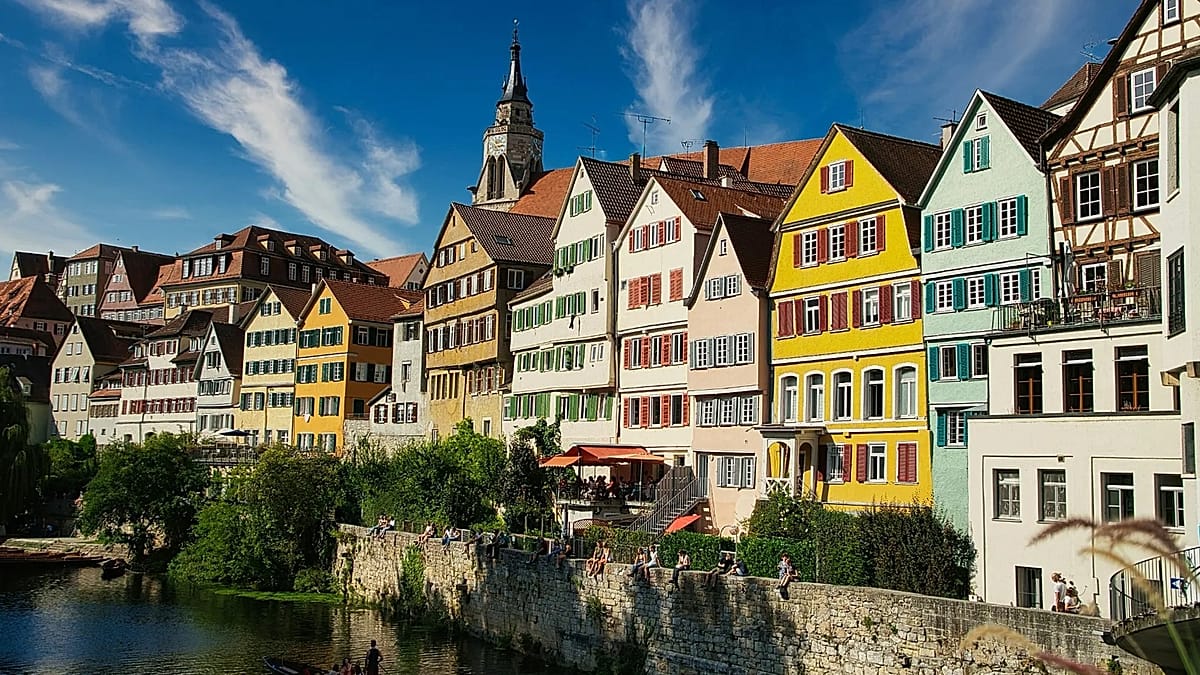
In the south west of Germany, half an hour from Stuttgart Airport, you’ll find picturesque Tübingen. Home to one of Europe’s oldest universities, it’s bursting at the seams with rich history and culture.
In the old town, make sure to visit the Stiftskirche St. Georg, a late-Gothic church with stained-glass windows and miles of city views from its tower. The ornately painted 15th-century City Hall is topped with a functioning astronomical clock, while the Museum of Ancient Cultures within hilltop Hohentübingen Castle boasts countless Greek, Roman and Egyptian artefacts.
Take a boat ride down the Neckar river, flanked by pastel coloured houses, stroll through the botanical garden of the University of Tübingen and be sure to try local specialities including Maultaschen – filled pasta – or Käsespätzle, which are hearty cheese noodles.
Wash it all down with a glass of one the region’s most celebrated wines – Trollinger and Lemberger are particular favourites.
Motovun, Croatia
In the heart of Istria, which straddles the cultural crossroads between Croatia, Slovenia and Italy, Motovun really feels like somewhere lifted straight from a fairytale.
Perched high above the Mirna River valley, the medieval hilltop town is known for its winding stone streets, panoramic views and beautifully preserved ancient walls.
Days here are best spent wandering through narrow alleyways, climbing the town’s bell tower and stopping at terrace restaurants overlooking rolling vineyards and forests below.
The surrounding Motovun Forest is one of the world’s most famous white truffle regions, making truffle hunting and truffle-heavy tasting menus a major draw, particularly in the autumn, while the region’s wine can be enjoyed year-round.
Summer brings the much-loved Motovun Film Festival, while spring and winter reveal a quieter, more romantic side to the town. Cycling routes, long lunches and sunset walks through the vineyards all add to Motovun’s slow, atmospheric charm.
Isola San Giulio, Italy
Floating quietly on Italy’s Lake Orta in the Piedmont region, Isola San Giulio feels worlds away from the crowds of Lake Como.
Often called the “Island of Silence”, the tiny island is known for its peaceful atmosphere, historic buildings and postcard-perfect lake views.
At its centre sits the Basilica di San Giulio, a Romanesque church dating back to the 12th century, filled with intricate frescoes, ancient artwork and ornate mosaics. Nearby, a Benedictine monastery adds to the island’s calm, reflective atmosphere.
Easily accessible via a scenic, short boat ride from the medieval town of Orta San Giulio, the island is best experienced via the “Way of Silence”, a peaceful walking path circling the shoreline with uninterrupted views across the lake.
Back on the mainland, visitors can settle into lakeside restaurants serving rich Piedmontese dishes including creamy risotto made with Barolo, bagna càuda – a warm dip made from garlic, anchovies, and olive oil – and local cheeses, all paired with regional wines like Nebbiolo and Gattinara.
Alberobello, Italy
In the heart of southern Italy’s Puglia region, Alberobello looks like something from a fantasy film. The small town is famous for its trulli, whitewashed stone houses topped with cone-shaped roofs, which have earned UNESCO World Heritage status and remain a distinctive form of rural architecture
The best way to explore Alberobello is simply by wandering. The Rione Monti and Aia Piccola districts are filled with narrow lanes lined by hundreds of trulli, many now housing wine bars, boutiques and family-run restaurants.
Among the standout sights is Trullo Sovrano, the town’s only two-storey trullo, while the unusual Church of Saint Anthony was also built entirely in the traditional trulli style.
Food is a huge part of the experience here. Expect hearty plates of orecchiette pasta, creamy burrata, focaccia barese and crunchy taralli biscuits, often enjoyed alongside local Puglian wines.
Meteora, Greece
Rising dramatically above the plains of central Greece, UNESCO-listed Meteora is perhaps most famous for its monasteries, which appear impossibly balanced atop towering rock formations carved by nature.
Built between the 14th and 16th centuries, these monasteries remain one of the most remarkable examples of Eastern Orthodox monasticism anywhere in the world.
Today, six remain active, including the Great Meteoron and Varlaam monasteries, both filled with religious icons, frescoes and panoramic viewpoints stretching across the Thessalian plains.
Beyond the monasteries themselves, Meteora is also a paradise for hikers, with trails weaving between the rock formations, forests and hidden viewpoints scattered throughout the landscape.
The nearby town of Kalambaka offers a taste of traditional Greek mountain life, with tavernas serving classics including moussaka, souvlaki, spetsofai – or spicy sausage stew – and syrup-soaked galaktoboureko, custard-filled pastries.
The top 10 according to European Best Destinations
- Tübingen, Germany
- Motovun, Istria, Croatia
- Isola San Giulio, Italy
- Alberobello, Italy
- Meteora, Greece
- Fiskardo, Greece
- Kravice Waterfalls, Bosnia-Herzegovina
- Monsaraz, Portugal
- Lago di Resia, Italy
- Pérouges, France
Read the full article here