




 Weather
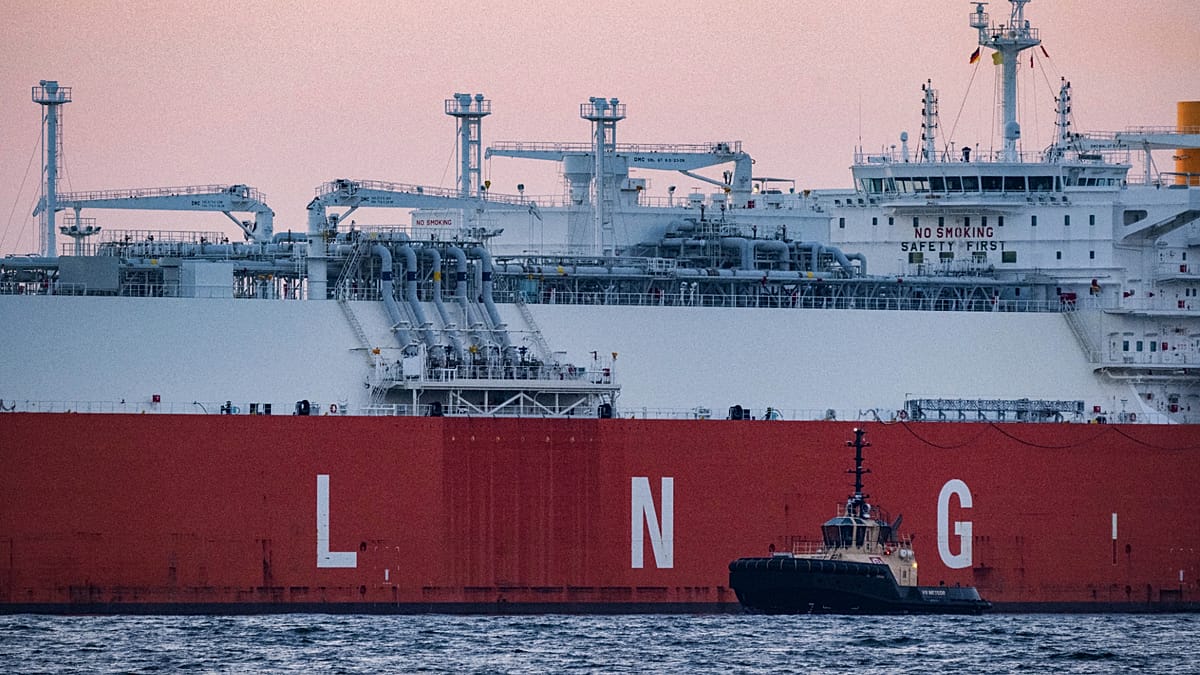
The European Union is currently racing against time to refill its gas storage before winter. As liquefied natural gas (LNG) exports from the Gulf are increasingly diverted to Asia, the bloc’s 90% storage target is now effectively out of reach, according to energy market intelligence company Montel.
ADVERTISEMENT

ADVERTISEMENT
With natural gas supplies expected to tighten due to the war against Iran and the effective closure of the Strait of Hormuz, which accounts for roughly 20% of the world’s gas transit, the European Commission had allowed EU countries to refill storage levels below 90%, in a bid to prevent panic buying and ballooning prices.
But despite these flexibilities, which could go as low as 75%, European gas storage stood at just 5% full at the end of July, around 12 percentage points lower than last year and 16 percentage points below the five-year average, according to Montel.
Montel’s modelling forecasts European storage at between 69% and 84% on 1 November, depending on how quickly injections accelerate and how much LNG is available. That would leave the EU’s 90% storage target firmly out of reach.
“Continued disruption to LNG flows through the Strait of Hormuz means that pressure on Europe’s gas market continues to build as winter approaches,” said Joachim Endress, a gas market expert at Montel.
The situation is particularly acute in Germany, where storage was only 46% full at the end of July.
Between April and July, net injections were 11% below the five-year average and 18% lower than during the same period last year. The shortfall has left Europe facing a steep challenge in the final three months of the injection season.
Montel estimates that Europe received an average of just 105 LNG cargoes a month between May and July, a long way short of the roughly 130 cargoes a month needed to bring storage close to 80% by early November.
The resulting gap amounts to around 72 cargoes. To reach even 80% storage by November, Europe would now need to attract more than 140 LNG vessels every month in August, September and October, a figure considered unlikely by Montel unless European gas prices rise substantially or LNG flows through the Strait of Hormuz are restored.
The storage shortfall could increase pressure on European natural gas prices as winter approaches.
With less gas in storage, traders have less of a safety cushion if cold weather suddenly boosts demand or supplies are disrupted. At the same time, the EU is competing with Asia for LNG cargoes, meaning it may have to pay more to attract shipments that could otherwise go to higher-paying Asian buyers.
Asia pays more
US LNG cargoes that previously flowed towards Europe are increasingly being diverted to Asia, where buyers have offered more attractive returns.
US LNG deliveries to China, Japan, South Korea, Taiwan and India tripled between March and July, reaching record levels. In July, shipments to those five markets exceeded US deliveries to Europe for the first time.
During much of the period since April, selling US LNG into Northeast Asia generated higher returns than sending it to Northwestern Europe. Therefore, Europe may need to pay more to bring the cargoes back, ultimately resulting in higher energy bills.
This could leave the EU’s gas market increasingly exposed as winter approaches. A cold spell, another disruption to global LNG supplies or stronger Asian demand could quickly intensify competition for cargoes.
Despite recognising the “volatile context” of global gas markets, a European Commission spokesperson dismissed any potential winter shortages, saying that the present situation is “not an emergency at all”.
“We are very close to 62% (of storage levels). There is no immediate concern for the security of gas supply in the EU ahead of the next winter season,” the Commission spokesperson told reporters on Thursday.
Since Russia launched its full-scale invasion of Ukraine in 2022, the EU has been redesigning its natural gas system to end its reliance on the country’s energy and to prevent Moscow from using revenues to finance its war.
Meanwhile, the United States and Norway have emerged as the bloc’s top natural gas suppliers, accounting for roughly 57% of imports in 2025.
Read the full article here