




 Weather
Published on •Updated
Ceuta’s president, Juan Jesús Vivas, has accused Morocco of a “policy of harassment” towards the city and urged the EU to take a tougher stance and fund border security after some 80,000 migrants entered the exclave on 30 July, distancing himself from Spain’s cooperative approach to Rabat.
ADVERTISEMENT

ADVERTISEMENT
Vivas met three EU commissioners and several lawmakers in Brussels on Tuesday, urging help to return irregular migrants and restore normality in the exclave, where thousands of third-country nationals, including unaccompanied minors, remain. “Ceuta is on the brink of collapse,” he said.
The Ceuta leader broke with the national government, accusing Pedro Sánchez’s administration of failing to respond adequately before, during and after the July incident, which left more than 150 people dead at sea.
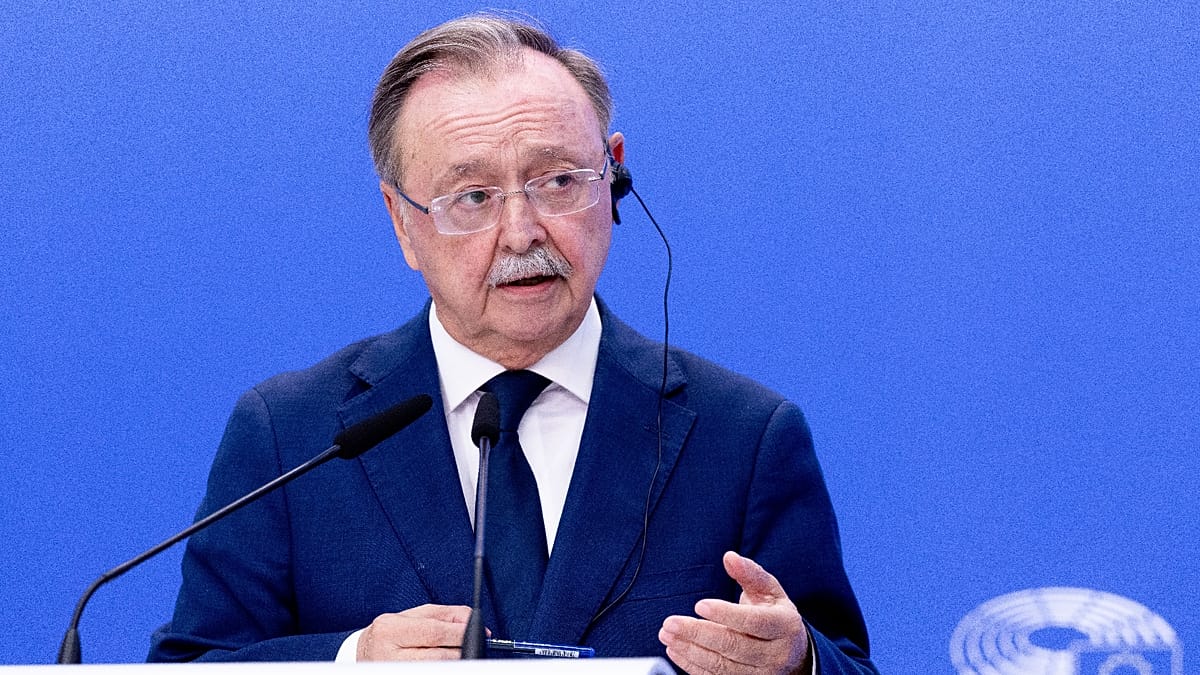
“The EU should tell Morocco that any fruitful and mutually beneficial cooperation begins by respecting our borders,” he said at a press conference at the European Parliament, where EPP lawmakers and staff greeted him with applause.
Spain has not blamed Morocco for the Ceuta incident, despite calling it a violation of its territorial integrity.
Instead, Madrid has pointed to false claims on social media and human traffickers as the main drivers of the mass influx, while continuing to describe Rabat as a “trusted partner” in tackling irregular migration — a position echoed by the European Commission.
“The government should explain why it refuses to hold Morocco responsible, whether directly or through inaction, for the invasion,” Vivas said, after being asked about a leaked police report suggesting Moroccan forces played a role in the crisis.
He claimed that Rabat maintains a “policy of harassment” towards the city and that his fellow citizens now live in fear that a sudden major influx could happen again.
Vivas stopped short of calling for the suspension of EU funds to Morocco, a request made in recent days by Spain’s far-right party Vox. The EU is currently financing Rabat’s migration management strategy with €160 million until 2027.
In his talks with the Commissioners, he also asked for financial support to build border infrastructure and manage the humanitarian crisis that erupted after the mass influx.
According to Vivas, EU Commissioners Andrius Kubilius, Magnus Brunner, and Dubravka Šuica expressed support for Ceuta, but the Commission made no specific commitments.
Brussels is now set to send a technical mission to Ceuta this week to “assess the situation”, a Commission spokesperson said on Tuesday.
As Europe’s only land border with Africa, Ceuta, along with Melilla, should have a “special status,” within the EU and migration rules adapted to their circumstances, Vivas said.
Another request is for a “permanent presence” in Ceuta of the EU asylum agency (EUAA) and Frontex, the agency responsible for the bloc’s external borders.
“The situation is untenable. We need EU support to restore normality. If Ceuta falls, Europe falls,” Vivas said.
Read the full article here