





 Weather
NEWYou can now listen to Fox News articles!
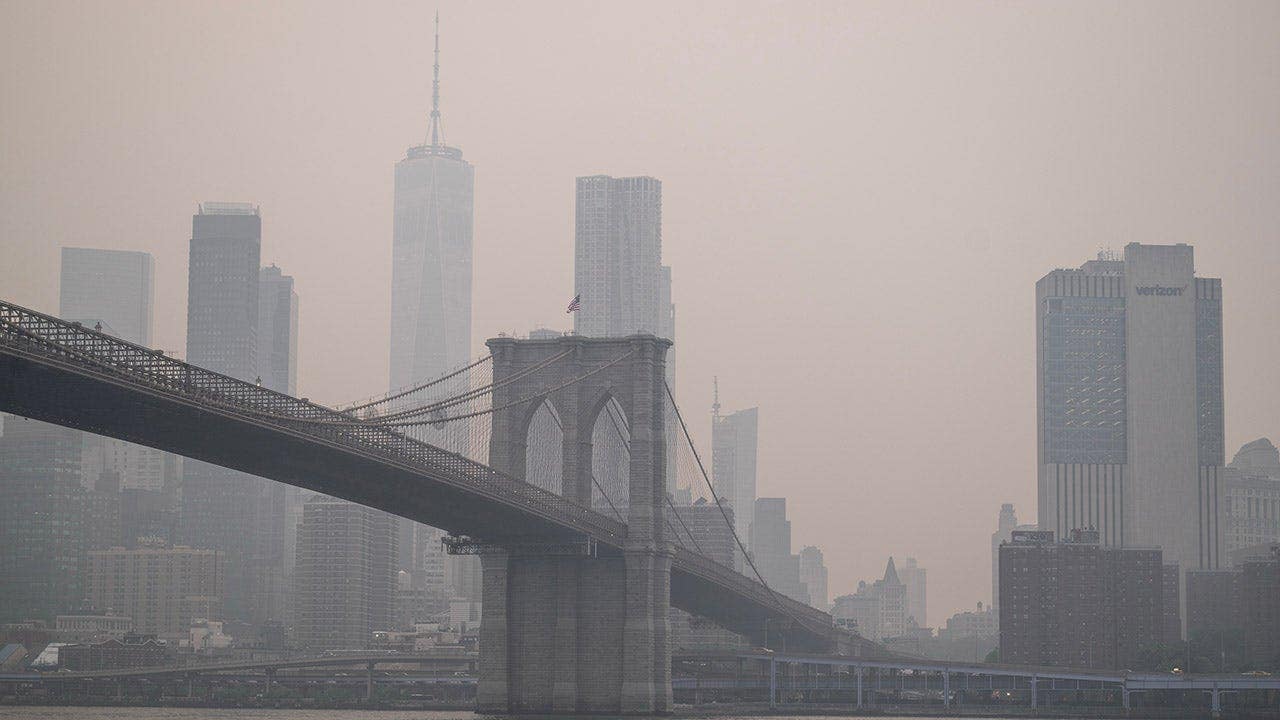
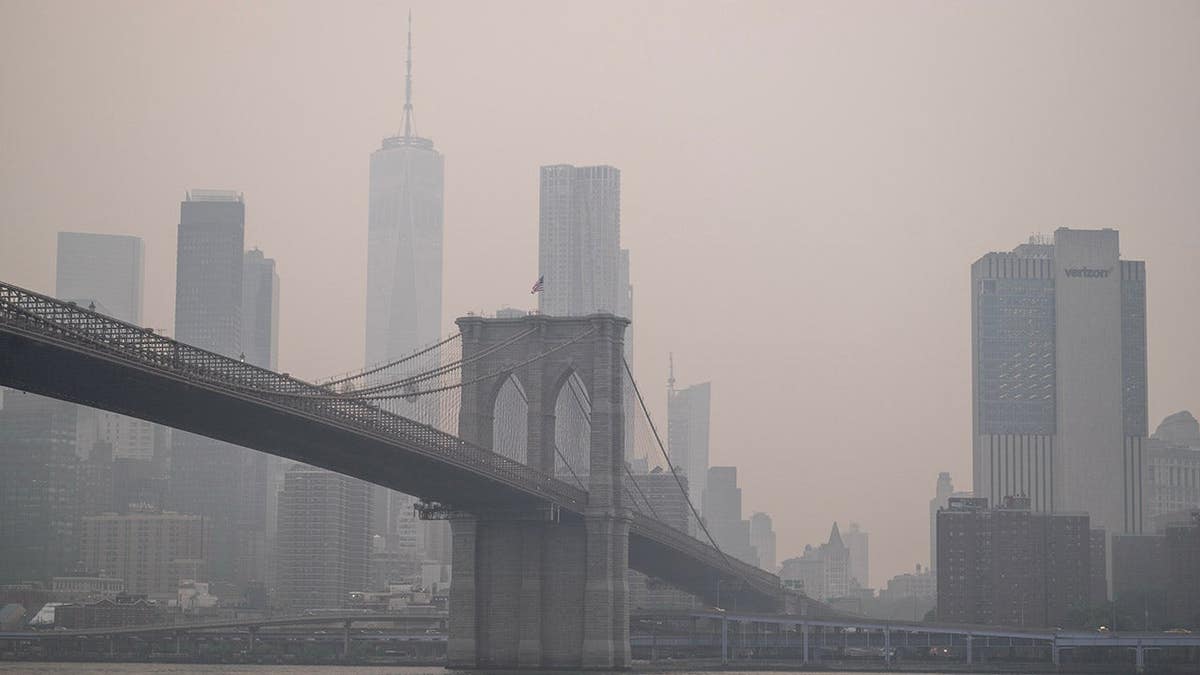
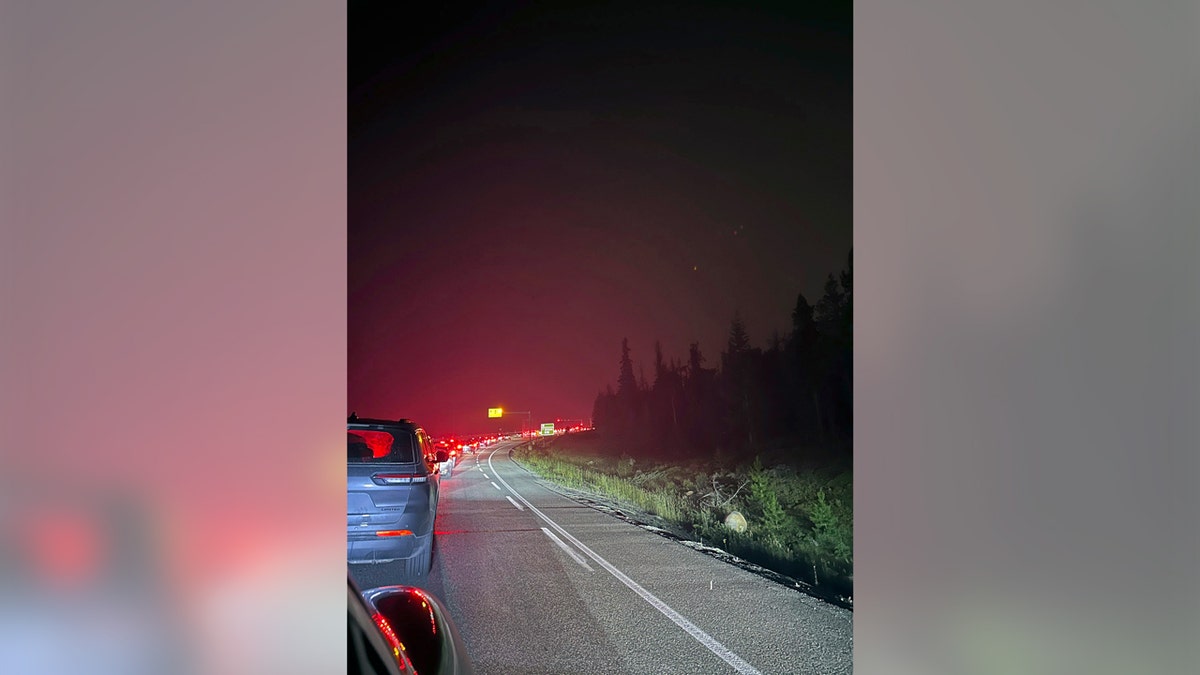
As smoke from Canadian wildfires continues to drift across parts of the United States, forestry experts say Canada could reduce the severity of some fires through more aggressive forest management.
The issue reached the White House Friday, with President Donald Trump accusing Canada of failing to properly manage its forests and threatening to factor the economic cost of the smoke into tariffs on Canadian imports.
“We are holding Canada responsible for the fact that they are not properly maintaining their Forests, and Brush therein, and the United States is being unnecessarily invaded by filthy, polluted, and unhealthy air,” Trump wrote on Truth Social. He said he planned to call Canadian Prime Minister Mark Carney and accused Canada of refusing to engage in “basic Forest Management and Debris Removal,” calling it “Willful Negligence.”
TRUMP SHOULD EXPAND HIS BORDER CRACKDOWN. TIMING IS PERFECT TO REIN IN CANADA AND MEXICO
Andrew Hale, a Canadian fellow at Advancing American Freedom, argued that Canada’s wildfire policies have failed to prioritize forest management.
“Canada has a policy of not keeping reservoirs. They also will not cut firebreaks and will not thin their forests,” Hale told Fox News Digital. “This is the result of the undue influence of environmental groups who are firmly politically motivated and have divorced themselves from science and good stewardship. Canada and the rest of North America is suffering as a result,” he said.
Earlier this week, four Republican members of Michigan’s congressional delegation — Reps. Jack Bergman, John James, Lisa McClain and John Moolenaar — sent a letter to Carney saying residents in their state were once again experiencing unhealthy air because of smoke drifting south from Canadian wildfires.

“We are done accepting apologies in place of action,” the lawmakers wrote, accusing Canada of underinvesting in forest thinning, fuel reduction and prescribed burns while calling for measurable plans to reduce future wildfire smoke crossing the border.
The criticism comes as Canada’s own Senate has reached a similar conclusion on one point: while it says climate change is making wildfire seasons longer and more severe, the country also needs to do substantially more to prepare its forests before fires ignite.
FOX WEATHER CORRESPONDENT BOB VAN DILLEN WEIGHS IN ON EFFECT OF CANADIAN WILDFIRES ON
The Senate Committee on Agriculture and Forestry released a report in June titled Canada on Fire: The Catastrophic and Escalating Effects of Wildfires on Lives and Communities after holding 17 meetings, hearing testimony from 79 witnesses and receiving 23 written briefs from scientists, government officials, Indigenous leaders and industry experts.
The committee concluded that Canada’s three most recent wildfire seasons demonstrated that climate change was accelerating fire behavior “beyond the capacity of existing systems.” At the same time, it found that prevention efforts have not kept pace with the growing threat.
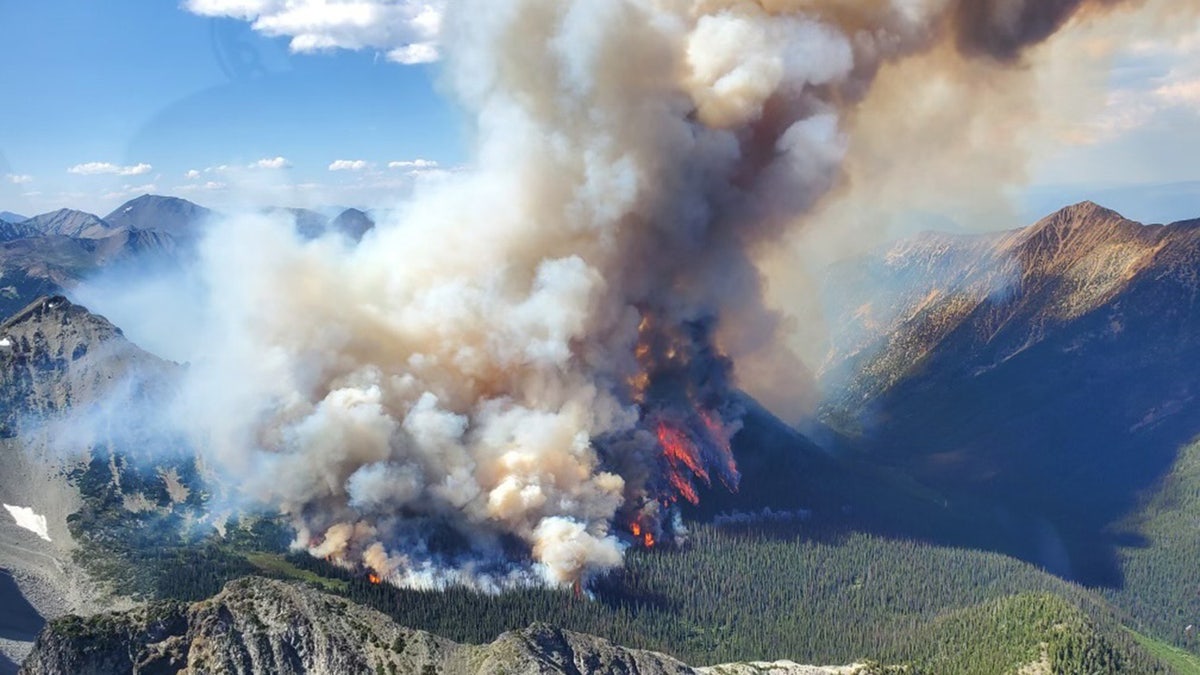
Much of the report focuses on what experts call “fuel management” — reducing the amount of dry grass, dead trees, fallen branches and other vegetation that allows small fires to become large, destructive wildfires.
“Several witnesses agreed that prescribed fire is the most important risk-reduction tool for helping to manage or slow wildfire on the landscape and restoring ecological integrity,” the report said.
METS AND PHILLIES STARS SHOW CONCERNS ABOUT PLAYING IN UNHEALTHY AIR QUALITY: ‘NOT THE GREATEST IDEA’
One witness, Paul Hessburg, a professor at the University of Washington’s School of Environmental and Forest Sciences, said that climate change is making wildfire conditions worse but does not eliminate the value of proactive forest management.
“The punchline is, with climate change, these conditions will intensify with less snowpack, more fires, bigger fires, hotter fires,” Hessburg told the committee. “The question is: Can we restore resilience? We can. We can bring back these elements and put the governors back into the landscape that historically regulated the flow of fire.”
Jason Hayes, a senior research fellow in energy and environmental policy at the Heritage Foundation, said the practical solution is to spend more time managing forests before fires begin rather than relying primarily on emergency response after they start.
“The best thing to do is get out, space and thin, do prescribed burns and recognize that these are renewable resources,” Hayes told Fox News Digital. “If we did that, then we would have much less intense wildfires.”
Hayes acknowledged that carrying out those recommendations across Canada would be far more difficult than simply identifying them. He said many fires burn in remote areas of northern Ontario and other parts of Canada that are difficult to reach because they are far from roads and population centers.
“You have to fly in, and it’s just difficult to do,” Hayes said.
CLICK HERE TO DOWNLOAD THE FOX NEWS APP
Witnesses to the Canadian Senate committee also warned that Canada faces practical challenges beyond forest management, including shortages of wildfire-management expertise and an aging fleet of firefighting aircraft. The report cited testimony that provincial fleets still include 22 older CL-215 aircraft and that at least 20 aircraft require immediate replacement.
Fox News Digital has reached out to the Office of Prime Minister Mark Carney but did not receive a comment in time for publication.