





 Weather

SAN CLEMENTE, Calif. () — The California Coastal Commission on Thursday unanimously approved a plan to protect a vulnerable stretch of railroad along the South Orange County coast, despite concerns from critics who say the project could reduce public access to the beach.
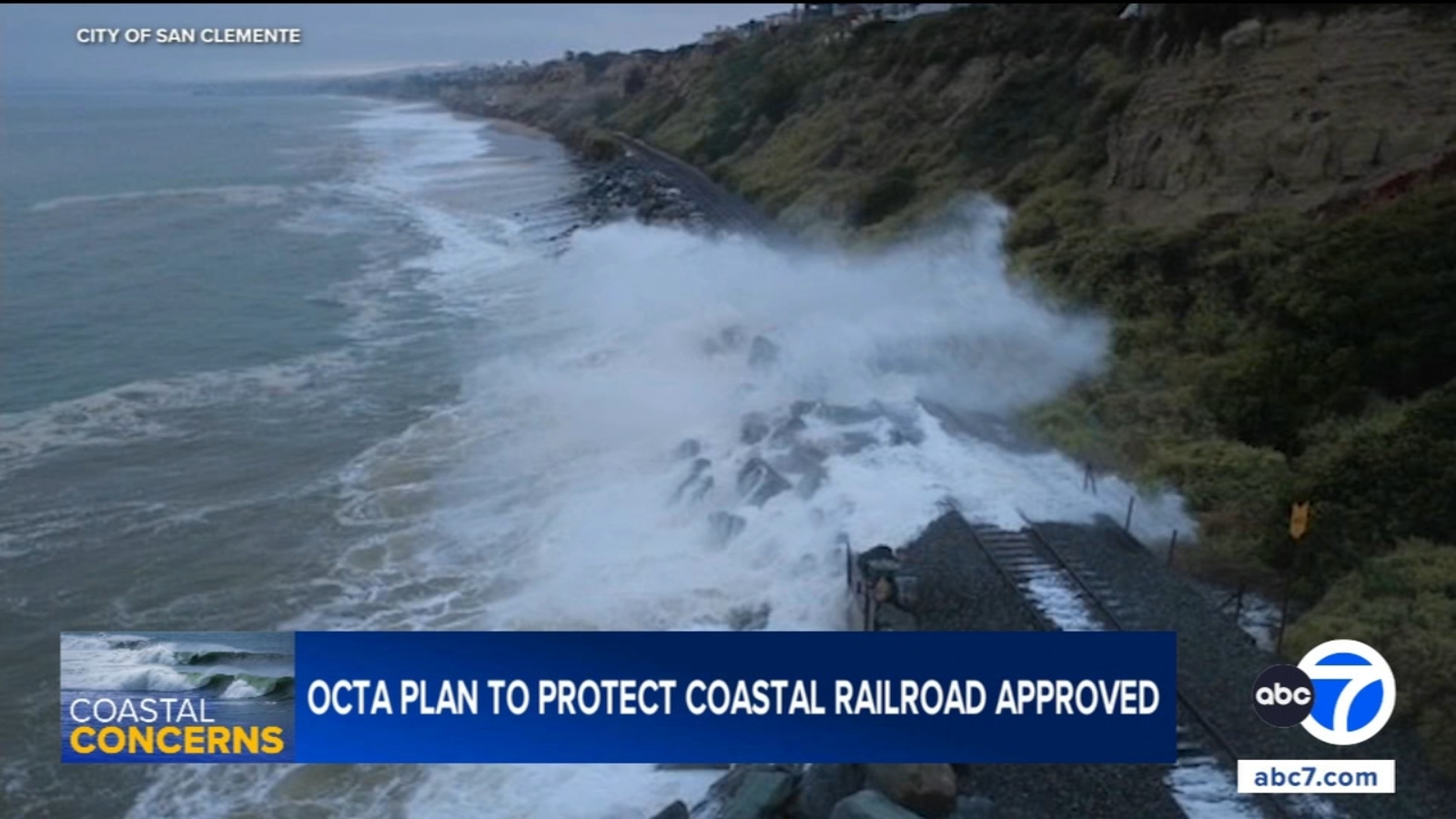
The proposal, described during the commission meeting as one of the largest beach encroachments the agency has considered, is intended to protect the rail corridor in San Clemente, which transportation officials say is increasingly threatened by coastal erosion, high tides and strong swells.
“If this was an easy solution we would have been done with this two years ago and the balance of public infrastructure and public access to the coast is critical,” said Darrell Johnson, CEO of the Orange County Transportation Authority.
According to the Orange County Transportation Authority, recent coastal conditions have damaged the tracks and contributed to frequent rail service suspensions along the corridor.
The agency said the $305 million plan includes 690,000 cubic yards of sand for San Clemente beaches, a 1,200-foot seawall at San Clemente State Beach and the retention of 48,000 tons of riprap, or large boulders. The majority of the riprap has already been placed along the beach under emergency permitting, but the plan also includes an additional 2,100 tons of new riprap. The riprap drew some of the strongest criticism during public testimony.
“A railroad protected by mountains of rock while the public beach disappears is not a success story. It’s a tragedy and an entirely preventable one,” said San Clemente resident Sarah Schneider.
Gregory Ray, also of San Clemente, criticized the long-term use of the boulders.
“The OCTA has created a long-term structure that disrupts our beach. They should be required to implement a long-term solution,” Ray said.
Speakers ranging from residents to city leaders voiced support for adding sand to the beaches but raised concerns about the riprap. Several urged commissioners to require OCTA to guarantee at least 50 feet of public beach access in an area where the coastline has already been shrinking.
“As you make your decision, I urge you to consider one of my father’s favorite sayings. Lack of planning on your part does not necessitate an emergency on mine. For decades, rail authorities have buried their heads in the sand for so long, there is no sand left,” said Sarah Spinuzzi of Orange County Coastkeeper.
After hours of debate, the commission voted unanimously to approve the permit. Commissioners said they will reconvene in no less than five years to determine and recommend an appropriate beach-width requirement.
The commission’s executive director said the case reflects broader challenges facing communities along the California coast as officials are confronted with weighing protection of critical public infrastructure with maintaining public access to beaches.
Separately, a study will examine what would be required to remove or relocate the railroad entirely. The study is intended to assess potential alternatives to protecting the existing rail line in place.
© 2026 Television,