


 Weather
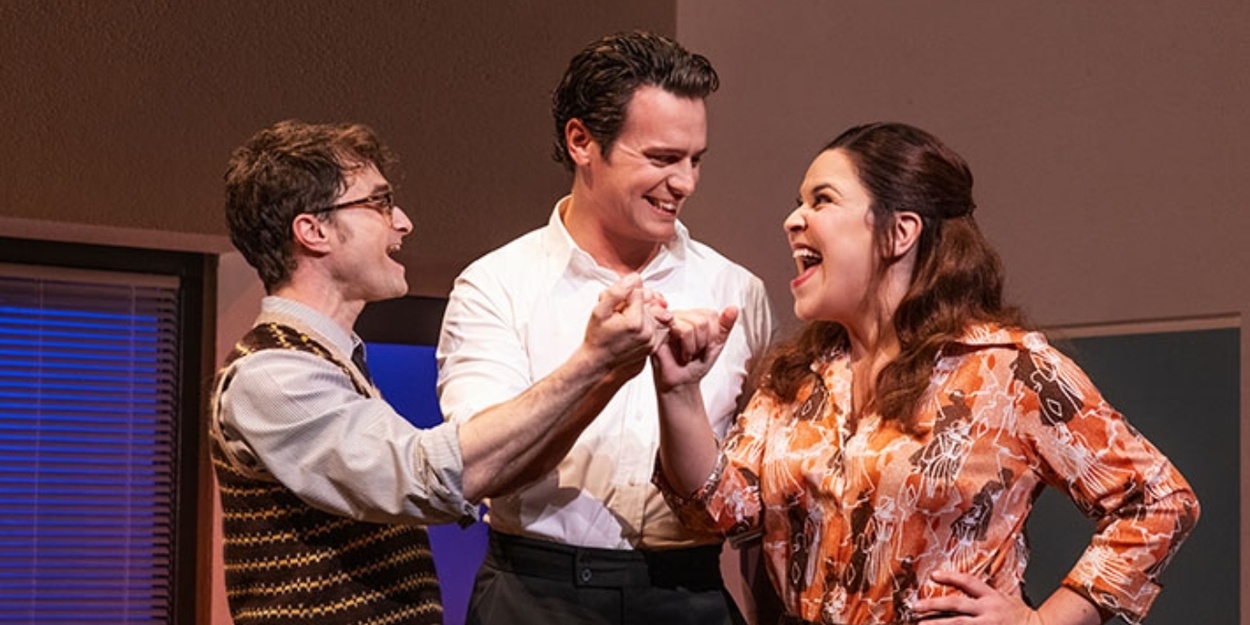
Merrily We Roll Along, the live filmed version of the four-time Tony Award-winning musical performance, is now in theaters. Find out what critics think of the cinematic interpretation, which was directed by Maria Friedman based on her stage production.
Spanning three decades, Merrily We Roll Along charts the turbulent relationship between composer Franklin Shepard and his two lifelong friends — writer Mary and lyricist & playwright Charley. Originally produced on Broadway in 1981, the musical has since become a cult classic.
The critically acclaimed production won the 2024 Tony Awards for Best Revival of a Musical, Best Performance by an Actor in a Leading Role in a Musical, Best Performance by an Actor in a Featured Role in a Musical and Best Orchestrations. Additionally, in London, Merrily We Roll Along garnered the most five-star reviews in West End history, with Friedman’s production also winning the Olivier Award for Best Musical Revival.
Merrily We Roll Along is produced by Sonia Friedman, David Babani, Patrick Catullo, F. Richard Pappas, RadicalMedia’s Jon Kamen, and Dave Sirulnick. Executive Producers include Meredith Bennett, No Guarantees Productions, Scott Abrams, Jonathan Corr, Mary Maggio, Jeff Romley, Tony Yurgaitis, Andrew Cohen, Amanda Lipitz, Henry Tisch alongside Co-executive producer Stephanie P. McClelland. Karla Zambrano and Alec Sash serve as Supervising Producers.
Pete Hammond, Deadline: “Usually in directly filmed stage productions the audience figures more heavily, but Friedman’s approach here is far more cinematic than just getting a filmed record of a theatrical performance. What she achieves with her cast is an intimacy I have never experienced in any of the productions of this legendary musical I have seen over the years, and indeed it is that intimate nature of Merrily We Roll Along that makes this a perfect candidate for this kind of presentation.”
Calum Marsh, The New York Times: “Merrily We Roll Along” is an OK movie of a good production of a great musical: on balance, another worthy addition to the Stephen Sondheim canon, which can always stand to be expanded.
Matt Zoller Seitz, RogerEbert.com: “Visually, things get tighter and more elegant as the story moves from the 1970s into the ‘60s and ‘50s. The narrative focus tightens as the number of significant characters shrinks, allowing the crew to devote more time and thought to each image. The fewer bodies onstage, the sharper the filmmaking becomes.”
Gemma Wilson, The Seattle Times: “Stage and screen director Maria Friedman focuses this story tightly on Frank (both figuratively and literally, on film), cursed with overwhelming talent and overweening ambition. From the opening frame this is his story, a close-up on his numb face an acid contrast to the upbeat music picking up around him.”
Jackson Weaver, CBC: “Combining three live shows with audience-free tapings, Merrily straddles the line between stage and film production. Friedman carefully guides our eyes with closeups that omit much of the action outside of the frame. The camera moves with the actors, and only occasionally allows the applause or reaction of the audience to bleed through.”
Tania Hussain, Collider: Filmed at the Hudson Theatre in New York during its two-year run from 2023 to 2024, Merrily We Roll Along — starring Jonathan Groff, Lindsay Mendez, and Daniel Radcliffe — has a magnetic ease to its production. While the camera softens some of the rougher edges that once made the show a harder sell in 1981, it doesn’t do away with its former critical elements.”
Mark Keizer, MovieWeb: “Much like Hamilton on Disney+ or Spike Lee’s filmed version of the brilliant Passing Strange, the big screen Merrily We Roll Along is simply a live recording of the Broadway show. It was shot at the Hudson Theater in June 2024 with Friedman, who directs the filmed version as well, adding cutaways to hide edits, judiciously chosen close-ups to direct our eye, and also the rare shot that looks a little too artfully blocked for the camera.”
Joshua Chong, Toronto Star: “But this production isn’t exactly perfect either. And where it disappoints is in how Friedman’s staging is captured on film. Sam Levy’s cinematography features far too many close-ups and quick cuts. Not once do we even see the theatre’s proscenium arch in its entirety. It’s as if Friedman and Levy want to pretend that this production wasn’t originally a stage musical.”
Photo Credit: Sony
Reader Reviews
To post a comment, you must register and login.