




 Weather
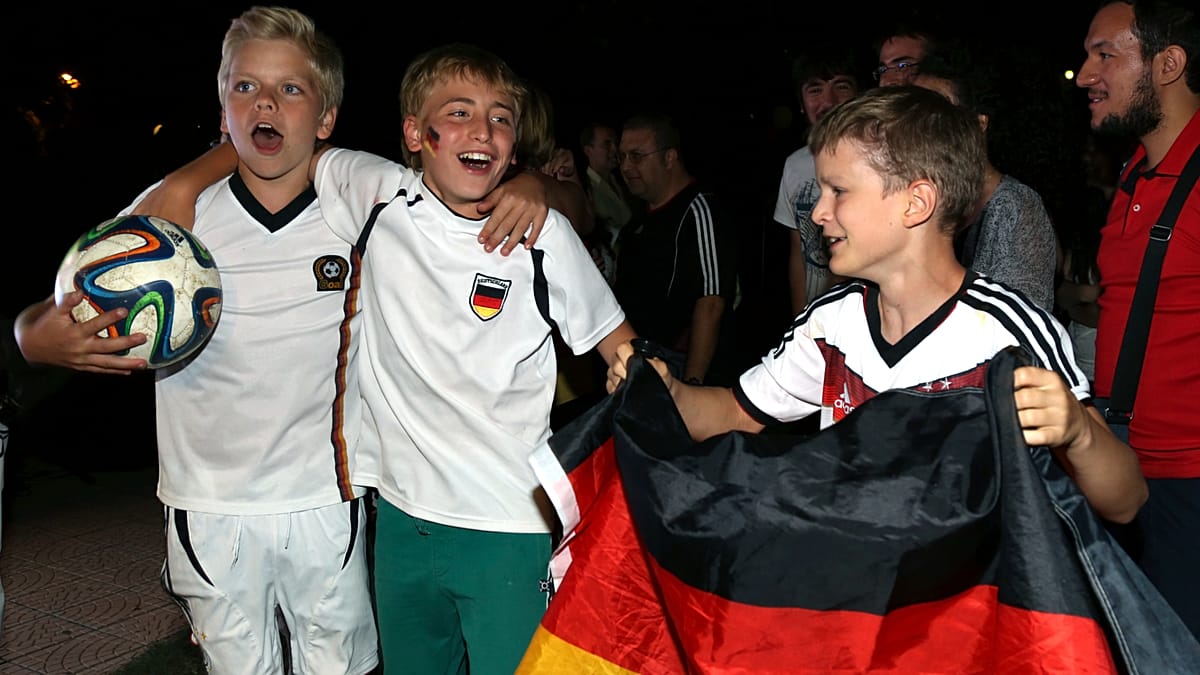
It sounded like the perfect sequel to the summer fairy tale: on 13 July 2014, Germany were crowned world champions in Rio de Janeiro, Mario Götze scored in the 113th minute to make it 1–0 against Argentina, millions celebrated in the streets, on balconies and at fan zones. More than 30 million viewers in Germany watched the final on television. Soon the question arose: shouldn’t such an exceptional state of euphoria also have consequences for the birth statistics?
ADVERTISEMENT

ADVERTISEMENT
Even before the final, Saxon family policy expert Alexander Krauß (CDU) had predicted a baby boom in the Bild newspaper, as WirtschaftsWoche later reported: “When the ball is rolling, the mood is high not only in front of the television but also in bed. Goals for Germany mean babies for Saxony!” The claim could be put to the test in spring 2015, roughly nine months after the triumph in Brazil.
The tale of the World Cup babies
The expectation was nothing new. As early as the 2006 World Cup in Germany, the original “summer fairy tale”, the story of the football babies, began to circulate. The country was in a buoyant mood, and the fan zones were packed. Journalist and presenter Lena Cassel looks back on that time on NDR and describes it as an “emotional loosening-up”.
In February 2007, the Frankfurter Allgemeine Zeitung reported on a “winter fairy tale after the summer fairy tale”: antenatal classes were full, maternity wards were working at full stretch. The magazine Stern picked up the story as well. Hamburg’s Asklepios clinic reported around ten per cent more births in March 2007.
In Berlin, the number of births in March 2007 rose from around 2,400 to 2,800, according to the state statistics office. The Vivantes hospitals reported 11% more births than in the same period a year earlier. Cologne recorded 116 more births in April than in the same month of the previous year. In 2015, the pattern repeated itself: the Bild newspaper showcased individual “World Cup babies”, and several cities reported rising birth figures.
Isolated figures do not yet make a trend
If the 2014 World Cup win had in fact led to more pregnancies, this could have been seen even before the babies were born: in health insurance data, in pregnancy tests and in the baby-goods trade. But it was precisely there that WirtschaftsWoche found hardly any solid evidence in 2015.
At the time, Barmer GEK told the paper: “We have no data that provides information on expected birth numbers in the coming months.” Techniker Krankenkasse also said it could “not derive anything robust from the data available”.
Manufacturers of pregnancy tests also saw no boom. Dolorgiet, who makes the Hilary test, said July 2014 had been below average and August had been average. Baby and toddler retailer BabyOne did report rising pram sales, but said the increase had already been underway since autumn 2014.
Birth figures contradicted the myth
By spring 2015, the catchy story had turned into a statistical problem. A spot survey by the German Press Agency of registry offices and hospitals found no unusually high birth numbers. None of those questioned was willing to talk of a baby boom.
In the obstetrics department at Berlin’s Charité hospital, even fewer children were born than usual, roughly 40 weeks after the World Cup final. From 4 to 6 April, 14 babies were delivered there; normally it would be nine to ten per day.
In retrospect, the World Cup hypothesis of 2006 also failed to stand up. In November 2007, the Federal Statistical Office announced that the number of births in the first half of 2007 had actually fallen slightly: 313,100 children compared with 313,900 in the same period a year earlier, a drop of 0.3%, as Der Tagesspiegel reported. The official responsible, Martin Conrad, said there had “by no means” been a baby boom nine months after the 2006 World Cup.
Many different factors can trigger a baby boom
The persistence of the story also has to do with the way numbers are handled. Individual spikes in cities or hospitals look spectacular, but say little about a nationwide trend. Cologne did record more births in April 2007 than in the same month the year before, but there had been even more in 2005 – with no World Cup connection at all. Stuttgart’s baby fever had already been rising in previous years.
There are also other factors. In Berlin, the increase in March 2007 was also linked to the new parental allowance. It replaced part of the income lost after the birth of a child and was intended to make it easier for parents to combine work and family life and to share childcare more equally.
What the research shows
A study by the IZA research institute even turns the popular thesis on its head. The authors analysed monthly birth rates from 50 European countries over 56 years and compared them with the performances of national teams at 27 major football tournaments.
The result: greater sporting success was not associated with more births, but with a decline. After an average tournament performance, birth numbers fell by 2.13% nine months later. Applied to Germany, that would mean around 1,000 fewer births. One possible explanation: anyone celebrating in the stadium, in front of the television or at a public viewing event is not spending that time in the bedroom.
Demographer J. Richard Udry examined a similar phenomenon back in 1970 in connection with the great power outage in New York in November 1965. At the time, media reports created the impression that unusually many children had been born nine months later. Udry disproved this link in a study published in the journal Demography: the city-wide birth rate was no higher than usual. In his conclusion, he suggests that many people apparently tend to believe that exceptional events that disrupt everyday life prompt people to conceive children.
What remains of the hoped-for baby boom
The case of the World Cup babies shows how quickly anecdotes can turn into an enduring myth. A few hospitals, fully booked classes, happy parents, or striking monthly figures do not yet amount to a robust demographic trend.
Looking at the full year is only of limited help as well: in 2015, about 738,000 children were born in Germany, around 3.2% more than in 2014. But no World Cup effect can be inferred from that. Birth numbers depend on many factors: the age and number of potential mothers, family policy, the economic situation, regional hospital structures and long-term trends. In 2026, the population here is still shrinking – birth rates in Germany and Europe are falling.
And yet the story of the World Cup babies lives on. It blends football euphoria, a sense of togetherness and family happiness into a simple, catchy image. Perhaps that is precisely why it keeps resurfacing after major tournaments: in 2006, 2014, and possibly again this time.
Read the full article here