




 Weather
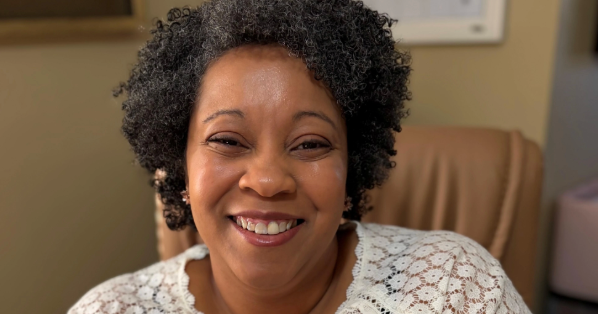
Dawn Jemison’s pelvic pain started when she was 11 — and never really stopped.
The Fort Wayne, Indiana, native started experiencing pelvic pain in middle school. At first, it was dismissed as puberty. By her late teens, she was in pain multiple days each month. In her 20s, she was diagnosed with anemia and lupus. But nothing explained the “terrible, twisting, stabbing pains” that ranged from her ribcage to pelvis, or the swollen feeling in her legs.
Over the next two decades, Jemison, now 43, would see a range of doctors and undergo dozens of tests and exploratory procedures. Some doctors thought it might be endometriosis and recommended birth control, which didn’t help. Two doctors even recommended she have a baby to “regulate (her) system,” she said. Some thought it was all in her head, Jemison said, while others thought she was drug-seeking.
“As the years are going by, these pains are getting worse. It is not just a couple times a week, a couple times a month; it is almost every day, waking up because of pain, a stabbing pain, a lot of times, and just not having an explanation,” Jemison said. “You’re like, ‘OK, I have to go to work, I have to get up and live my life, but I’m in so much pain right now.'”
In December 2024, Jemison asked her doctor for a hysterectomy. The procedure, where the entire reproductive system is removed, was a radical step. But it felt like the only option left.
“I’m like, ‘I’m done, I’m done with it all, let’s get rid of the organ that I thought was causing me the most problems,'” Jemison said. “I was over it at this point.”
A “completely by chance” meeting
After multiple consultations, Jemison scheduled the hysterectomy with her doctor. Then a chance encounter at her workplace in January 2025 changed everything.
Jemison, a restaurant server, was taking care of a group of healthcare sales representatives and doctors giving a presentation in a private room. During the remarks, a representative described a patient case that matched Jemison’s experience exactly. A stent placed in a pelvic vein had helped relieve that patient’s symptoms.
Surprised by what she heard, Jemison approached the team after the meal to ask about the case. Interventional cardiologist Dr. Abigail Qin-Nelson offered to meet with her the next week. Jemison called her other doctor to delay the hysterectomy.
“It was completely by chance that I was the server on this room, that I was actually paying attention to what they were discussing, and noticing that the person on screen was (like) me,” Jemison said. “I’m really happy I was there.”
“A breath you can finally take”
Qin-Nelson wanted to work Jemison up for pelvic congestion syndrome, a chronic condition where blood flows through the arteries normally but blockages and compression keep it from getting back to the heart through the veins. That can lead to blood pooling and pushing on organs, nerves and tissues, causing pain and swelling. The condition has no clear cause, according to the Cleveland Clinic.
Diagnosing the disease is difficult, Qin-Nelson said, because it has been thought to be rare and requires the ruling out of many other conditions. In Jemison’s case, Qin-Nelson conducted an imaging test called a venogram to look inside her veins.
The test found several blockages in Jemison’s iliac vein, which carries blood from the legs and pelvic organs to the heart. In one place, the vein was 76% compressed. Another vein had a 52% blockage.
The venogram took over two hours, twice as long as it normally would, Jemison said. But it gave her real answers for the first time.
“It was like a breath you can finally take,” Jemison said. “It was just validation, like, OK, I wasn’t lying, I wasn’t making this up, I wasn’t looking for attention. There really was a problem, and I just had to find the right doctor to fix it.”
A “game changer” treatment
After diagnosing Jemison’s condition, Qin-Nelson was able to treat it. Using a catheter, Qin-Nelson placed two stents: one in a vein by her kidney and the other in a vein along the left side of her groin. The stents reopened the blockages and allowed blood to flow normally.
Medtronic 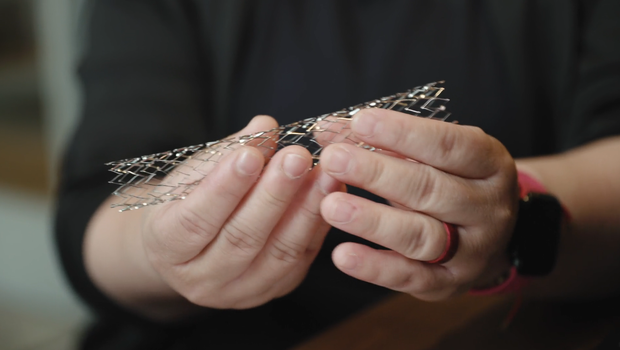
The operation was a “game changer,” Jemison said. The discomfort from the stent placement only lasted for a few days. Jemison also underwent a second procedure shortly after the stent placement to cauterize some veins that her body had created as alternate pathways that would no longer be necessary after the stenting.
Jemison said the surgery led to a “complete 180 on (her) life.” Now a year out from the procedures, her daily pain level “is at a zero,” she said. Qin-Nelson said that she will continue to receive routine monitoring to ensure the condition does not return.
Jemison said she was relieved to have met Qin-Nelson before undergoing the hysterectomy, which might not have even reduced her pain.
“I would still probably be laying in my bed right now asking, ‘What did I do, what did I do wrong, how do I fix this, who do I talk to next?'” Jemison said.
“It’s now like, oh, I want to go walk, I want to go to the park, I want to be in the garden, I want to do different things,” Jemison continued. “I can do that without having to work around my pain.”