





 Weather
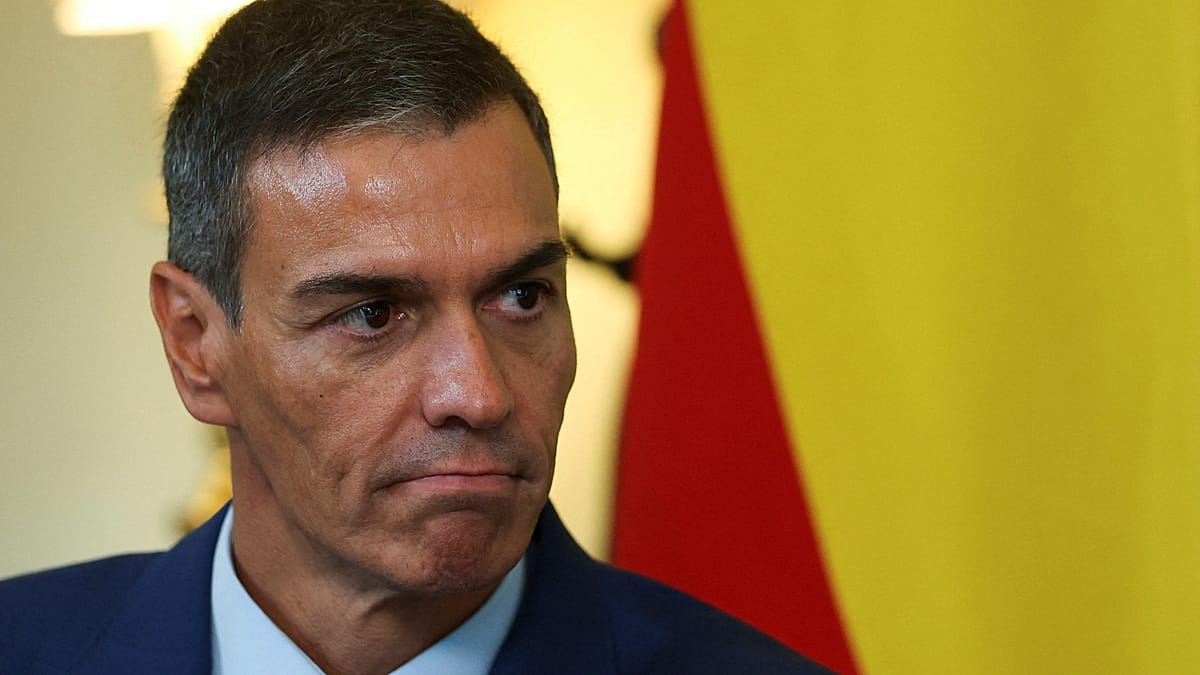
Spain has today reached the symbolic milestone of 1,000 days without a new national budget, the main tool for steering the country’s economic policy and setting priorities for public spending.
ADVERTISEMENT

ADVERTISEMENT
The left-wing coalition government led by Pedro Sánchez, made up of PSOE and Sumar, has gone the entire legislative term without passing a single budget. Instead, it has been governing with the budget approved in 2022 for the 2023 financial year.
That year, after Sánchez returned as prime minister – without a parliamentary majority – the government argued that the 2023 election results had made it difficult to bring a new budget bill before the Congress of Deputies.
Despite repeated promises from both the prime minister and the former finance minister, María Jesús Montero, no budget was presented in 2024 or 2025. In June this year, Sánchez also ruled out Spain having a new budget in 2026.
While in opposition, Sánchez himself told then-prime minister Mariano Rajoy of the centre-right party Partido Popular that “to govern without a budget is not to govern at all.”
Article 134.3 of the Spanish Constitution stipulates that the government must submit the national budget to Congress at least three months before the previous year’s version expires. It also allows the previous budget to be extended if a new one is not approved – a provision the government has relied on due to the difficulty of securing enough parliamentary support to pass a new one.
César García Novoa, professor of financial and tax law at the University of Santiago de Compostela, argued that this was a distortion of the rule.
“The regulation, without spelling it out, is designed for an extension of one year at most; it is an emergency mechanism,” he said.
García Novoa added that budget extensions exist in other European countries, “but they are always tied to short-term, exceptional situations, such as Belgium’s government crisis.”
Fernando Navarrete, a Popular Party MEP and member of the European Parliament’s budget committee, shares García Novoa’s view: “Until Sánchez, the understanding was that the extension lasts for one year. If after that there is still no majority to approve a budget, you have to call elections.”
Navarrete described the 1,000 days without a new budget as a democratic anomaly. He added that if his party governed after the elections due next year, it would change the law to prevent such an issue from happening again.
Navarrete also argued that going so long without a new budged amounted to “a theft from citizens, who have not been able to decide through their representatives how much public money is spent and on what.”
Government hits back
Spain’s Ministry of Finance disagrees, however.
In comments to Euronews, officials insisted that the government has “approved measures to protect citizens from the crisis stemming from the conflict in Ukraine or in the Middle East due to the rise in energy prices.”
On access to housing – currently the main concern for Spaniards, according to Spain’s Centre for Sociological Research – ministry sources point to the €7 billion earmarked in the State Housing Plan for the period 2026-2030.
Without a new budget, and as the housing plan was not included in the 2023 budget, the government has to resort to extraordinary channels to finance it.
This is what Navarrete means when he criticises the government for using emergency mechanisms “designed for other situations,” adding that not having a new budget prevented Spain from “responding to global disruptions.”
Brussels
García Novoa argued that just continuing with the extended 2023 budget “limits Spain’s ability to set out the reforms required by the European Union” and weakens the country’s credibility in Brussels.
Under its fiscal rules, the European Union has required member states since 2024 to present a medium-term plan that guarantees sustainable public finances and promotes investment and reforms.
Spain has such a plan, but without a new budget “we cannot show how we are going to fulfil it”, Navarrete said. “The European Commission relies on its own economic forecasts to supervise us.”
He added that although Brussels was concerned about Spain not having approved budgets for 2024, 2025, and 2026, there has been no particularly strong reaction as it is seen as an internal political problem.
“It is a mistake and I do not understand their stance, because Spain is breaching its European commitments, overspending on public money and passing the hot potato to the next government,” Navarrete told Euronews.
Elections on the horizon?
The Spanish Ministry of Finance insists that a budget will soon be put forward for 2027.
“We are confident it will be approved and we are not contemplating any other scenario,” sources told Euronews.
Although it is unlikely that the government will submit a 2027 budget before 30 September, the latest date on which it should do so under the Constitution, it has already opened talks with several political parties to negotiate its approval.
“The extension of the current budget has not prevented Spain from growing above the EU average or from achieving record employment. The new budget must consolidate this trend and strengthen the welfare state,” the ministry’s sources told Euronews.
However, some, including Navarrete, view the move as a possible pretext for calling a general election if parliament rejects the new budget.
“I do not believe they will present it because they do not have a majority, but if they do, it will be to use it as electoral propaganda with the help of the ministries. Yet another abusive use of Spanish taxpayers’ money,” Navarrete said.
Read the full article here