





 Weather
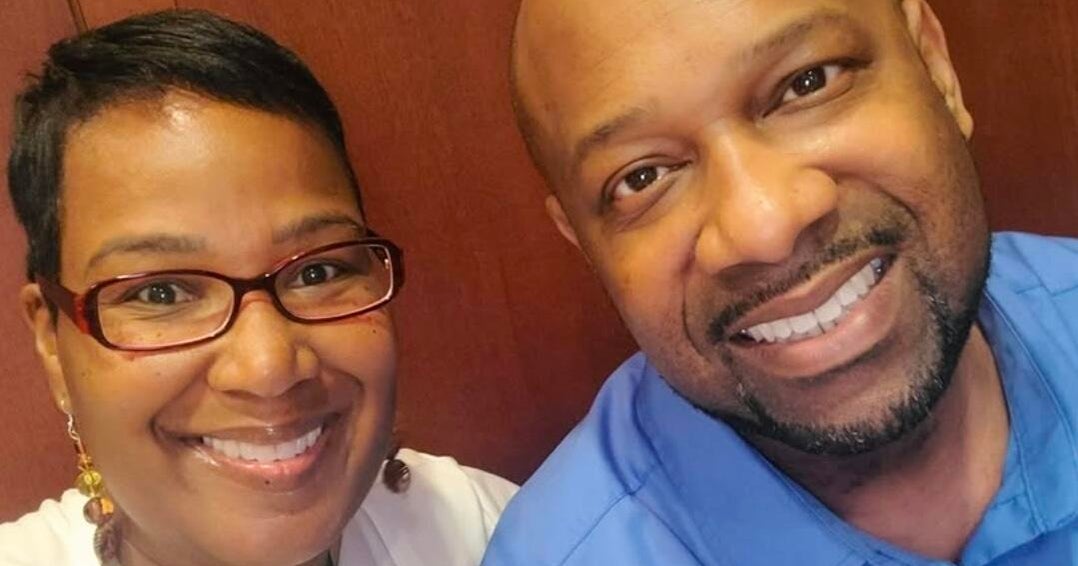
By the time Derion Blackman collapsed in front of a Dollar General in Kissimmee, Florida, in March, he had been waiting two months to regain access to some of the vital medications he’d been taking since undergoing a heart transplant two years ago.
“He was on a nasty, dirty ground in front of a store,” recalled Sonja Smith, who is enraged about the circumstances that led to her husband’s heart failure. “He didn’t deserve to die like that.”
Problems started last year when the couple learned the monthly premium payment for their Federal Employees Health Benefits plan would more than double to $307 and their deductible would also go up. They decided to switch Blackman’s primary coverage to CHAMPVA, a health benefits program for dependents of disabled veterans, which had no premium and a $3,000 deductible.
Smith thought she and Blackman had carefully prepared so that the transition between health plans would be seamless. It was anything but.
After the new health plan became active in January, Smith said, Blackman faced one hurdle after another getting approval for the antirejection medications needed to prevent his body from attacking his transplanted heart. Patients who rely on these drugs can develop severe and life-threatening heart issues if they miss even a few days. She said Blackman had enough medication to last only about a month into the new plan year. He told her just before his death that he had run out.
“I screamed at CHAMPVA. I screamed at the Trump administration. I screamed at the overall healthcare system in this godforsaken country,” she said. “Everybody played a part in what happened to my husband.”
The Department of Veterans Affairs declined to comment on the record about Blackman’s case.
While the couple’s situation is extreme, their challenge of trying to continue a treatment is faced by many who shop for cheaper options as health insurance costs have soared across the country. The U.S. already has a fragmented health system, in which insurers, clinicians, and drugmakers are largely left on their own to hash out the cost of each medication or service. That lack of standardization leads to layers of bureaucracy for patients; moving to a new plan can ensnare patients in a thicket of red tape, keeping them from care.
Making matters more challenging, Congress didn’t renew COVID-era subsidies that helped lower premiums for Affordable Care Act marketplace plans before this year. The Trump administration is also adding hurdles for people to access Medicaid, a state-federal health insurance program for Americans with low incomes or disabilities, so more people may lose their current coverage.
“We’ve basically set up a series of cracks in our healthcare system that we ask people to jump over,” said Adrianna McIntyre, an assistant professor of health policy at the Harvard T.H. Chan School of Public Health. “But if you don’t jump over those cracks, you can lose coverage, or lose access to your doctor, or lose access to your medications.”
“This is a lot”
Insurers calibrate plan prices by negotiating rates with individual clinicians, hospital systems, and drugmakers, leading to varying levels of coverage. Plans that have lower monthly costs often have narrower networks of doctors and hospitals, and less generous drug coverage.
As a result, when patients choose an insurer — or even a new plan with the same insurer — they may lose access to medications or doctors that they have had for years, said Sabrina Corlette, a research professor in health policy at Georgetown University. There are so many ways “patients could get tripped up,” she said. “When you switch to a new insurance company, they’re going to apply their rules.”
In a pledge announced by the Trump administration last year, many insurers voluntarily agreed to reduce some red tape by honoring existing prior authorizations for 90 days when a patient switches health plans. As required by law, they also offer resources such as plain-language plan descriptions and searchable online clinician directories to help patients coordinate care, according to AHIP, the main health insurance industry trade group.
“The goal is to ensure every member understands their benefits and can access the care they need without interruption,” said Conner Coles, an AHIP spokesperson.
But patients say understanding their benefits can still be a challenge.
Monique Acosta, 54, had to navigate two health insurance changes after she was laid off from her job at a disability nonprofit in October. The heart transplant recipient and cancer survivor said she paid nearly $900 a month to continue her employer coverage under COBRA, the Consolidated Omnibus Budget Reconciliation Act. Then, in January, the Woodbridge, Virginia, resident switched to Medicaid.
During these transitions, Acosta said, she lost coverage for a postchemotherapy drug. So, she changed her care team to qualify for lower-cost medications through a local hospital’s charity program. Then one of her new doctors reduced the frequency of an injection she had gotten for years. During that time, she said, her red and white blood cell counts plummeted and she struggled to recover from a heart catheterization procedure.
Eventually her new physician upped the frequency of her injections back to twice a month. “He needed to document it so he could see it himself,” Acosta said. “I was very, very fatigued, very weak, and it’s unnecessarily so.”
Acosta said she is putting off a mammogram until she can better understand her Medicaid plan or find a job with better benefits. “This is overwhelming,” she said. “This is a lot.”
Burden on the patient
Federal regulations, 43 states, and Washington, D.C., have continuity of care protections that require health plans to continue covering doctors and drugs when there is a network change, like when a clinician or hospital that a patient goes to is terminated from the insurer’s network of providers.
But Corlette said that not all the protections address the trip wires that people face when they switch insurers on their own, like during open enrollment or after a major life change.
Still, people can be proactive in a few ways about maintaining care when they change plans, said Shelli Quenga, an insurance agent in South Carolina.
She advises patients to keep written records of their medical and drug history for new providers. Quenga tells her customers to get their new insurance information to their doctors as soon as they switch, not to wait until an appointment. In addition, she said patients can request a case manager with their insurer so they don’t have to repeat their concerns to different staffers.
Even when a patient does their homework, doctors can drop out of a network and insurers can change the contours of their plans, McIntyre said.
“Nobody has an incentive to make it make sense,” she said. “This puts a lot of burden on the patient.”
The cost-sharing program Blackman was part of, which has about 1 million enrollees, doesn’t work like traditional insurance. It has no networks or third-party appeals process, according to Caira Benson, a staffer at Code of Support Foundation, an organization that supports veterans. Instead, the program covers part of a patient’s cost of care.
Blackman qualified for the program because Smith was declared permanently disabled due to physical and mental injuries she sustained following an assault on an Air Force base during her service. CHAMPVA was Blackman’s secondary insurance previously.
One of his medications was about $800 a month, more than half his disability check. Knowing that these heart medications were crucial, Smith said, the couple in November called CHAMPVA, which she said confirmed it would cover the drugs. But they still got caught in red tape.
CHAMPVA had Blackman’s previous insurance listed as his primary, even though he had canceled that plan. That took six weeks to resolve. Some but not all of his medications came, because the health plan said his provider needed to clarify his prescriptions.
“Now I’m left here trying to piece together all the things that happened,” Smith said.
And she is full of regrets, too.
“I would have kissed him one more time before he walked out the door,” she said through sobs. “I feel so cheated.”
KFF Health News South Carolina correspondent Lauren Sausser contributed to this report.
Are you struggling to afford your health insurance? Have you decided to forgo coverage? Click here to contact KFF Health News and share your story.
KFF Health News is a national newsroom that produces in-depth journalism about health issues and is one of the core operating programs at KFF — the independent source for health policy research, polling, and journalism.