


 Weather
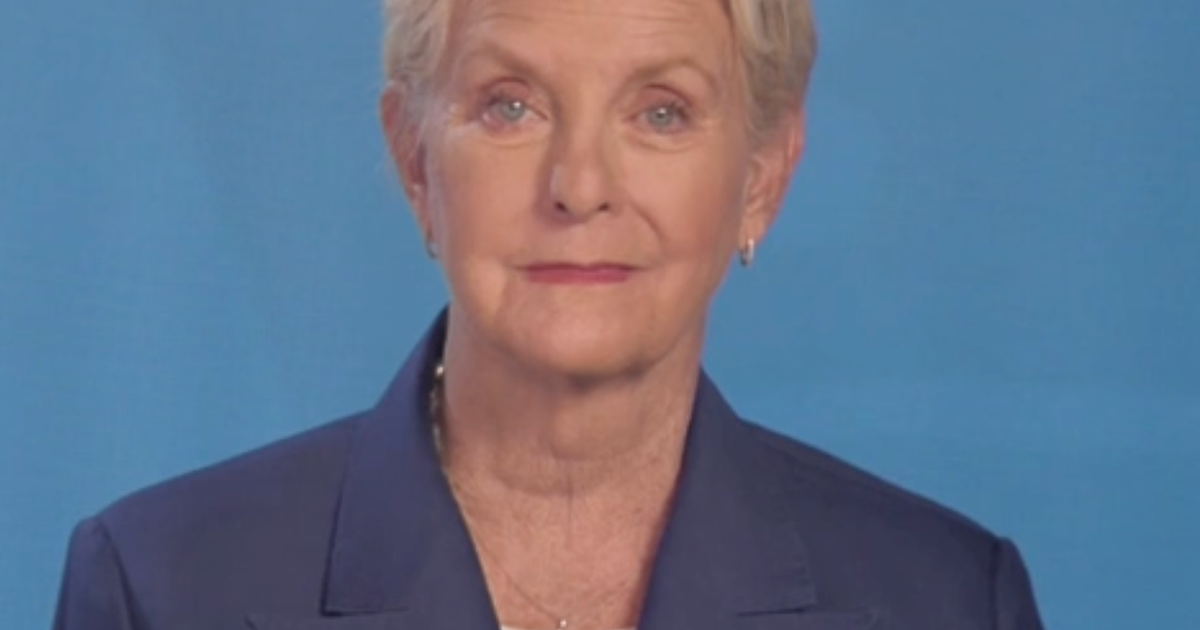
The following is the full transcript of the interview with Cindy McCain, executive director of the U.N. World Food Programme, a portion of which aired on “Face the Nation with Margaret Brennan” on May 31, 2026.
MARGARET BRENNAN: We turn now to the Executive Director of the United Nations World Food Programme, Cindy McCain, who joins us from Rome. Welcome back to Face the Nation.
U.N. WORLD FOOD PROGRAMME EXECUTIVE DIRECTOR CINDY MCCAIN: Thank you.
MARGARET BRENNAN: Well, Executive Director, you have so much work on your plate, given the data shows a record high number of people seeking urgent food and livelihood assistance. We’re just five months in to 2026. What’s the trajectory we’re on?
MCCAIN: Right now, it’s not very good, clearly, because of the- the large amount of people, number one, that are- are food insecure. Our ability to feed and feed at scale is not too good, because we right- this year have only received half of the money that we need to be able to feed the amount of people we- we are looking at right now.
MARGARET BRENNAN: Half of the money you need, is that because of the U.S. cuts or a global pullback in helping feed the hungry?
MCCAIN: It’s both, it’s U.S. and the global pullback. It’s not one country by any stretch, but it’s collectively everybody.
MARGARET BRENNAN: How do you explain that?
MCCAIN: Some of the countries have begun looking internally, and- and their constituents are asking for less money for foreign aid and more money for- for domestic uses, and I certainly understand that, but what- with what we are- have looked at, and what we are looking at now, with regards to not just hunger, but we’re looking at several more famines, by the way, so that would be- we’ve already had two, which is unprecedented, we add two more, you see what we’ve got. So we really need countries and private sector, as well as private- not just private sector, but also corporations, etc., to- to step up, and to some degree they are. We’ve had a great deal more involvement with our private sector and our corporations, but we have- it’s going to collectively take all of us to be able to fix this.
MARGARET BRENNAN: I want to come back to this in a moment, but let’s talk about where the need is right now. There is this emergency response to Ebola in the Congo, that’s a country that’s already struggling, as I understand it, with about 27 million food insecure people. I know the U.S. State Department is pledging some help here, but- but what are you hearing about the situation on the ground for emergency responders like yours?
MCCAIN: Well, clearly we are a large part of the emergency response there, and it is a group- as you know, the WHO is in there, we’re in there, several- several other NGOs, etc. It’s not good, and this is it’s- it’s hitting people in a mass way, and there’s really no- no way to know right now how many people have been affected by this. We know that it’s- it’s a rampage now with it. So, what- what we need to do is not only be able to get in, we- we run logistics, we bring in supplies, we bring in people, and we- and we do much more than that as well, just in the region, but this is going to take a real-world effort. This is very deadly.
MARGARET BRENNAN: You said there’s a rampage of Ebola.
MCCAIN: Yeah.
MARGARET BRENNAN: I mean, are you able- are you able to keep your workers on the ground?
MCCAIN: Our workers are on the ground, but my- one of my big projects, my- the reason- a large reason of what we planned today was taking care of our own people, the duty of care, and that comes into play because right now there’s no adequate facilities set up to handle that, and so we’re looking, you- obviously putting together a task force and a team that will do just that to make sure that we’re protected, as well as, of course, anyone that is from WFP.
MARGARET BRENNAN: There was also the conflict in Sudan that broke out while you were in this role as executive director, and I know it’s required a lot of your attention. The U.N. says it’s the world’s worst humanitarian crisis. Is there any movement forward? Is there any progress?
MCCAIN: Well, we’re seeing a little bit of progress and mind you, little means really little, but a little bit of progress towards Darfur. We’re able to set up- kind of moving more of our people on into the Sudan side rather than staging out of Chad, but it’s still extremely difficult, because on any given day one of the factions may get involved and stop us from moving at all and getting any food in it at- at- at any time, but I am also a big believer that- that eventually this will be solved, and more importantly, I believe in the good faith of the people that- that we serve, and that they will- will somehow survive this, but also remember that people do care about them, and that’s kind of where- when I saw them, I’ve been in Sudan, what I- what I witnessed were people that thought- had no hope, and people do care, and I always reiterate that when I go.
MARGARET BRENNAN: Well, you have been in this role at a time when there are so many hot spots, so many conflicts, and of course the Mideast continues to be a big challenge. I understand that you still do have some operations inside of Iran. As you know, there isn’t a free press on the ground able to document what’s happening. What can you tell us about how civilians there are doing?
MCCAIN: Well, we have a very small team, as you just mentioned, and we are getting some intel out of there, obviously, because we do have a team, not only to listen to, but to protect as well. Things aren’t good. I mean, let’s face it, when you shut the Strait of Hormuz, and you’ve got bombings on both sides all the way up and down, people are going to not only become food insecure, but they’re going to starve. It’s time to end this and make sure that we can open the Strait of Hormuz, because it’s affecting everybody, and it will take us months to get back on track when they do open it.
MARGARET BRENNAN: Months to get back on track. Why is that? Because the ships with the food are stuck, or because of the food prices? Why?
MCCAIN: Prices, availability, movement. Good example is that we- we do work in Afghanistan, and before what would usually take us three weeks, maybe, to get the food in from where it comes in from, now takes us almost three months, and so- so in the- but in the meantime, women and children, which are always the first to be hit, are starving, and so this is the case with all of them. When you talk about fertilizer, when you talk about seeds, of course, and other things, they’re being moved around that help stave off hunger. It’s a real problem. So we’re looking very hopeful that these peace talks will- will happen and that we can open the Strait.
MARGARET BRENNAN: Beyond Iran, Israel has stepped up its campaign against Hezbollah in Lebanon, and I know there’s a large number of refugees there. In Gaza, there have been all these ceasefire violations, hundreds of Palestinians killed since the ceasefire was announced. Hamas, the armed groups, they have not disarmed like they were supposed to. Israeli troops are still there. Bigger picture, when you look at the destruction in the Middle East just within the past few years, how do you describe to an American at home what the longer term impact is?
MCCAIN: Well, the longer term impact, to- to put it very bluntly, is not good. You know, we staved off hunger in Gaza when it was finally- the ceasefire held, and we were able to get trucks in at scale. We’re back to where we were. We can’t get trucks in at scale. People are- are, you know, as you know, there’s bombings, there’s all those things, and we’re looking at not just a serious situation, we’re looking at possibly losing a generation of children, so in any of these countries where there’s an issue – Lebanon, Gaza, Syria, Sudan, you know, all the ones that- that I’ve been to, plus Ukraine – it- access and being able to get in at scale is most important, and make sure- making sure that our humanitarian workers are not targets and that we respect humanitarian law, and that simply isn’t happening right now. It’s very dangerous to be an aid worker right now.
MARGARET BRENNAN: What do you mean losing a generation of children?
MCCAIN: Well, when you- when you talk about kids that are not- either not getting enough food or what they’re getting is not nutritious enough, and plus there’s no schools open, and there’s no, you know, proper housing, clean water, etc. medicine, etc. that- that spells disaster for a child, especially. And so I’m, obviously, one that has- as a mother first, and a grandmother six times over, and so I see it through my mother’s eyes. I, you know, it- you will do anything to feed your children, anything as a parent, and the fact that that can’t- it’s not happening in so many of these areas now is really alarming and very desperate.
MARGARET BRENNAN: I’ve heard you say feed them now or fight them later. You draw a direct connection to national security and radicalization.
MCCAIN: Yes. No, you’re absolutely right. We believe that, because when folks who are hungry can’t get adequate nutrition or food, they will turn to the bad guys, because food’s offered there. So it turns- you see- if you see what I’m saying. It makes it very difficult for people to turn that down if they’re trying to feed their families, and then in the meantime, we have a growing number of- of a lot of these factions around the world as a result of it.
MARGARET BRENNAN: I want to come back to something you said about aid workers. According to the U.N., there have been over 1,000 aid workers killed over the past three years, and I know you’ve been calling on global leaders to enforce humanitarian law. You’ve said it’s never been harder to work in this field. Why do you think that is? Is it because there are just a growing number of conflicts? Is there just no regard anymore for international law?
MCCAIN: I think it’s a perfect storm of all of it, to be honest with you. People aren’t caring, factions aren’t caring, they’re- the- the inability for us to move in, move in at scale, etc. all the things that’re being- being- that we’ve talked about, and when you- when you talk about conflict, that’s what’s happening. It’s- we have issues with climate change, we have issues with weather, etc., but the biggest- the biggest problem in all this is conflict. And ceasefire, allowing complete unfettered access, and most importantly, a full respect for humanitarian law and humanitarian aid workers, and that simply isn’t happening at all right now. We had, as you know, as you may have seen, we had a convoy attacked last week, and then we had our- our warehouse blown up, and this- these were both in Ukraine.
MARGARET BRENNAN: I did see that. A drone hit a truck and Russia hit a warehouse with a missile.
MCCAIN: Right. With a missile.
MARGARET BRENNAN: In another day- a missile, which you target, right? So it suggests deliberateness. In another day and age, the United States would have loudly condemned it. I didn’t hear that happen.
MCCAIN: Well, I’m hoping that they will. You know, I have to- I have to believe in the good faith of the American people, and I’m hoping that they will stand up for what’s right and for the people who cannot help themselves. But in the meantime, we’re doing the very best we can. Our warehouses and our trucks are highly visible in terms of you know it’s a WFP warehouse, you know it’s a WFP truck. So you’re- you’re correct. We believe they were targeted.
MARGARET BRENNAN: And we don’t know the consequence yet for Russia in having done that.
MCCAIN: No, no.
MARGARET BRENNAN: I was reading something that you said, and I want to come back to it, because I think it’s a pretty big statement. You recently were asked about the conservative movement, and that within the conservative movement, aid, you said, has become a dirty word, and being a humanitarian useless. You’re a lifelong conservative. When- when you describe things going this direction, that has to be hard to stomach. Why do you think this is happening? And do you think it is temporary?
MCCAIN: I will say this. Obviously, that was- that was frustration speaking to a great degree. I believe there are many, many, many good people in the United States are more than willing to help this cause, or help, you know, whatever- whatever they see fit to do for all of this, but we need more of it, and we need- we need actionable items from not just the United States, but other countries around the globe that will stand up also and help us. We can’t do this alone, and we’re- we’re hoping, as you know, the United States is our largest donor, and we’re very proud of that. But we need everybody involved in this.
MARGARET BRENNAN: But you don’t see China or Russia stepping up? Or the European powers stepping up?
MCCAIN: No, but- but again, I’m also a big believer in the good- good nature of people, and I’m hopeful I can eventually put myself out of business.
MARGARET BRENNAN: America, though, has changed its policy towards aid. The Trump administration uses that phrase- phrase trade not aid, arguing they’re going to be more efficient and more effective with the support they provide in the form of foreign assistance. When you look at the places you operate, do you think there has been an impact from the dismantling of USAID?
MCCAIN: I do. I really- I do. AID was- was an intimate part of all of these things, and- and of course we relied on them- on them to a degree as well. I wish we still had AID, but it was the choice of this administration, and so we have to work with that. I do- I am hoping, though, that eventually we can put back some of the soft power aspects that we were able to do, as well. As you know, that’s a very important part of, at least U.S. aid, but again, I’m not criticizing anybody in the administration. I’m simply saying we need help.
MARGARET BRENNAN: The administration pushes back on any criticism of- of its choices, saying that it’s unfair to burden the American taxpayer and the- with the full burden of taking care of every person on Earth. Why–
MCCAIN: I don’t disagree.
MARGARET BRENNAN: Right, but why aren’t more countries stepping up if- if the United States is drawing this line? Is it just that there is a loss of faith in the United Nations in these international institutions, or do they just not think it’s in their interest to help the people that you say are going to become a threat to everyone’s security?
MCCAIN: I think it’s a little of everything. Listen, in the beginning, when I first took on WFP, I knew we needed to scale back, I knew we had to be slimmer, I knew we had to operate within our means, and that’s exactly what we’ve done. We’ve managed to push that through, and that’s how we operate now. Listen, every organization can- can do better, and can- needs to scale down. I mean, that- that just happens. There was a time and place where money was- was flush within the U.N. agencies and within the entities that we work with as well. It’s not that way anymore, and people have a right to ask how the money is being spent. I do not disagree with any of that. So, it is important that- that the agency scale back, that we- we become more nimble, more effective, better use of- of AI, better use of technology, all the things that we can do to make ourselves much better at what we do, and make us much more efficient at what we do. So, I, you know, the U.S. government, or I mean, the U.S. people have a right to ask questions, and so do other countries. I understand that, and we have the- the burden of making sure that we do exactly what we should be doing, and that is getting the most food and the most access to the people we serve, and those are ones who cannot help themselves.
MARGARET BRENNAN: You are stepping back from this job within the next few days. You have the McCain name, the power, the leadership abilities when you go up on Capitol Hill to lobby Republican lawmakers in particular, to help overcome some of the reluctance we’ve been talking about. Who can fill this role after you? What advice do you have for them to be able to make the case that it is in America’s national security to help the needy in the way that you’re arguing?
MCCAIN: Well, first of all, I go to both sides, because food security, in my opinion, is nonpartisan. So, I talk to everybody, anybody who will talk to me about food security, I talk to. I think this person, whoever this person is, I hope will lead from their heart, because we push- at WFP, we believe in pushing everything to the field, our frontline workers, the people that we serve, not keeping this at headquarters. It needs to go into the field. I hope whoever takes this job leads with their heart, understands the nature of what we’re doing and the importance of it, and more importantly, is willing to take risks, because that’s what this job is.
MARGARET BRENNAN: Ambassador McCain, Executive Director. Thank you for your time today.
MCCAIN: Thank you. Thank you.