






 Weather
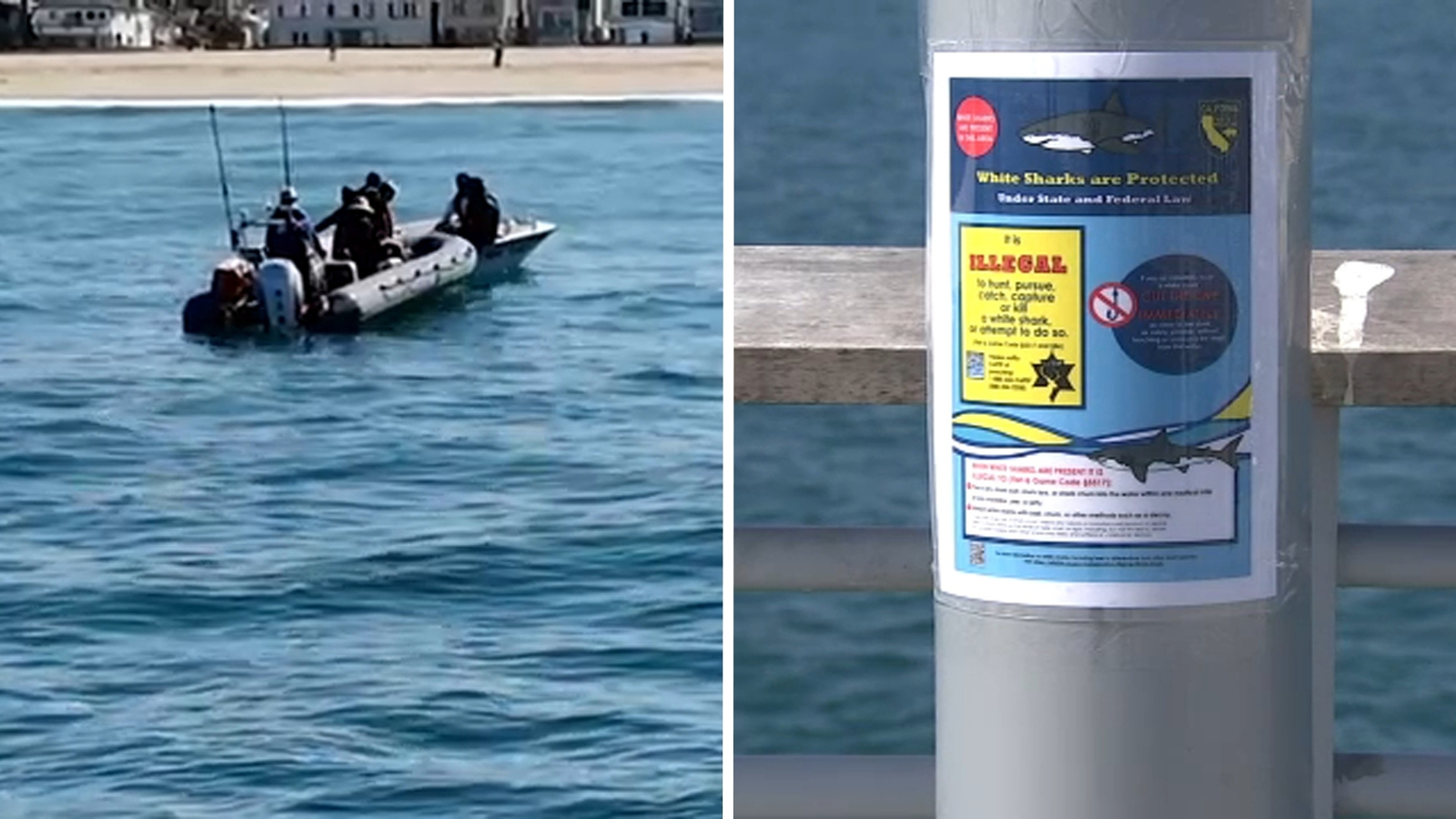
As more and more young great white sharks are gathering off the coast for warmer waters, it’s creating a new risk with fishermen desperately trying to catch the sharks.
Eyewitness News got a closer look at why it’s dangerous not just for the sharks, but for swimmers and surfers, too.
On the hunt for predators of the deep, the team from Cal State Long Beach’s Shark Lab searches the sea for great white sharks being targeted by fishermen along the Southern California shore.
People casting lines from area piers are creating a potentially illegal and dangerous situation, not only for the animals, but for swimmers and surfers, too.
“The biggest worry is they hook into a big shark. That’s going to drag out a lot of line. There are people swimming and surfing in that area, and that’s a cheese cutter. It could decapitate somebody,” said Chris Lowe, the director of the Shark Lab at CSULB. “In addition, you got an angry shark at the end of the line, and that puts somebody at risk who’s swimming.”
It’s happened before. In 2014, a great white shark fighting to free itself from a fisherman’s line off of the Manhattan Beach Pier bit a long-distance swimmer passing by.
Recently, fishers off the Hermosa Beach Pier reportedly hooked juvenile great white sharks nearly two dozen times.
“I’ve never caught a great white out here, but to anyone who’s fishing for great whites, it’s not allowed, and it’s a hassle, too,” said Cheyne Sullivan from Redondo Beach.
It is illegal to fish for great white sharks, which are federally protected. But scenes like one on social media showing a fisherman trying to remove a hook from a great white’s mouth are drawing more anglers to the piers.
“It’s a little bit concerning that folks feel so comfortable going out there and essentially trying to catch a great white, a predator shark,” said Chief and Harbor Master Patrick Butler with the Redondo Beach Fire Department.
If a great white is hooked, it is supposed to be immediately cut from the line, which creates another danger — possible entanglement for anything and anyone in the water.
Eyewitness News joined Lowe and his team, along with the help of the L.A. County Fire Lifeguards and Redondo Beach Fire Harbor Patrol, to search above and below the waves for sharks with hooks and line still in their mouths.
The team deployed a stretch of net to try to capture the creatures and free them from the risk.
Increasing the concern for the apex predators and people, warming water temperatures from the expected El Niño are now pushing more sharks into Southern California.
Lowe says this year, they could see twice as many great whites as normal, making it more likely a fisherman’s line could hook a great white, whether they mean to or not.
If anyone is caught intentionally fishing for white sharks, they could face up to a $1,000 fine and six months in jail. Lowe is urging anyone who sees anything suspicious out on the piers to call the state tip line at 1-888-334-CALTIP (888 334-2258).
“It’s illegal to target white sharks, and there was a new law that was passed last year that means you can’t bait near them, you can’t put targets out near them to lure them, and you certainly can’t fish near them,” Lowe said.
Warnings are now posted along the Hermosa Beach Pier. The California Department of Fish and Wildlife and local officials are now on the lookout for those intentionally trying to reel in a protected predator.
“If you want to come down and see this natural beauty of the sharks, and see them in a kind of docile environment, come down to watch. But don’t come out here thinking that you’re going to competition to start catching sharks,” Butler said.
© 2026 Television,