





 Weather
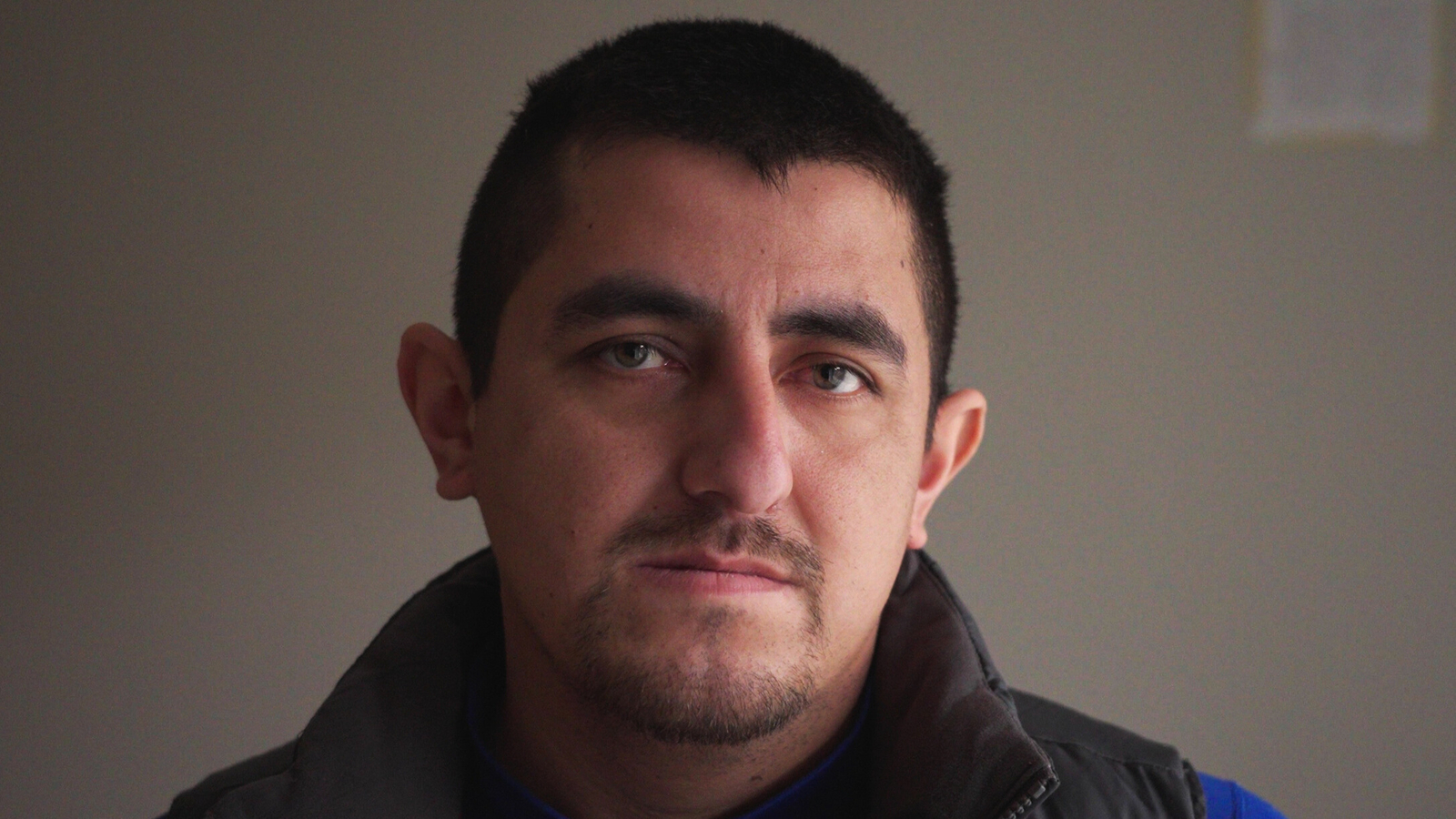
MINNEAPOLIS — Alberto Castañeda Mondragón says his memory was so jumbled after a beating by immigration officers that he initially could not remember he had a daughter and still struggles to recall treasured moments like the night he taught her to dance.
But the violence he endured last month in Minnesota while being detained is seared into his battered brain.
He remembers Immigration and Customs Enforcement agents pulling him from a friend’s car on Jan. 8 outside a St. Paul shopping center and throwing him to the ground, handcuffing him, then punching him and striking his head with a steel baton. He remembers being dragged into an SUV and taken to a detention facility, where he said he was beaten again.
He also remembers the emergency room and the intense pain from eight skull fractures and five life-threatening brain hemorrhages.
“They started beating me right away when they arrested me,” the Mexican immigrant recounted this week to The Associated Press, which recently reported on how his case contributed to mounting friction between federal immigration agents and a Minneapolis hospital.
Castañeda Mondragón, 31, is one of an unknown number of immigration detainees who, despite avoiding deportation during the Trump administration’s enforcement crackdown, have been left with lasting injuries following violent encounters with ICE officers. His case is one of the excessive-force claims the federal government has thus far declined to investigate.
He was hurt so badly he was disoriented for days at Hennepin County Medical Center, where ICE officers constantly watched over him.
Officers claimed he ran headfirst into a wall
The officers told nurses Castañeda Mondragón “purposefully ran headfirst into a brick wall,” an account his caregivers immediately doubted. A CT scan showed fractures to the front, back and both sides of his skull – injuries a doctor told AP were inconsistent with a fall.
“There was never a wall,” Castañeda Mondragón said in Spanish, recalling ICE officers striking him with the same metal rod used to break the windows of the vehicle he was in. He later identified it as an ASP, a telescoping baton routinely carried by law enforcement.
Training materials and police use-of-force policies across the U.S. say such a baton can be used to hit the arms, legs and body. But striking the head, neck or spine is considered potentially deadly force.
“The only time a person can be struck in the head with any baton is when the person presents the same threat that would permit the use of a firearm – a lethal threat to the officer or others,” said Joe Key, a former Baltimore police lieutenant and use-of-force expert who testifies in defense of police.
Once he was taken to an ICE holding facility at Ft. Snelling in suburban Minneapolis, Castañeda Mondragón said officers resumed beating him. Recognizing that he was seriously hurt, he said, he pleaded with them to stop but they just “laughed at me and hit me again.”
“They were very racist people,” he said. “No one insulted them, neither me nor the other person they detained me with. It was their character, their racism toward us, for being immigrants.”
The Department of Homeland Security, which includes ICE, did not respond to repeated requests for comment over the last two weeks on Castañeda Mondragón’s injuries.
It is unclear whether his arrest was captured on body-camera footage or if there might be additional recordings from security cameras at the detention center.
In a recent bid to boost transparency, DHS announced a broad rollout of body cameras for immigration officers in Minneapolis as the government also draws down ICE’s presence there.
ICE deportation officer William J. Robinson did not say how Castañeda Mondragón’s skull was smashed in a Jan. 20 declaration filed in federal court. During the intake process, it was determined he “had a head injury that required emergency medical treatment,” he wrote in the filing.
The declaration also stated that Castañeda Mondragón entered the U.S. legally in March 2022, and that the agency determined only after his arrest that he had overstayed his visa. A federal judge later ruled his arrest had been unlawful and ordered him released from ICE custody.
Video shows him stumbling during arrest
A video posted to social media captured the moments immediately after Castañeda Mondragón’s arrest as four masked men walk him handcuffed through a parking lot. The video shows him unsteady and stumbling, held up by ICE officers.
“Don’t resist,” shouts the woman who is recording. “Cause they ain’t gonna do nothing but bang you up some more.”
“Hope they don’t kill you,” she adds.
“And y’all gave the man a concussion,” a male bystander shouts.
The witness who posted the video declined to speak with AP or provide consent for the video’s publication, but Castañeda Mondragón confirmed he is the handcuffed man seen in the recording.
At least one ICE officer later told staff at the medical center that Castañeda Mondragón “got his (expletive) rocked,” according to court documents filed by a lawyer seeking his release and nurses who spoke with AP.
AP interviewed a doctor and five nurses about Castañeda Mondragón’s treatment at HCMC and the presence of ICE officers inside the hospital. They spoke on condition of anonymity because they were not authorized to discuss patient care and feared retaliation. AP also consulted an outside physician, who affirmed the injuries were inconsistent with an accidental fall or running into a wall.
Minnesota state law requires health professionals to report to law enforcement any wounds that could have been perpetrated as part of a crime.
An HCMC spokeswoman declined to say this week whether anyone at the facility had done so. However, following the Jan. 31 publication of AP’s initial story about Castañeda Mondragón’s arrest, hospital administrators opened an internal inquiry seeking to determine which staff members have spoken to the media, according to internal communications viewed by AP.
Minnesota Gov. Tim Walz posted a link to AP’s prior story about Castañeda Mondragón, but his office has not said whether state authorities would pursue answers.
“Law enforcement cannot be lawless,” Walz wrote in the post on X. “Thousands of aggressive, untrained agents of the federal government continue to injure and terrorize Minnesotans. This must end.”
Castañeda Mondragón’s arrest came a day after the first of two fatal shootings of U.S. citizens in Minneapolis by immigration officers, triggering widespread public protests.
Elected officials call for accountability
Minnesota congressional leaders and other elected officials, including St. Paul Mayor Kaohly Her, called this week for an investigation of Castañeda Mondragón’s injuries.
The Ramsey County Attorney’s Office, which oversees St. Paul, urged Castañeda Mondragón to file a police report to prompt an investigation. He said he plans to file a complaint. A St. Paul police spokesperson said the department would investigate “all alleged crimes that are reported to us.”
While the Trump administration insists ICE limits its operations to immigrants with violent rap sheets, Castañeda Mondragón has no criminal record.
“We are seeing a repeated pattern of Trump Administration officials attempting to lie and gaslight the American people when it comes to the cruelty of this ICE operation in Minnesota,” Sen. Tina Smith, a Minnesota Democrat, said in a statement.
Rep. Kelly Morrison, another Democrat and a doctor, recently toured the Whipple Building, the ICE facility at Ft. Snelling. She said she saw severe overcrowding, unsanitary conditions and an almost complete lack of medical care.
“If any one of our police officers did this, you know what just happened in Minnesota with George Floyd, we hold them accountable,” said Democratic Rep. Betty McCollum, whose district includes St. Paul.
A native of Veracruz, Mexico, Castañeda Mondragón came to Minnesota nearly four years ago on a temporary work visa and found jobs as a driver and roofer. He uses his earnings to support his elderly father, who is disabled and diabetic, and his 10-year-old daughter.
On the day of his arrest, he was running errands with a friend when they suddenly found themselves surrounded by ICE agents. They began breaking the windows and opening the doors of the vehicle. He said the first person who hit him “got ugly with me for being Mexican” and not having documents showing his immigration status.
About four hours after his arrest, court records show, Castañeda Mondragón was taken to an emergency room in the suburb of Edina with swelling and bruising around his right eye and bleeding. He was then transferred to the Minneapolis medical center, where he told staff he had been “dragged and mistreated by federal agents,” before his condition deteriorated, court records show.
A week into his hospitalization, caregivers described him as minimally responsive. As his condition slowly improved, hospital staff handed him his cellphone, and he spoke with his child in Mexico, whom he could not remember.
“I am your daughter,” she told him. “You left when I was 6 years old.”
His head injuries erased past experiences that for his daughter are unforgettable, including birthday parties and the day he left for the U.S. She’s been trying to revive his memory in daily calls.
“When I turned 5, you taught me how to dance for the first time,” she reminded him recently.
“All these moments, really, for me, have been forgotten, he said.
He showed gradual improvement and, to the surprise of some who treated him, was released from the hospital on Jan. 27.
Long recovery lies ahead
He faces a long recovery and an uncertain future. Questions loom about whether he will be able to continue to support his family back in Mexico. “My family depends on me,” he said.
Though his bruises have faded, the effects of his traumatic brain injuries linger. In addition to the problems with his memory, he also has issues with balance and coordination that could prove debilitating for a man whose work requires going up and down ladders. He said he is unable to bathe himself without help.
“I can’t get on a roof now,” he said.
Castañeda Mondragón, who does not have health insurance, said doctors have told him he needs ongoing care. Unable to earn a living, he is relying on support from co-workers and members of the Minneapolis-St. Paul community who are raising money to help provide food, housing and medical care. He has launched a GoFundMe.
Still, he hopes to stay in the U.S. and to provide again someday for his loved ones. He differentiates between people in Minnesota, where he said he has felt welcome, and the federal officers who beat him.
“It’s immense luck to have survived, to be able to be in this country again, to be able to heal, and to try to move forward,” he said. “For me, it’s the best luck in the world.”
But when he closes his eyes at night, the fear that ICE officers will come for him dominates his dreams. He is now terrified to leave his apartment, he said.
“You’re left with the nightmare of going to work and being stopped,” Castañeda Mondragón said, “or that you’re buying your food somewhere, your lunch, and they show up and stop you again. They hit you.”
___
Biesecker reported from Washington. Mustian reported from New York, and Attanasio reported from Seattle.
___
Brook is a corps member for The Associated Press/Report for America Statehouse News Initiative. Report for America is a nonprofit national service program that places journalists in local newsrooms to report on undercovered issues.
© 2026 by The Associated Press. All Rights Reserved.