




 Weather
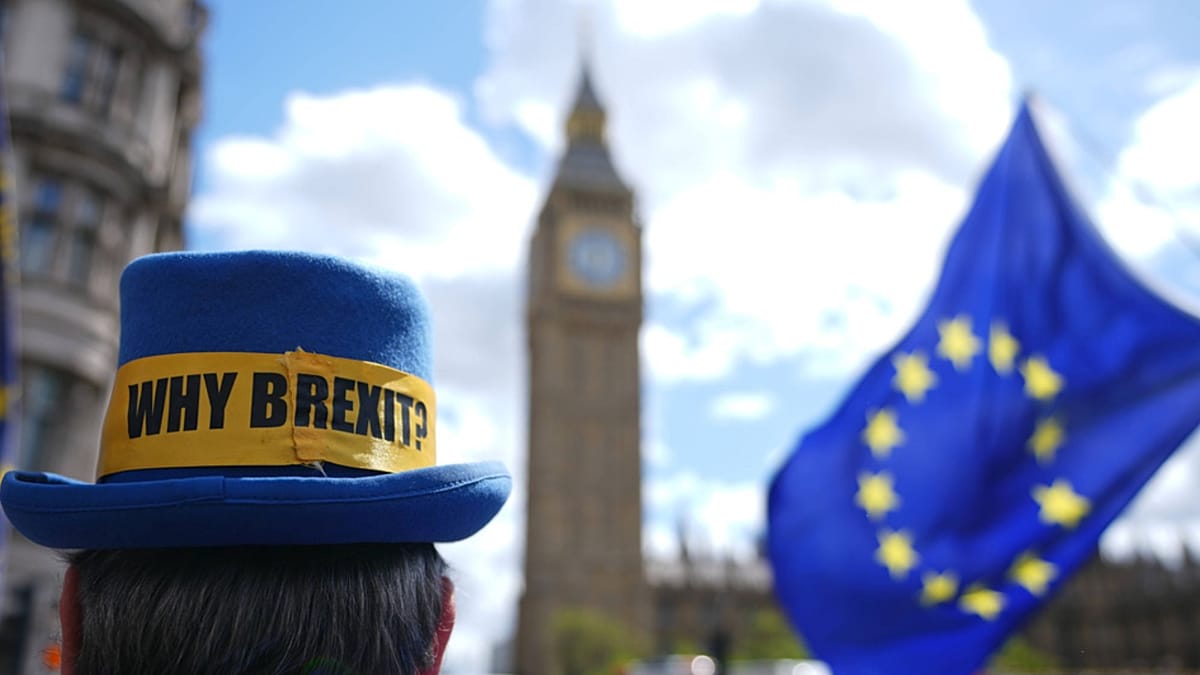
It’s been 10 years since the referendum that saw the UK vote narrowly to leave the European Union, with 52% opting to get out and 48% preferring to remain.
ADVERTISEMENT

ADVERTISEMENT
The vote on 23 June 2016 was followed by years of agonising negotiations and political turmoil in the UK, before the country finally officially left the bloc in early 2020.
While the time may have flown by, some of the conflicting claims about whether Brexit would be a benefit or a disaster for the country have not.
From the economy to immigration, the Irish border and security, arguments about whether the UK’s departure from the EU was a good thing or not persist to this day, even though polls show that the majority of the public believe Brexit is a failure.
The Cube, Euronews’ fact-checking team, revisited some of the biggest points of contention during the 2016 campaign and how they hold up today.
Claim: Brexit will harm the UK’s economy
The Remain campaign was insistent that leaving the EU would cause significant damage to the UK economy, making the country poorer and citizens worse off.
There were plenty of instances of high-profile politicians and campaigners making the same claim.
Back in May 2016, then-Chancellor of the Exchequer, George Osborne, the UK’s chief finance minister, said: “A vote to leave would represent an immediate and profound shock to our economy. That shock would push our economy into a recession and lead to an increase in unemployment of around 500,000.”
“GDP would be 3.6% smaller, average real wages would be lower, inflation higher, sterling weaker, house prices would be hit, and public borrowing would rise compared with a vote to remain,” he added.
A decade later, the overwhelming consensus among researchers and government institutions is that this has been the case, though gradually rather than in a sharp drop or sudden blow.
The UK’s own Office for Budget Responsibility (OBR) has said that the country’s productivity is down 4%; the UK’s EU exports and imports will be lower 15% in the long run; and that new trade deals with non-EU countries haven’t had a material impact.
“I think on that there’s no longer any question: Brexit has definitely harmed the UK economy, and it’s done so very badly,” Mark English, policy advisor at the European Movement UK, told The Cube. “Even many Brexiteers would recognise that, although they say it’s a price worth paying. I’m not sure why.”
“Core estimates range from the UK being 4% poorer than it otherwise would be because of Brexit to 8% poorer,” he explained.
Jonathan Portes, professor of economics and public policy at King’s College London, voiced a similar, if slightly less damaging, opinion.
“The consensus among economists was that Brexit would harm the UK economy, and that has proved to be correct,” he told us. “There are a variety of estimates for how large that damage has been, but there is a consensus that the damage has been significant and long-lasting.”
“Estimates have ranged up to 8% of GDP, although my personal view is that that’s rather implausibly high, but certainly it’s plausible to say that Brexit has cost the UK economy perhaps 3% to 5% of the GDP,” he said.
Experts say that there have been some marginal benefits, in the sense that the UK was able to conclude a free trade agreement with India, one of the world’s fastest-growing economies, before the EU. However, much like the OBR said, these have not produced a significant impact on the British economy.
Additionally, it’s worth noting that, following the UK’s withdrawal from the EU, the global economy was rocked by successive crises, such as the COVID-19 pandemic and Russia’s full-scale invasion of Ukraine.
While it can therefore be difficult to disentangle the full effects of Brexit from these other economic shocks, according to researchers, the figures do still clearly point to it harming the UK’s coffers.
“There are quite a few different studies using different methods, and they all, I think, point in the same direction,” Portes said. “The damage has been significant, although the precise numbers do vary, and I think given the uncertainties, we will never know precisely what the impacts of Brexit were, because it is very complicated.”
“We don’t have an alternative counterfactual world in which Brexit did not happen,” he added. “But we can be reasonably certain that that breaks it has done significant economic damage.”
Claim: Brexit will allow the UK to significantly curb immigration
Immigration was a significant battleground during the 2016 campaign, with prominent Leavers arguing a departure from the EU would enable the UK to fully control its borders and drive down the number of migrants coming into the country.
“Voters were promised repeatedly at elections that net migration could be cut to tens of thousands,” Conservative politicians Boris Johnson and Michael Gove said at the time. “This promise is plainly not achievable as long as the UK is a member of the EU and the failure to keep it is corrosive of public trust in politics.”
Immigration from the EU did fall dramatically as freedom of movement ended, but figures from outside the bloc rose, taking immigration levels to record numbers in 2023.
According to the Migration Observatory at the University of Oxford, EU net migration has been negative since 2022, with 42,000 more people leaving than arriving in 2025. This is a significant change from the run-up to the 2016 referendum, when EU citizens made up a majority of immigration and net migration to the UK.
Net UK migration in general reached 944,000 in the year ending March 2023, before dropping to 171,000 in 2025, falling more in line with levels seen before the new post-Brexit immigration system was introduced.
Portes said that pro-Brexit campaigners’ promises to end the free movement of people from other European countries and introduce a new skill and salary-based system were ultimately kept. However, the strong implication that this would lead to a significant reduction in immigration did not come to pass.
“Now that wasn’t just because of Brexit, because most other European countries also saw significant increases in immigration from outside the EU after the pandemic as a consequence of the labour shortages that emerged,” he said. “But […] overall, the increase in non-EU immigration more than offset the decrease in EU immigration, nd so Brexit, as far as we can tell, did indeed lead to an increase rather than a decrease in immigration.”
English noted that it’s important that pro-EU Brits try not to overstate the impact of Brexit here, but that it was only natural that non-EU migrants would fill the gaps left by Europeans.
“I do think it’s important that people on my side of the debate don’t overclaim,” he said. “A lot of that rise in immigration was nothing to do with Brexit, it came from the fact that we offered sanctuary to people from Ukraine and Hong Kong and Syria, and it came from a decision to offer a very liberal regime at the time for non-EU students as well.”
“But the fact in the end is that the UK, like every richer country in the world, needs and wants inward migration to fill vacancies, and if it doesn’t get that migration from the EU, it will get it from elsewhere,” English added. “I think Brexit certainly did not reduce immigration, and it was never going to.”
It’s worth noting too that the UK, like all other EU countries, always had the power to remove even EU citizens from its borders under certain conditions, despite Leave campaigners claiming that freedom of movement meant full, unfettered access to Britain’s shores.
The EU’s Free Movement Directive repeatedly says that member states are allowed to remove EU citizens who become an “unreasonable burden” on their social assistance systems.
Claim: Brexit will slash cumbersome EU bureaucracy
Leave campaigners claimed that quitting the EU would mean the UK would no longer be bound by restrictive EU red tape, as it could do away with any inhibiting EU regulations, while remain supporters said the opposite and that things would actually get more sluggish.
“It would be a return to the bad old days of endless forms and burdensome bureaucracy,” then-Prime Minister David Cameron, a Remain campaigner, said in March 2016. He was warning that leaving the EU would force British businesses to deal with customs declarations, rules of origin checks, and export barriers.
Before the creation of the EU single market, each country had its own set of rules, meaning companies wishing to trade across the continent needed to make sure they complied with each of them.
English pointed out that the UK was “right at the centre” of devising the single market, which required companies to follow only one set of rules and so reduce bureaucracy.
“Brexit took away the ability to sell across the market free of red tape, it took it away from UK businesses while other businesses across the EU kept it,” he said. “They’re therefore at an advantage compared to UK businesses. So, of course leaving the EU led to more cumbersome bureaucracy.”
London has not diverged significantly from regulations set in Brussels, preserving EU standards to avoid extra administrative costs for businesses because ultimately, the bloc is still its largest trading partner.
“Brexit did not mean a bonfire of domestic regulations in the UK,” English said. “And the reason for that is pretty simple: the British public wants to know that the products it buys are safe, and they want to know that businesses are properly regulated.”
Portes said that ultimately, Cameron was right in the short term, as there was a significant increase in civil service work and areas of regulatory policy following the Brexit negotiation and implementation period.
“It’s not clear whether there’s been a huge increase or decrease either way,” he said. “What is quite clear is that there hasn’t been some sort of massive rollback of deregulation or bureaucracy as a consequence of Brexit. We are probably more regulated and have more bureaucrats than we did pre-Brexit, although I think that’s probably not mostly due to Brexit as opposed to broader trends in the UK.”
Claim Brexit will make the UK less safe
Theresa May, former home secretary and later prime minister who originally oversaw Brexit, said that the UK would be at greater risk of terrorism if it left the EU, while Leave campaigners dismissed this as “Project Fear”.
“So my judgment, as home secretary, is that remaining a member of the European Union means we will be more secure from crime and terrorism,” May said in April 2016.
She based her comments on the raft of databases that the UK would be left out of if it quit, which did indeed end up happening.
These include the Schengen Information System II, which allows EU countries to share real-time alerts on wanted people and suspected terrorists; Eurodac, the EU’s fingerprint database used for tracking irregular border crossings; and direct access to Europol and Eurojust’s information systems and strategic intelligence networks.
Researchers say that while none of this has meant that the UK has become significantly less safe after leaving the EU, it has still put up unnecessary hurdles to its ability to fight cross-border crime.
“I don’t want to claim that Brexit has made the UK dramatically less secure against crime and terrorism, but it has had a negative effect,” English said. “All of those [databases] allow dangerous individuals to be identified and to be apprehended, and equally importantly, the UK can no longer use the European arrest warrant to bring back to the UK quickly criminals who fled into Europe.”
Portes said that, similar to post-Brexit trade barriers, it has made cooperation between the UK and other European countries more difficult.
“It’s clearly not helpful, but equally, I don’t think there has been some sort of huge, obvious, catastrophic failing as a result,” he told The Cube. “But I think in practice, this cooperation continues, it’s just slightly more cumbersome.”
Read the full article here