


 Weather
The veto right allows member states to block Council decisions in areas where treaties require unanimity instead of majority voting.
ADVERTISEMENT

ADVERTISEMENT
Activating this power can plunge the entire EU into political gridlock: a single opposing member state is enough to prevent proposed actions from being adopted.
National governments use this right only if they consider that Council decisions harm their sovereign interests. Yet it is increasingly used as a power move to extort concessions from the EU, especially after Russia’s invasion of Ukraine in 2022.
According to Michal Ovádek, lecturer in European Institutions, Politics and Policy at University College London, member states have used their veto power 48 times against foreign policy files, budgetary decisions, and enlargement steps.
With 21 vetoes, Hungary is by far the most obstructionist country. Poland halted 7 Council decisions, followed by Greece, the Netherlands, and Austria, each with 2 vetoes. Other member states, such as Cyprus, Romania and Bulgaria, have exercised unanimity at least once.
Why does the veto power exist?
While 80% of all EU legislation is adopted through qualified majority, unanimity remains central in the European Council.
This means that all 27 member states need to agree for an action to be adopted and implemented. If one member state uses its veto power to vote against a decision, the decision cannot take effect, and the entire process is paralysed.
“The European Union is a complex animal. Decisions are made differently across policy areas, and member states have strong incentives to exercise power. This is a major issue, because it can really block decision-making at a time where unity is needed”, said Patrick Müller, professor for European Studies, Centre for European Integration Research, University of Vienna, and Vienna School for International Studies.
Unanimity exists because the EU is a union of sovereign states, not a federal union. This means that national interests outrank European objectives. By allowing unanimity, the EU did not want to force member states to agree to political decisions that go against their constitutional identity.
In 2009, the Lisbon Treaty expanded the use of qualified majority voting. Today, unanimity remains the rule in key policy areas: common foreign and security policy, defence, enlargement, treaty changes, and parts of the EU budget.
Those in favour argue that joint-decision guarantees strong democratic legitimacy. It also protects a fair, consensus-based approach and power equality between larger and smaller member states.
Besides leading to slow decision-making, unanimity can prevent the EU from being a responsive actor. Critics say the lack of consensus leads to fragmented responses to major crises. This carries huge geopolitical costs, weakening the EU’s credibility and allowing other powers to fill the vacuum.
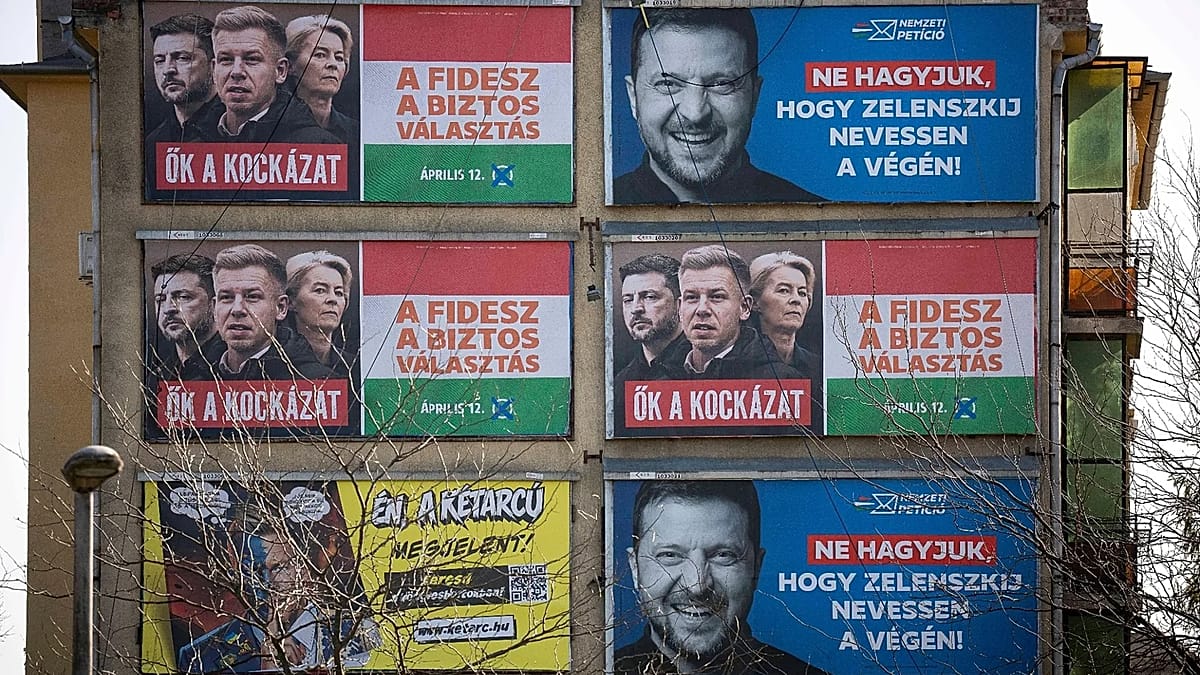
In Brussels, debates over unanimity have reignited since 2022. Hungary’s repeated vetoes of sanctions packages and financial aid for Ukraine fuelled concerns about Europe’s growing political deadlocks and paralysis in response.
To increase efficiency and streamline the decision-making process, French President Emmanuel Macron proposed extending qualified majority to other policy areas in 2022.
But the idea is far from simple. It implies treaty reforms and a significant loss of control in important policy matters, which goes against member states’ own interests.
Nobody can blackmail the EU
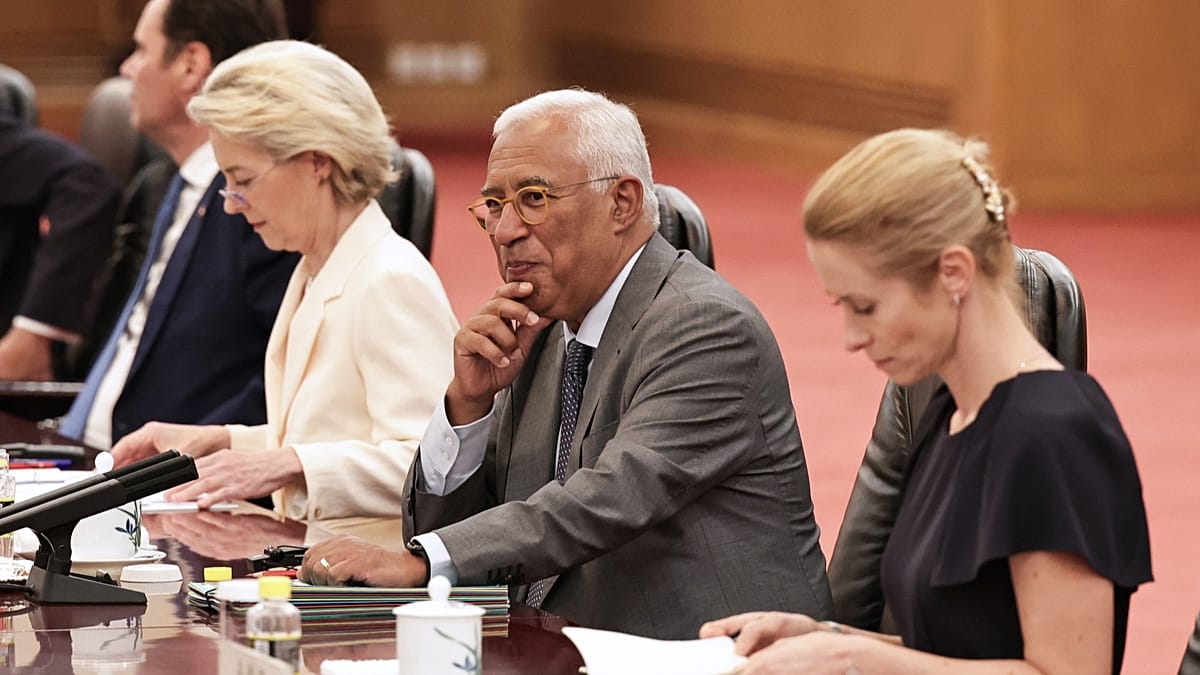
European Council President António Costa said that “no one can blackmail the European Institutions” after Hungary vetoed the Ukraine loan during the March European Council Summit.
Despite being used to constraints imposed by its unanimous decision-making, Europe is grappling with member states’ strategic use of veto power.
Member states have increasingly used unanimity as leverage. They use one policy decision, such as sanctions or enlargement steps, to extract unrelated concessions. In most cases, countries aimed to bend Brussels over frozen EU funds and rule‑of‑law disputes, while arguing to defend national interests.
This happens because “formal safeguards from member states resorting to veto power are missing”, Müller argued.
Member states deny any link between the vetoed decision and their extortion. Acknowledging it would mean admitting to abusing treaty-based unanimity. It would weaken the leverage power and increase legal and political risks. Instead, they insist that their veto is purely decision‑specific and in defence of national interests.
“Hungary tries to veil this link, so it’s not easy to detect, it’s not explicit. It gives the illusion that these things are about foreign policy. One could just call it blackmail or, you know, hard bargaining”, Müller told Euronews.
According to Thu Nguyen, acting Co-Director of the Jacques Delors Centre in Berlin, veto is often used close to national elections to gain consensus. “Raising the veto is also a way to signal to the national electorate that perhaps national interests are protected or that a government is, I put it in quotation marks, standing up to Brussels”, Nguyen said.
The EU has options
Though limited, the EU does have options to keep veto powers from paralysing big decisions. One informal method is political isolation, in which other governments coordinate to pressure or sideline a country by using its veto (this has been seen repeatedly in disputes with Orban over EU support for Ukraine). In such cases, other member states negotiate outside the formal framework or threaten to proceed without the vetoing country to force a compromise.
According to Nguyen, “there are bridging clauses where the European Council can give permission to act with qualified majority voting instead of unanimity”.
But transitioning to qualified majority voting requires agreement from all member states.
“There have been some creative solutions in the past. In the EU Council in December 2023, member states came up with this famous coffee break, where Viktor Orbán left the room, then the rest could decide. This presupposes that the member state that is vetoing the decision is leaving the room or voluntarily lets the others go ahead with the decision”.
Another formal option is to trigger Article 7.
“It is a procedure that allows the EU to suspend the voting rights of a member state in the Council when it fundamentally breaches the values of the European Union”.
Member states have been reluctant to resort to this solution. “It is a procedure that only applies when there is a fundamental and ongoing breach of EU values, such as democracy, rule of law, human rights, human dignity”, explains Nguyen.
This would effectively remove countries’ veto power, but it is politically difficult because it requires near-unanimous agreement from the others.
“This is also a procedure that needs unanimity, but without the member state concerned […] but also there, we haven’t really managed to go anywhere with it. If there is any solution, then it would be to know how to go ahead with Article 7”, Nguyen told Euronews.
This option was triggered against Poland in 2017 and closed in 2024, and against Hungary in 2018.
Another workaround of the informal kind is financial pressure. The EU can decide to link access to funds to respect for rule-of-law standards, as it happened with billions of euros to Hungary.
Certain governments now support expanding this “conditionality” so that countries risk losing funds if they systematically block key decisions. However, others (especially smaller or more sovereignty-focused states) warn that removing or bypassing vetoes could weaken national control, meaning any reform remains politically contested.
The most plausible way forward
There is no doubt that the EU needs to reform the veto power. This will decide on the Union’s credibility, resilience and role in an increasingly complex geopolitical context.
According to Nguye, today’s international tensions require Europe to strengthen unity. Despite the need for a common position, especially on foreign and security matters, “what we have seen is a very clear divide between Hungary and the rest of the European Union”, she argued.
The veto-trap might still haunt Europe for quite a while.
“The big problem that the EU has with unanimity is that you can only get rid of unanimity with unanimity. Everyone must agree to get rid of it”, said Nguyen.
Most member states seem willing to reach an agreement and give up this right. Yet Poland’s latest veto on a €44bn EU loan for defence modernisation on 12 March proves that disagreements and protection of national sovereignty remain strong.
A better balance between national concerns and common European priorities may be a short-term answer. Member states could apply common sense when opting for unanimity and only use it when strictly necessary to protect fundamental national interests.
“It is the willingness of member states to say, we exercise a lot of forbearance in terms of our veto power, but we don’t employ it strategically. We only use it in the most limited way to protect interests directly implicated”, Müller told Euronews.
Read the full article here