


 Weather
By Dianne Apen-Sadler
Published on
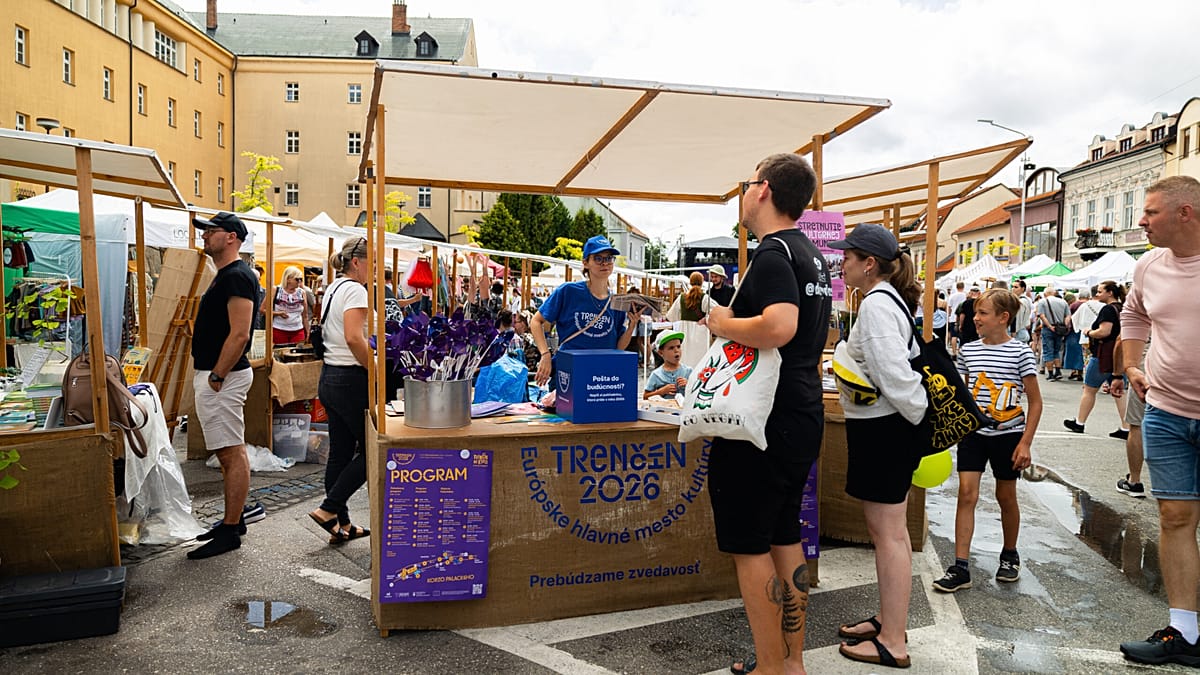
After Finland’s Oulu took on the mantle last month, Trenčín in Slovakia is set to launch its European Capital of Culture programme in mid-February.
The city, which is located around an hour and 15 minutes away from the capital Bratislava, has planned events around the theme of curiosity. The team behind the programme has said it hopes to “inspire bridge-building between people, between past and future, and between imagination and reality”.
Here’s what to expect if you’re planning a visit in 2026.
All the events not to miss in Trenčín in 2026
Trenčín Castle, the city’s top tourist attraction, is being transformed into a space for contemporary art with three exhibitions set to open on 7 February.
The Well of Love takes the legend of Turkish man Omar, who supposedly dug into the rock at the castle after his partner Fatima was imprisoned, and translates the story into contemporary works using light, sound and holograms.
Barbora’s Thread, from Portuguese artist Carla Rebelo, makes use of fragments from the Merina textile factory in the city to create an installation that deals with collective memory, while Japanese artist Yasuaki Onishi has created Crystalline Silence using transparent materials.
In April, Trenčín’s Light Art Festival will be back, with a number of installations popping up across the city for two days, while July will see the return of Splanekor, an event where handmade vessels attempt to sail along the River Váh.
Another unmissable event in July is Garage, a music festival focusing on emerging artists from Slovakia.
Then, in September, Trenčín will celebrate the transformation of the former railway bridge into a cultural space with the Fiesta Bridge Festival, which will be followed by Altofest in October, with performances taking place inside homes across the city.
Slovakia and the European Capital of Culture programme
Trenčín is the second city in Slovakia to be named a European Capital of Culture, with Košice holding the title in 2013.
Ahead of that year’s programming, the industrial city opened the Kulturpark, a former 19th century Hungarian army barracks that was turned into a cultural space, as well as the Kunsthalle, a former swimming pool that now hosts concerts and exhibitions.
The European Capital of Culture programme, which has been running since 1985, aims to transform a city long after its closing ceremony.
“Receiving the title is a historic moment, but even more, it is an opportunity for transformation – of our city, our region, and the people who live here,” said Patrik Žák, Deputy Mayor of Trenčín.
Read the full article here