



 Weather

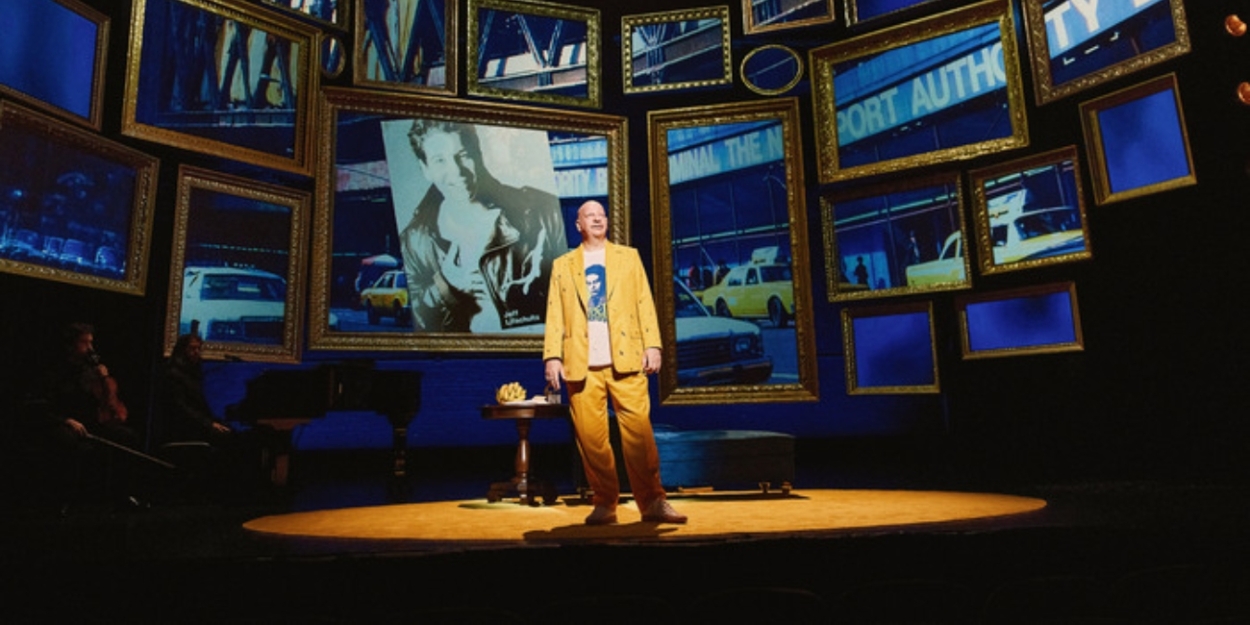
After seeing understandably immense success on both Broadway and the West End, the Tony Award-winning play Good Night, Oscar is here in sunny South Florida, enjoying its run at the Maltz Jupiter Theatre. Equal parts laugh-out-loud funny and thought-provoking, this remarkable comedy-drama sheds light on a 20th-century icon. A gifted concert pianist, composer, and actor, Oscar Levant (Max Roll) also became famous for his talk show appearances, his acerbic wit and candid discussion of difficult topics resonating with many viewers. This is from where Good Night, Oscar, written by Doug Wright and directed here by Bill Fennelly, draws its main source of inspiration. Set in 1958, solely at NBC Television Studios in Burbank, the play follows a chaotic day in Levant’s life as he prepares to film an episode of The Tonight Show with Jack Paar. Creative prowess and enduring fame can too often come at a high cost—and is the price really worth it?
Good Night, Oscar offers many strengths on its own—engaging pacing, clever writing, and well-drawn characters, to name a few—but with the fantastic performances by its cast, these qualities shine even brighter. Max Roll impresses as the play’s titular character, capturing the nuances of Oscar Levant’s personality, from his sharp sense of humor to his tendency toward self-deprecation. In Roll’s performance, viewers see the intersection between Levant’s undeniable talent and his underlying struggles with mental health and substance abuse, culminating in a breathtaking musical sequence near the end of the show. He truly brings this prodigy to life, while also placing his own spin on the character.
While the show may center around this single character, the others are certainly no less important to the story. Corey Brill showcases how Jack Paar’s commitment to vulnerability and authenticity, keen eye for talent, and biting snark helped make him a pioneer in the world of late-night television. Elisha Lawson brings a quiet groundedness and focused ambition to the role of Alvin Finney, a young medical orderly tasked with overseeing Levant on his brief leave from the Mount Sinai psychiatric ward. Natalie Cordone thoughtfully depicts June Levant’s put-together veneer and unwavering internal strength in the face of any crisis, demonstrating the character’s deep care for her husband and family. Ben Sandomir and Aaron Idlis emphasize the fast-paced, high-intensity environment of a late-night TV set as Bob Sarnoff, the president of NBC, and Max Weinbaum, Jack Paar’s harried new production assistant, respectively. Finally, the story wouldn’t be complete without the charming and celebrated composer George Gershwin, played by Harris Milgrim. Levant was a friend and protege of Gershwin’s, later becoming a foremost interpreter of his works. This complicated relationship became a double-edged sword of sorts for Levant, an idea that Good Night, Oscar delves deeply into.
The scenic design, by Michael Schweikardt, recreates a 1958 television studio with precision and close attention to detail, cultivating an atmosphere and aesthetic reminiscent of TV shows like Mad Men and The Marvelous Mrs. Maisel. Smooth set transitions facilitate effortless travel between locations, from various dressing rooms to The Tonight Show with Jack Paar’s set and back again. Similarly, Siena Zoë Allen’s costume design feels true to the time period, while also harnessing its own distinct stylistic flair.
The sound design, by Ernesto K. Gonzalez, and the lighting design, by Dalton Hamilton, work together in a uniquely captivating way to convey these characters’ journeys, highlighting the shifts between the public-facing, interpersonal environment of the television set, and the internal psychological pain Oscar Levant suffers from as he finds himself back in the limelight. For instance, when Levant experiences auditory and visual hallucinations, the sound and lighting match that sense of intensity and disarray; the music picks up and the stage is bathed in hues of deep, moody blues, giving the audience a front-row seat to Levant’s mental state and how this manifests throughout the story.
We’ve all heard the phrase “Two things can be true at once,” but it’s this simple statement that lies at the heart of Good Night, Oscar. Throughout the show, theatergoers are encouraged to consider the fine lines between humor and heartbreak, entertainment and exploitation, public success and private misery, and, in the words of Oscar Levant himself, “genius and insanity.” The play explores all these dichotomies and more in a compelling way that will surely strike a chord with any audience member. Don’t wait—now’s the time to see it for yourself!
Good Night, Oscar runs at the Maltz Jupiter Theatre through March 1. Purchase your tickets here.
The post The Maltz’s Good Night, Oscar Hits a High Note (Or Several) appeared on South Florida Theater.