





 Weather
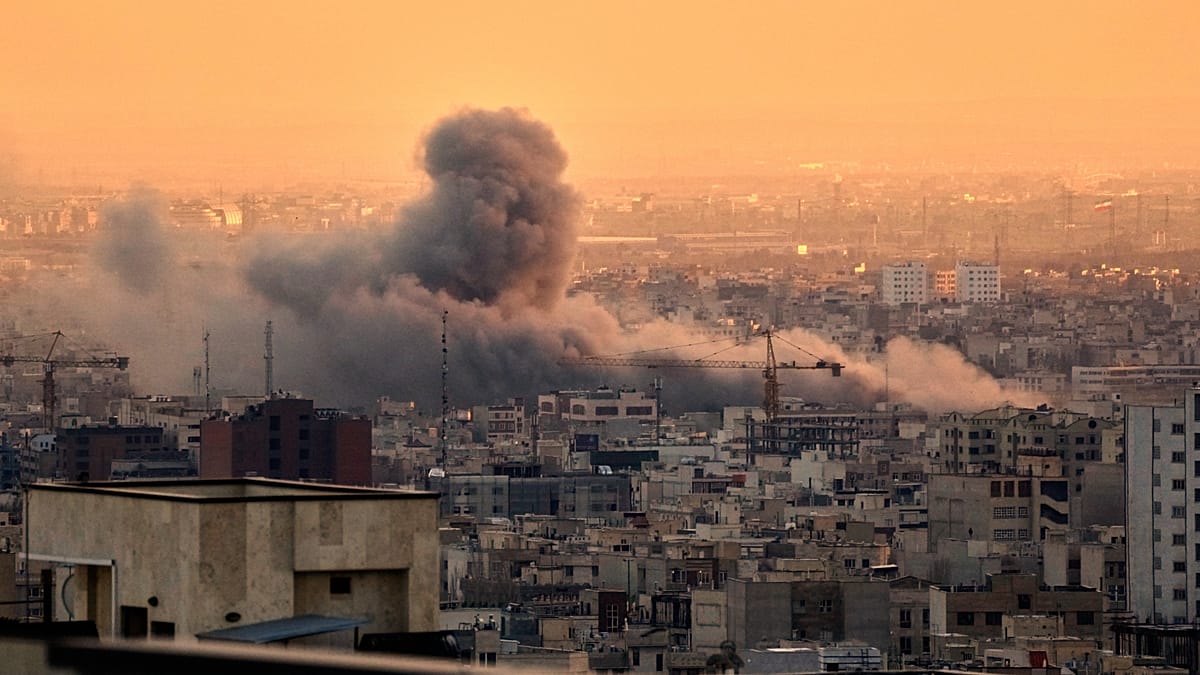
Iran’s Foreign Minister Seyed Abbas Araghchi has alleged that bombings on Tehran had “no impact” on the country’s ability to continue fighting Israel and the US, crediting its strength to the “decentralised mosaic defence strategy.”
ADVERTISEMENT

ADVERTISEMENT
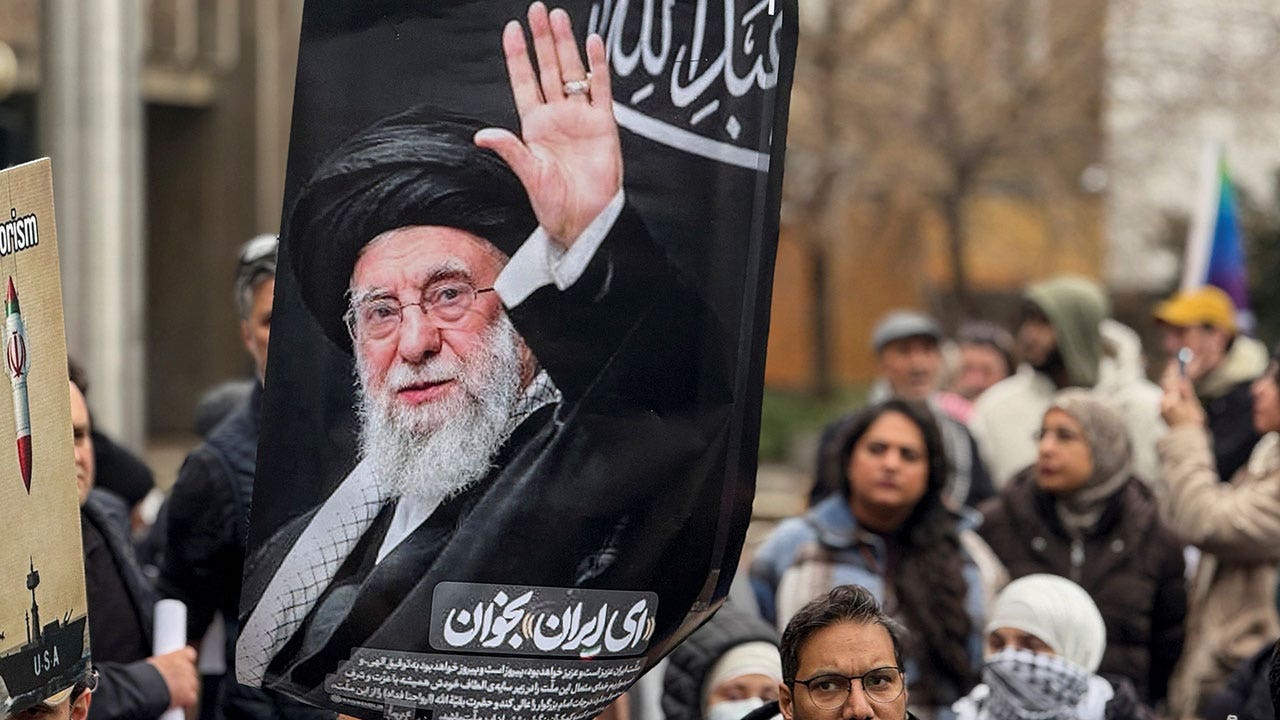
The statement, posted on X, comes as the Iran war rages on, triggered by US-Israeli strikes on 28 February, which killed some 40 Iranian leaders, according to the Israeli Defense Forces (IDF) and US President Donald Trump. The country’s supreme leader, Ayatollah Ali Khamenei, was among them.
The conflict has since expanded into the wider region, as Tehran’s retaliatory attacks target Israel, as well as the US-allied Gulf States. Meanwhile, Lebanon has been drawn into the regional war due to militant group Hezbollah’s support of the Iranian regime.
Euronews’ fact-checking team, The Cube, took a closer look at Iran’s military capabilities to see if Araghchi’s claims hold water.
What is the mosaic defence strategy?
Iran’s mosaic defence strategy seeks to minimise the impact of senior leadership decapitations by preparing meticulous contingency plans, essentially via a decentralised command system. The mosaic metaphor refers to the resilience of a system composed of intertwined, but independent parts.
“The intellectual roots of the mosaic defence concept go back to the early 2000s, following the US invasion of Afghanistan in 2001 and Iraq in 2003”, Francesco Salesio Schiavi, researcher and non-resident fellow at the Middle East Institute Switzerland, told The Cube.
Iranian strategists assessed that the collapse of Saddam Hussein’s regime was accelerated due to the US’s rapid decapitation of senior leadership and command infrastructures.
“The Iraqi system was highly centralised, meaning that power flowed from the top down,” Schiavi said. “When the top layer was removed, the entire system disintegrated.”
“Rather than reinforcing centralised control, Tehran deliberately chose to diffuse authority across its territory and institutions,” he continued. “This transformation accelerated under Muhammad Ali Jafari, who served as the IGC commander from 2007 to 2019.”
The mosaic defence strategy is designed to withstand attacks on central command structures, but also to ensure that leadership can deal with a ground invasion, according to Federico Borsari, defence analyst at the Centre for European Policy Analysis_._
“In terms of structure, every province is a part of the mosaic,” he said.
Iran has 31 provinces, Borsari said, each of which has its “own commanders who have the ability to take decisions and have a more ‘flexible’ and autonomous way of interpreting command and control.”
A defence strategy intensified by sanctions
Iran has faced more than 45 years of crippling Western sanctions, introduced in response to its nuclear enrichment activities, support of regional proxy groups, and grave human rights violations.
Iran’s isolation on the international stage has put a strain on its military capabilities, pushing the country towards further self-sufficiency in the realm of defence.
“Every province has its own kind of warehouses, stocks, and areas where it can even produce equipment, manufacturing drones really in dispersed workshops that are scattered among different provinces,” said Borsari.
According to experts, in parallel to the mosaic defence concept, the Iranian regime’s goal is also to ensure a drawn-out war by ensuring that economic and political pressure intensifies domestically.
“We know that prolonged conflicts can become really politically difficult to sustain long-term in the West,” said Borsari. “I think this is definitely part of the Iranian calculus; however, there is not yet sufficient pressure within the US political environment to really suspend the operations or to stop the operations.”
How Iran reacted to US and Israeli strikes
President Trump has made the US’s military objectives clear: to destroy Iran’s nuclear weapons and missiles programme, to achieve the annihilation of its naval forces, as well as to prevent “the Axis of Resistance” — Iran’s regional proxy forces — from harming US forces in the Middle East.
The IDF has made similar statements, calling for the removal of “existential threats” to Israel, citing Iran’s nuclear and missile programmes, as well as the “Axis of Resistance”.
Iran’s contingency plans have facilitated retaliatory attacks against Israel and the Gulf states, even though the country’s senior leadership and Ayatollah Ali Khamenei were killed on 28 February. Since then, Iran has carried out significant retaliatory strikes on US bases, oil and gas infrastructure, as well as airports in the Gulf region.
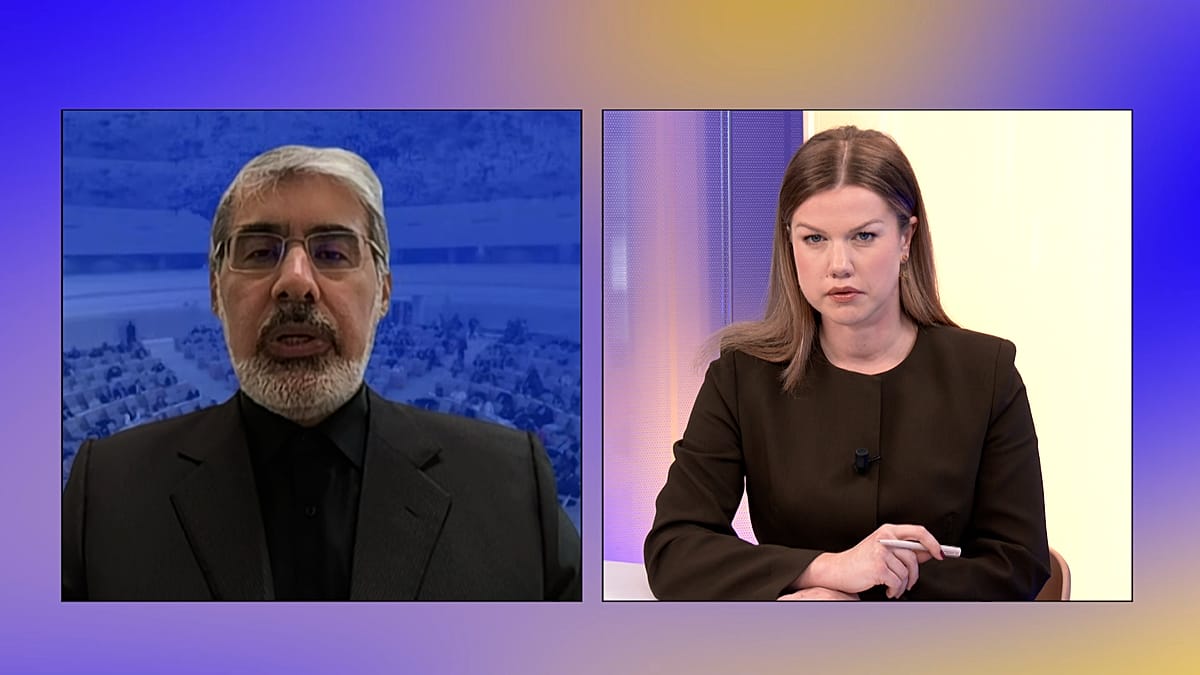
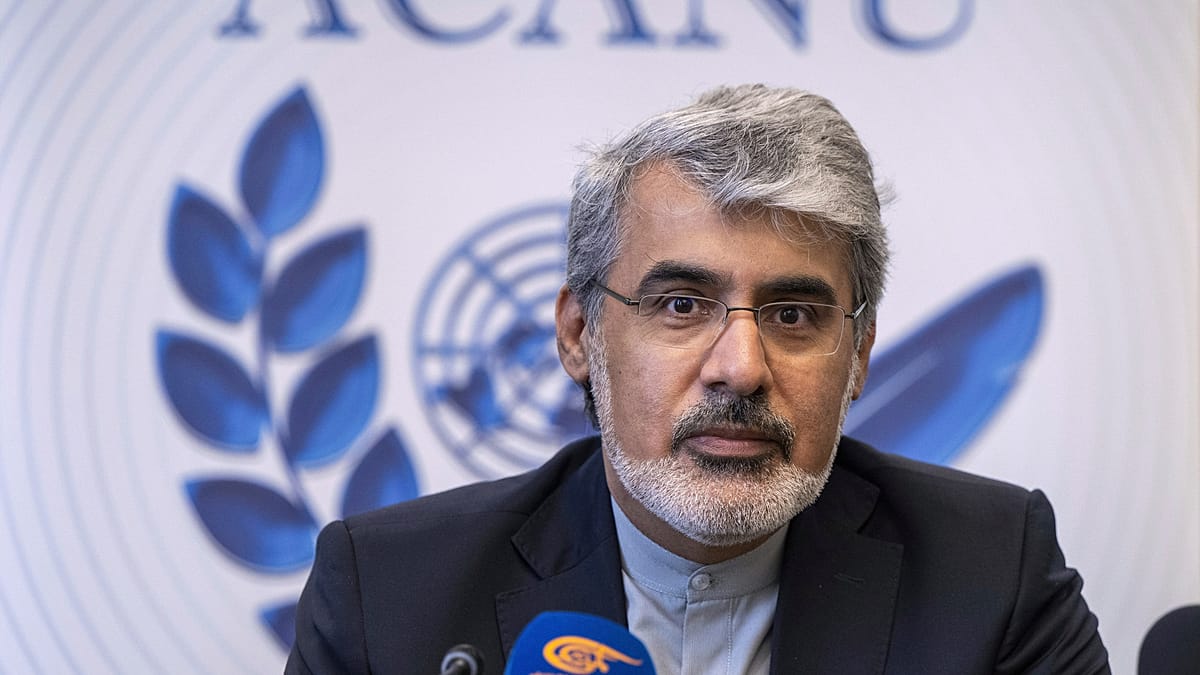
When questioned about the Iranian foreign minister’s claims that bombings “have no impact” in an interview with Euronews, Iran’s ambassador to the UN, Ali Bahreini, did not address the assertions directly, instead diverting attention to the “high” number of civilian casualties, in particular to the bombing of a school in southern Iran, which remains under investigation, but killed at least 175 people.
Despite this, while the country’s mosaic defence strategy may allow for some level of contingency planning, Araghchi’s claim is at odds with how the conflict has panned out for now.
Can Iran really say that strikes on Tehran have had ‘no impact’?
Since late February, the US-Israeli coalition has struck a significant amount of strategic Iranian targets — striking naval bases, ships and aerial installations, launching thousands of munitions in the first days of the war.
In retaliation, Iran and its proxies have conducted more than 3,000 missile and drone attacks targeting Israel and Arab Gulf nations since the beginning of the conflict.
But on 5 March, US officials reported that Iran’s ballistic missile launches had dropped by 86% compared to the first days of the conflict, revealing a rapid decline in Iran’s ability to produce and store missiles.
“Since the start of the campaign, US and Israeli forces have focused heavily on entombing Iran’s missiles and on destroying mobile launchers before they can fire,” Schiavi told The Cube.
“The highest concentration of Iran’s ballistic missiles was launched in the first 48 hours of the conflict, when Tehran attempted to saturate regional air defences with large salvos,” he added. “The available data then reveals a shift, in part due to the destruction of missile launchers in strikes, but also because of operational limits because of US-Israeli superiority.”
Without missile launchers, Tehran would struggle to launch its ballistic missiles.
According to Israeli authorities, as of 6 March, around 60% of Iran’s missile launchers have been destroyed. However, Pentagon officials also cautioned last week that Iran may still retain up to half of its missiles and launchers.
“The key question is not simply how many missiles or drones Iran possesses, but how many launch platforms and protected storage facilities remain operational after two weeks of sustained strikes,” said Schiavi.
Despite this, the scale of the impact on Iran’s so-called subterranean “Missile Cities” — which protect the country’s underground arsenal of weapons — remains to be determined.
“We don’t know how many missiles Iran still has in stock or has hidden in the underground bunkers,” Borsari told The Cube.
As well as ballistic missiles, drone stocks remain a key asset for Iran, as drones allow Iran to exercise significant pressure on its adversaries, as evidenced by the impact of strikes in Bahrain, the UAE, Kuwait and Qatar, as well as the costly nature of intercepting these attacks.
The human toll of the strikes
Iran’s ambassador to the UN reported on Wednesday that more than 1,341 civilians had been killed in US-Israeli strikes, with a further 17,000 wounded.
The World Health Organization has verified 18 attacks on healthcare since 28 February, and an Iranian health ministry update on Tuesday reported damage to at least 18 ambulances and 21 medical emergency centres across the country.
According to Israeli military assessments from 5 March, more than 3,000 Iranian soldiers and operatives have been killed since the onset of the Iran war.
The UN refugee agency has estimated that up to 3.2 million people in Iran have been displaced by the ongoing war, with the majority fleeing from Tehran and other major cities toward the north of the country or rural areas.
How the Iranian regime spreads wartime propaganda and bravado
There is a level of propaganda and tactical wartime rhetoric surrounding Araghchi’s claims that strikes on Tehran have not impacted Iran’s military capabilities.
“When Iranian leaders publicly refer to mosaic defence, they are also engaging in strategic messaging,” said Schiavi. “Domestically, the message is meant to reassure the population that the state is somehow prepared to survive even after severe military shocks.”
“Internationally, it also serves as a warning to adversaries that major strikes, including leadership killings, will not necessarily produce a rapid collapse of Iran’s war effort, which is what we are seeing now so far,” he added.
Read the full article here